Google+
This blog has moved. Please go over to this link to see my new website.
Showing posts with label Space. Show all posts

Monday, 29 September 2014

Star Maker, by Olaf Stapledon, Reviewed.

Is this the precursor of much of today’s science fiction? The themes, ideas, stories he covers in this long work are multitude. I’ve read developments of these ideas in so many other works. First published in 1937, it is definitely a work of its time. The style, a narrative without dialogue, is dated and I suspect many new readers would find it difficult. But it is well worth the effort of reading the whole work.

The voyage, unexplained in terms of the ‘how?’, is more concerned with the ‘why?’ and deals with this question very well. Multiple imagined worlds are brought alive on the page, alien life is explored and many diverse creatures described.

The author examines the big themes: war, man’s self-destructive nature, religion, relationships, the natural world, and many more. He looks at potential mental development and attempts to get inside the minds of creatures with greater experience, higher intelligence, different moral stances than our own. There is an undercurrent of analogy to the world in which the book was written; a reflection of the concerns and worries engendered by the burgeoning aggression that would ultimately be World War II.

This is a massive work of intellect and imagination. Yes, there are limitations on the science posed by the lack of knowledge at the time of its writing, but there are also surprising references to ideas we still hold dear.

Those who enjoy science fiction for its ability to examine serious themes, to go beyond the guns and rockets and lasers of the gamers and star warriors, will find a lot to enjoy within these pages. Those who thrive on battling superships and military space academicians will be less excited. But this is a work that may well have been seminal for writers who followed. Within its pages are the seeds of many later stories by other writers, and I wonder how many of those seeds began to grow in the fertile brains of developing talent as they read this book.


I enjoyed it and happily recommend it to those who enjoy science fiction with something to say beyond the obvious.

Tuesday, 9 September 2014

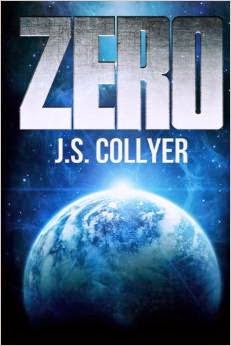
Zero, by J.S. Collyer, Reviewed.

Wow! This book moves at a great pace, and rarely lets up. This is a space adventure, a fast-moving action piece with little time to spend on explanation of the setting. However, the author cleverly integrates plenty of clues within the action so that the reader is able to envisage the world she has created here. And it is a world of undesirables, military types, skilled and able technicians, heroes and villains in many guises.

This is a story that gamers in particular will love. The reader experiences the action as the story progresses. And those who love their scifi films with plenty of combat will find this a very satisfying read.

It’s a page-turner, but it’s also a book with plenty of twists and turns. Who can be trusted? Who is telling the truth? Who are the real heroes, here? The characters - and those who know my reviews will be aware this is of real concern to me - are well drawn. The danger of stereotyping has been avoided by giving the people who populate this work individual quirks and sometimes unusual motivations. The mix makes for an engaging and absorbing story.

I read this under less than ideal circumstances, with many breaks due to things over which I had no control. But I never lost the thread and was always able to pick up where I left off. It would have been an even better read in one sitting, but at 364 action-packed pages, this was never an option for me.


If you like your space adventures full of hard men, and women, with plenty of physical conflict and dark humour, and with an undercurrent of subtly applied moral comment thrown in, you’ll enjoy this tale. I did, and I heartily recommend it.

Sunday, 6 November 2011

Stuart's Daily Word Spot: Facade

The main house at Bletchley Park. The estate w...Image via Wikipedia
Façade: noun - principal front of a building, overlooking a street or open space; outward appearance or front, especially when deceptive.

'The façade, dilapidated and faded as it was, nevertheless retained hints of the past glory of the emporium.'

'Giles adopted his most winning smile, knowing his façade of gentle and generous lover would persuade her to his own purposes before very long.'

Enhanced by Zemanta

Thursday, 9 June 2011

Stuart's Daily Word Spot: Between or among

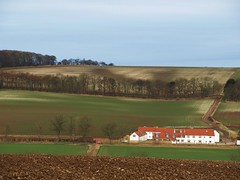
Farm on the WoldsImage by stuartaken via Flickr
Between or among
Between: preposition - reciprocal action or relation involving two or more as individuals, reciprocally, on the part of; motion or communication from each of two or more bodies, places, etc., to the other or others, to and from; confinement or restriction to two or more parties; in the interval separating two points of time, events, etc.; intermediate to, partaking of the nature of two qualities; in or through the space, line, or route separating two points, objects, etc. or bounded by; in the space bounded by two points etc., dividing, separating, connecting, uniting. Adverb - in or into an intermediate position or course, intermediately in amount, order, occupying intermediate space, intervening; in the interval or at intervals. to go to and fro as a mediator;
Among: preposition - in the assemblage of, surrounded by and grouped with; surrounded by the separate members, components, or particles of, amid; in company with; in the number or class of, in comparison with; in the general practice or views of; divided between, shared by.
Both words have possibly more meanings than most people appreciate. However, the confusion in usage arises only in certain circumstances: i.e. which should be used when referring to two objects and which belongs with three or more things. But this is to over simply the matter. The distinction doesn’t rely on whether you’re referring to two things or to three or more; it’s whether you’re referring to one thing and another, or to a collective or undefined number.
‘The gossip spread among the journalists faster than wildfire.’ But, you could also write, ‘The gossip spread between the journalists like wildfire.’
‘A five bar gate rested between the gateposts.’ Means something entirely different from, ‘A farm gate rested among the fence posts.’ In the former, we have a gate in situ with the posts at either side to support it. But in the latter, we have a gate as a separate item awaiting use along with some fence posts.
There is also a question of the mood conveyed by the two words: ‘The lovers walked among the bushes.’ indicates a meandering stroll. But, ‘The lovers walked between the bushes.’ is suggestive of a more formal promenade with bushes at either side of them.
One other aspect that needs a few words is the use of ‘between’ when used to measure something in relation to the objects the measured item lies between. So, the ‘distance between the posts’ does not include the width of the posts themselves but merely the space intervening. When something falls between two or more other things, those other things are not part of that something, but the defining boundaries of the space into which the something falls.

Zemanta could find no suitable illustration for this one, so here's one of my own, taken on the Wolds, near Bridlington.

Enhanced by Zemanta