Google+
This blog has moved. Please go over to this link to see my new website.
Showing posts with label California. Show all posts

Monday, 8 August 2011

Stuart's Daily Word Spot: Synecdoche


Synecdoche: A figure of speech in which a part is used to represent the whole.

Examples:

Describing a vehicle as ‘wheels’
‘grey beard’ for an older man
‘hands’ for workers as in, ‘All hands on deck.’
‘the good book’ for the Bible
‘bug’ for any kind of insect
‘glasses’ for spectacles
‘irons’ for shackles used to restrict a prisoner
‘rubber’ for a condom.

Pic: Californian Poppies.

Thursday, 21 July 2011

Author Interview with Susan Moody


Please tell us little about you, Susan.

I've been writing (and being published) for 30 years or so, mainly crime and suspense.  In my time, I've been Chairman of the Crime Writers Association of Great Britain, and World President of the International Association of Crime Writers.  To be a writer was an ambition from my very earliest years and I constantly thank whatever gods there are for having been able to achieve this.  I have so enjoyed all the activities associated with the job – because it is a job, and a hard one, too – especially the opportunities to travel.  Some years back I was invited to be a Writer-in-Residence at the University of Tasmania, in Australia, where I met my Australian/Scottish husband John.  Of necessity, we lead a nomadic life: between us we have children in Australia, Iceland, California and Denmark, and homes in England, Australia and France.

Give us some insight into LOSING NICOLA in a few sentences. 

It's a book about childhood and the loss of innocence, and though the murderous events described in it never actually happened to me, I'd like to think it captures the essence of a place and time – the 1950s – which has gone forever, and the kind of slightly odd family I grew up in.

How did you come to write this particular book?

Casting about for a new book to write, I remembered a short story I'd written a long time ago, and thought that it had all the ingredients for turning into a much longer piece of fiction.   It was also a huge pleasure to write about parts of my childhood, something I'd not done before.  So although it is in no way autobiographical, it does contain a lot of my past.                                                          

If you have a favourite character in your novel, why that particular one? 
    
Orlando, because he is based on and celebrates my much-loved brother, Barnaby, who died much too young.
                  
Where can people buy your books?

I've written 28 books and nearly all of them have been published in the UK, as well as in many other countries (including the US.)  Most of them are available on Amazon.  (SA – see the full list at the foot of this interview).
        
What qualities does a writer need to be successful?

Perseverance, self-belief, ruthlessness and probably – though I hate to admit it because like most writers I'd prefer to believe that my work is good enough on its own! – a little bit of luck.  Women writers especially have a hard time keeping to a writing schedule and at the same time fulfilling their traditional role of mother, wife, chef, cleaner and bottlewasher. 
  
What is your working method? 

At this point in my life, rather more haphazard than I'd like it to be.  When I still had a child at school, it was easy: as soon as he had gone off for the day, I was at my desk and worked until he returned.  Now, with a retired husband needing attention, it's a great deal harder.  But basically I like to work creatively for about four hours, as early in the morning as possible, and the rest of the day, revise, answer emails, read, research, meet people, prepare talks etc etc. The difficult thing about a writer's life is finding solitary time, and at the same time realizing that unless you interact with others, you aren't engaging with the people and in the life that you're writing about.

What’s the single biggest mistake made by beginner writers?

a)   Opening a book with a funeral or a dream.
b)  Cramming too much information into the first chapter
c)   Not differentiating between characters
But b) is the most usual

To what extent are grammar and spelling important to a writer?

Absolutely vital.  They are the main tools of communication and if they are ignored, the reader is lost.  There is nothing worse for the reader than being pulled up short, wondering what the writer is trying to say and no writer should ever ignore her potential readers.

How much do you revise your MS before you send it off?

Revising a manuscript is not the same as redrafting or rewriting.  These days, most publishers no longer use copy-editors, so a mss has to be as perfect as it can be before it is delivered  I work hard at this but even then it's all too easy for things to slip past me.
For a book which is to appear next February, I've been asked to lose about 9,000 words.  For a writer, this is like leaking blood, but it's such a good lesson: it's all too easy to fill a paragraph with wonderful but extraneous stuff.

As a writer, to what extent do you think genre is useful in the publishing world?

Very useful: apart from anything else, it's helpful for readers to be directed to the area they enjoy.  It also helps to identify the writer, both to the reader and to herself.  I very much enjoy being labelled 'Crime Writer', and belonging to associated groups such as the Crime Writers' Association, the Detection Club and the International Association of Crime Writers.

Marketing is often considered a chore by authors. What's your opinion on this issue and how do you deal with it?

In today's market, we're all scrabbling for attention and should be grateful for any chance to raise the profile of our books. The vast majority of writers can't afford to be finicky or up themselves about it.   I'm always delighted to be asked to 'market' my books in terms of signings, library visits, talks.  Besides it's a great morale-booster to know that there are actually fans out there.

What sort of displacement activities keep you from writing?

Just about anything, from thinking about domestic chores to reading to the card games which came already installed on my most recent computer.  Like many writers, I'm reluctant to take the plunge each day into that abyss of creativity which constitutes the imaginary world you are conjuring up, and it's fatally easy to find an excuse not to do so.

What support do you have from family and friends, or a writing group?

Family and friends are always supportive.  I don't belong to a writing group but it's such a good idea and many of my colleagues do.  Though eagerly encouraging and loyal, it took my husband John quite a while to come to terms with A Writer's Life as lived by me, especially the tantrums and temperamental door-slammings caused by the inevitable frustrations of authorship.
           
How long does it normally take you to write a novel?

That entirely depends on the book.  I wrote one in 5 months last time I was in Australia; I used to write a Penny Wanawake in 3 months, but my bigger one-off novels take a year or more.

Who or what inspires you?

Nothing in particular.  It's a sudden realization that there's an idea waiting, a story waiting to be told, a story that no-one can tell as well as I can.  It's like hearing a long-awaited bus about to come round the corner and stop for you to climb aboard
         
If there’s a single aspect to writing that really frustrates you, what is it?

Not getting paid enough!.

Is there an aspect of writing that you really enjoy?

Writing a novel is an organic process and there is absolutely nothing more wonderful than feeling the thing starting to gel, or your characters proving to be so well-realized that you know exactly who they are and where they are headed, so that writing about them is almost like taking dictation.

Do you think writing is a natural gift or an acquired skill?

I don't think you can learn to be a writer, but you can certainly acquire the skills to be a better writer.  That said, I also believe that writers are born, not made.

What are you writing now?

A book called DANCING IN THE DARK, due out in February.  It's a romantic suspense novel about a young woman coming to terms with the fact that she was apparently abandoned at the age of 11.

Given unlimited resources, what would be your ideal writing environment?

More or less what I have at the moment.

Where do you actually write?

In my house in France, I have a very small red-tiled stone outhouse called Chez Susanne, which has room for a table, a book-case, an armchair and a plug for an electric kettle so I can make endless cups of tea.  
Bliss.

SA: Here is a list of Susan’s books; UK readers will find a buying link to most of them here.  And US and the rest of the world can try this link.

BIBLIOGRAPHY
Penny Black   Macmillan, 1984
Penny Dreadful   Macmillan, 1984
Penny Post   Macmillan, 1985
Penny Royal   Macmillan, 1986
Penny Wise   Michael Joseph, 1988
Penny Pinching   Michael Joseph, 1989
Penny Saving   Michael Joseph, 1990
Playing With Fire   Macdonald, 1990
The Hatchards Crime Companion   (editor)   Hatchards, 1990
Hush-a-bye   Macdonald, 1991
House of Moons   Hodder & Stoughton, 1993
Love Over Gold   (writing as Susannah James)   Corgi, 1993
Takeout Double   Headline, 1993
Grand Slam   Headline, 1994
The Italian Garden   Hodder & Stoughton, 1994
King of Hearts   Headline, 1995
Misselthwaite   Hodder & Stoughton, 1995
Doubled in Spades   Headline, 1996
Sacrifice Bid   Headline, 1997
Dummy Hand   Headline, 1998
Falling Angel   Hodder & Stoughton, 1998
The Colour of Hope   (writing as Susan Madison)   Bantam, 2000
The Hour of Separation   (writing as Susan Madison)   Bantam, 2002
Touching the Sky   (writing as Susan Madison)   Bantam, 2003
Losing Nicola   Severn House, 2011

Thursday, 14 July 2011

Stuart's Daily Word Spot: Zeal


Zeal: noun – eagerness, ardent interest in pursuit of something; fervour, passion.

‘In my epic fantasy, Aglydron is a character who shows great zeal in his ardent application of the rules rather than the spirit of his religion, and causes much suffering as a result.’

Watch out for an author Interview with Susan moody next week.

Picture: just a bunch of Californian Poppies, growing in my back garden.

Saturday, 12 March 2011

Dewey W. Dempsey, Author Interview:


Dewey W. Dempsey taught high school and college English for 17 years. He is a professional storyteller, and was a charter member of the Healing Stories Alliance of the National Storytelling Network. He taught storytelling and writing techniques in Arizona, Bermuda, California, Colorado, Georgia and Tennessee. He has written and published four novels and a collection of stories in hard copy and Kindle, and a nonfiction work, “Creating Your Own Spiritual System,” in blog form.

SA: What was your inspiration for the Diamond Rising Star Adair series.

DWD: I had just completed and sent of the MS of a heavily researched historical novel on a Cherokee family and the spiritual practices of the Cherokees before 1850. I was camping in the desert near Reno, Nevada and decided to write a contemporary detective novel. As I sat watching the sunrise and sipping my coffee the opening scene presented itself. I spent some time using techniques I had learned when I started creating my own stories for the storytelling circuit and the scene unfolded.

SA: What is your writing technique?

DWD: My technique for writing is to take an image and try to become fully present to it. My storytelling training was that unless I could visualize my stories completely with all of the senses I could not make it real for the audience. Then, the process involves asking the image for the backstory, the motivation, the history. Sometimes I need to research on locations and practical details. With one or two exceptions I never write about a location I have not visited. Even the fictionally created places are composites of places I have visited.

SA: How much revision do you do an your MS?

DWD: My process for the MS beyond the initial draft is two revisions: one focusing on theme and consistency and the other focusing on mechanics. I then send the revised MS to a core of readers from former and current writing groups and friends. I review all of the comments and then do a third revision. I then hire a professional proofreader and do final revisions.

SA: Where and when is your novel set and why did you make these specific choices?

DWD: In this series the locations are determined by the kinds of action that is being developed. In the first two novels, the core set of locations was centered around Denver, Colorado; Tahlequah, Oklahoma; Gran Lac, Wyoming(fictional); New York state and parts of Northern California. In this third novel parts of Mexico, Belize and British Columbia are added.

SA: How can people buy your books?

DWD: My Amazon.com author page includes paperback and Kindle versions. Author Page Amazon http://www.amazon.com/-/e/B004G7B5UC

SA: What qualities make a successful writer?

DWD: People tell me that I have led an interesting life and that is what they see as the strength of my books. The 'bad guys' in my works are based on my years of working with inmates on Death Row and in maximum security prisons, both male and female. This was followed by a career as a therapist working with severely mentally ill populations. I have traveled and observed people from all walks of life.

SA: How do you set about writing a piece?

DWD: So far, in all six of my novels, including the two in progress an opening scene has presented itself and I was off to the races.

SA: To what extent do you think genre is useful in the publishing world?

DWD: The concept of genre was invented by literary critics, not authors. It now determines marketing of fiction. I have not written a book that I feel exclusively fits into any genre. That struggle to select a genre for marketing purposes actually postponed the publication of my first two books.

SA: Do you think writing is a natural gift or an acquired skill?

Both. If the gift is not there no amount of skill will produce it.

SA: What single piece of advice would you give to writers still hoping to be published?

DWD: Persevere.

SA: What are you writing now?

DWD: The second book of the historical fiction (Qua Nie: the Wander Years) and the fourth book of the Diamond Series (Diamond and the Shape-Shifting Mayans).

SA: Do you have a website or a blog that readers can visit?

DWD: People are welcome to visit me at www.obsidianeaglellc.com

SA: Given unlimited resources, what would be your ideal writing environment?

DWD: Lake Tahoe, California; Magog, Quebec; Jay Peak, Vermont; Bermuda.

SA: Where do you actually write?

DWD: Wherever I am. I have a two pound portable word processor whose files can be downloaded to my computer for revision. My most frequent places have been coffee-house, campsites, ski lodges, airports, my deck, friends cabins and various rented cabins and resorts. I have written in over ten US states, four Canadian Provinces, Belize and Los Cabos, Mexico. My most frequent time for writing is dawn or early morning, but I write when I have the inspiration and the time.

PRESS RELEASE:
Native-American detective uses intuition, advanced technology to save world from Mayan Revenants
Dewey W. Dempsey reintroduces Diamond, a detective with strong Native American roots, in “Diamond: Psychotic Psychiatrists and Mad Mayans”
FORT OGLETHORPE, Ga. – Dewey W. Dempsey brings back the daring Diamond Rising Star Adair in the third title of the “Diamond” series, “Diamond: Pyschotic Psychiatrists and Mad Mayans” (ISBN 1456474138). Diamond, a strong, intuitive and well-educated woman, applies her talents toward solving crimes and saving lives.
After feeling demeaned and belittled in the first novel, “Diamond and the Bridger Mountain Butcher,” a vengeful psychiatrist has his sights set on Diamond and her lover, Jim Sullivan. The psychiatrist enlists the help of two colleagues to help commit serial murders. They begin by planting evidence at the crime scenes that will lead investigators directly to Diamond and Jim. Once the couple’s reputation is ruined, the psychiatrist plans to kidnap, torture and kill the couple.
Something seems amiss, however, for Diamond and Jim – one his former associates within the government’s serial-killers unit appears overly eager in seeing them convicted. Using her detective skills and superior intuition, Diamond discovers that the old colleague belongs to the Mayan Revenants.
Searching for the ties behind the man’s desire to kill her and her lover, Diamond finds two other members of the group, which plans to infiltrate the United States as part of the looming 2012 prophecies. With redesigned ancient Mayan-Toltec laser-like weapons and communication techniques, Diamond, Jim and America are in danger, and the couple must now outsmart the psychiatrist, the government and the Mayan Revenants.
“Diamond is different than most lead female detectives in mystery novels,” Dempsey says. “She’s a blend of Native-American mysticism and advanced technology.”
Fans of Dempsey’s “Diamond” novel series will rejoice over his latest installment. This time the intelligent, instinctive detective travels across Central America, the United States and Canada to save herself, her lover and her country.
“Diamond: Psychotic Psychiatrists and Mad Mayans” is available for sale online at Amazon.com and other channels.

MEDIA CONTACT:
Dewey W. Dempsey: Email: Phone: (706) 956-4889 Website: www.obsidianeaglellc.com

Enhanced by Zemanta

Monday, 20 September 2010

Interview With Toni V Sweeney (aka) Icy Snow Blackstone.


Toni V. Sweeney is a true Southerner,  born in Georgia sometime after the War between the States but many years before the Gulf War. Her writing career began during extended convalescence after an automobile accident. Since then, she’s survived hurricanes in the South, tornados and snow in the Mid-West, and earthquakes and forest fires in California. When she writes as Icy Snow Blackstone, she is using the name of an ancestor born in 1802 in Northern Georgia.
Tell us about your books in a few sentences.
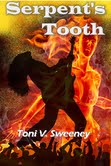
The latest book written under my own name is Serpent’s Tooth, released through Class Act Books.  It’s a contemporary retelling of the Faust legend, set in Hollywood and on a remote ranch in the sand hills of the Nebraska Panhandle.
The latest book by my pseudonym, Icy Snow Blackstone, is Brother Devil, a contemporary romance and the sequel to Bargain with Lucifer, both also published by Class Act Books.
What qualities do you need to be a successful writer?
This is going to sound callous and jaded, but…  A writer personally has to be talents and determined, but from all I’ve seen, the first and foremost thing someone needs to become a successful writer is… Luck!  We’ve had discussions about this on many writers loops of which I’m a member and the consensus is that no matter how good a writer you are, if your story is something the least different and not simply a cookie-cutter look-alike, if you aren’t lucky enough to find an editor to give your story a read instead of just sending it back, or an agent willing to take a chance, you’re dead in the water.  Publishers say they want something new and different but the truth is they’re afraid to take a chance on it when it comes along.  That’s why we have so many reruns on TV and remakes in the movies.  You need talent to write a good story, you need determination to continue to send it out, but you need luck to find that specific editor/agent who’s going to give you that Big Chance.
What is your working method?
Not the best in the world, I’m sure.  I procrastinate.  I’ll fight sitting down and typing that first word, so I’ve formulated a tried and true rule to speed me on my way:  if I have an idea for a story and it persists for more than three days, I must write it.  After that, it’s simple:  Go to computer.  Sit.  Type.
What is the single biggest mistake made by beginners to writing?
Writing a story and sending it off immediately.  Let it sit a few days.  Read it again.  Edit, reconstruct, change.  Let someone else read it.  Edit, reconstruct, change some more.  Maybe even a third or fourth time.  Then, send it in.
How did you come to write this particular book?
Serpent’s Tooth is an example of what I said in #3.  I like to say that it came to me in a dream, which is partly true.  I had a dream about an actor from the 1950’s and awoke with that memory, and a name.  Two days later, I was watching an old 1950 sci-fi movie on TV and this particular actor was in it and the name of one of the characters in the movie was the name I’d awakened with.  Well!  Had to take that as a sign, didn’t I?  So then I began to think about that name.  Three days later, the germ of the idea for Serpent’s Tooth had sprouted.
If you have a favourite character in your novel, why that particular one?
My favorite character isn’t from Serpent’s Tooth but is from a sci-fi series that I have.  Sinbad sh’en Singh in The Adventures of Sinbad.  So far, there have been three Sinbad stories published.  Sin is a smuggler, half-feline, half-human.  He’s rude, crude, loyal to a fault, and genetically pre-disposed to be a faithful husband and father once he takes a mate.  He’s got a wicked sense of humor and a temper, and he’s a handy person to have on your side in a crisis.  Besides all that, he’s drop-dead handsome and the heir to a shipping conglomerate.  Need I say more?  (And I’ve had several readers agree with me!)
How can people buy your books?
To what extent are grammar and spelling important to a writer?
This is one of my soap box subjects.  Unless a writer is portraying a character as illiterate or uneducated, I feel there is no excuse for misspelled or ungrammatical usage in a novel.  If these are present, the editor should catch them and if the editor doesn’t…shame on both of them!  I used to be an English teacher and I review novels on my website and I continually see both these mistakes in the stories I read.  The incorrect usage of “You and I” is the most common one, the second is the use of homonyms—words sounding alike but having different meanings.  One I’ve seen many times is “reign” in place of “rein.”  That grinding sound you hear is my teeth gritting.
How much revision of your MS do you do before you send it off?
I generally set a manuscript aside after completing it and let it get “cold.”  After a couple of weeks, when I’m no longer completely familiar with it as I’d be if I’d just finished it, I read it again, checking for typos, grammar, continuity.  I may rewrite some of it during that time.  I’ll do this two to four times before submitting it anywhere.  I have to make certain the manuscript is in the best shape I can make it because I have one publisher who never sends me any galleys.  He simply takes what I send him and gives it to the printer.
Where and when is your novel set and why did you make these specific choices?
Though there is a brief interlude on a Caribbean island, most of Serpent’s Tooth has two main settings—Hollywood and a ranch near the little town of Sonderlind in western Nebraska in the sand hills.  I wanted to show the contrast between the hero’s life before he is “discovered,” which to a certain extent explains why he does the things he does to get ahead, and then take him back to his home after he tries to abandon the “Dream Factory” to show the life he tries to resume.
To what extent do you think genre is useful in the publishing world?
I’m not certain it is useful but humans have a propensity—almost a need—to categorize everything, so they like to place their authors in categories, also.  It helps when you’re buying a book because you know which section to go to, but sometimes, it may keep a person from trying a certain type of book.  If you like a love story with snappy dialogue and a little comedy thrown in, and you see a novel classified as a suspense mystery, you’re not going to buy it, even though closer examination might reveal that it’s a suspense mystery with a heavy dose of comedic situations and give-and-take between hero and heroine.  By poking around in sections I usually don’t check out, I’ve accidentally discovers some gems like this which I would otherwise have disregarded because of their genre.
What are your writing habits?
I just sit down and write.  And keep on writing until I’m through telling the story.
How do you know where to begin any given story?
That’s a good one.  Usually that first idea tells me where.  If I start thinking of a battle scene, the story starts there, then may flashback to the why of the battle or the who.  Sometimes I think of the subject first or the characters or a specific scene.  Serpent’s Tooth starts off with the hero leaving Hollywood.  He stands on the porch of his million dollar beach bungalow, flips a coin and decides his fate.  Gets in his car and drives off into oblivion.  And the next scene is twenty-five years later.  That was the idea I had for the story:  What if a famous movie star disappears, and a quarter of a century later, a former fan meets him?  What would happen? 
What sort of displacement activities keep you from actually writing?
Homemaking.  Family.  Illness.  A new comic arriving in the mail.  Anything!  As I said, I’m a Procrastinator par excellence, though I usually manage to let only really serious problems keep me away from the computer now.  For example, while I was in the middle of preparing the answers to these questions, I had to drop everything and take care of my grandchildren while their parent was taken to the hospital.
Do you have support, either from family and friends or a writing group?
I’m a member of several writers’ loops (and some members are old school friends) and they give support.  After thirty years, my family is finally coming to accept the idea that perhaps I really am a writer after all. 
Is presentation of the MS as important as most agents and publishers suggest?
Another good question.  If by presentation, you don’t mean the actual form of the manuscript (neatness, correct spelling, formatting, etc.) but the pitch, blurb, or synopsis, my opinion on that is ambivalent.  It’s nice to have some idea of what the story’s about, so it can be channeled to the correct editor.  But… Some people have difficulty writing blurbs or synopses.  I’m one of them.  I tend to get facetious when trying to tell someone about a novel I’ve written and I usually have to rewrite it several times to weed out all the smart-ass remarks.  I’ve also read novels which I thoroughly enjoyed and also read their pitches and told myself I was glad I read the novel first because if I’d done it the other way around, I wouldn’t have bothered.  Sometimes I think it would be best if we could just put in our cover letters:  Here’s my novel.  It’s a mystery with supernatural overtones(or whatever).  And let it go at that.
How long does it normally take you to write a novel?
It depends on how enthusiastic I am about the subject (and if I have a deadline).  One novel took me two weeks to write and I had to do only one correction.  Another took me six months because I researched my subject and wanted the facts to be as meticulous and correct as possible.
What are your inspirations?
No more than any other writer…  To become a New York bestseller, have my novels bought by Hollywood and turned into blockbuster successes and then into a long-running Emmy-winning television series.  In other words, I want to be either JK Rowling or Stephenie Meyer!
If there’s a single aspect to writing that really frustrates you, what is it?
Losing a scene.  I get some of my best dialogue and descriptions just before I fall asleep and I always think to myself, “I’ve got to remember this,” but in the morning, they’re gone!  I wish there was a machine I could put on my head which would transcribe that great scene or that great conversation into my computer so in the morning it would be there, just waiting for me to insert it into the story.  Instead, I sit there and grit my teeth and mumble, “Why can’t I remember?”
Do you think writing is a natural gift or an acquired skill?
I think it’s natural and some people develop it better than others.  I’ve read some stories which had great potential but were written in such a way they were deadly boring.
What are you writing now?
At present, I’ve just finished a story called Runaway Brother which will be presented under Icy Snow Blackstone’s name.  And I’m starting on another, The Seventh Mothman, an alternate universe story set in a country similar to 17th-century France where soldiers fight a war using flying machines similar to the one invented by Leonardo da Vinci.
Is there any aspect of writing that you really enjoy?
I like to type.  I used to play the piano but during a particularly impecunious period, had to sell it to pay the rent, so I joke that since I don’t have the piano any more, typing is as close as I can come to using a keyboard and making music.  That’s the part I enjoy best.  Hitting those keys and seeing those words come out into a coherent, entertaining story.
Do you have a website or a blog that readers can visit?
Also:  videos of my novels may be seen at www.youtube.com, under the names “tvsweeney” e.g. http://www.youtube.com/watch?v=rjvoi3c6qRs and “icsnow14” e.g.  http://www.youtube.com/watch?v=7q-Z6ZY88EY.
Given unlimited resources, what would be your ideal writing environment?
Nothing ostentatious, just a simple, unpretentious mansion on my own private island off the coast where I could get up and write as long as I wished—or not, as the case may be—while my cook prepared me scrumptious meals with which she would tempt me away from the computer, and my assistant was there to field phone calls and run errands and buy groceries and sew buttons on my clothes and do all the other mundane little things I do to prevent myself from getting to work and w*r*i*t*i*n*g!  And every other weekend, I’d invite my writer friends out to have brainstorming sessions while we sat around the pool and drank gin-and-tonics or margaritas or mimosas or whatever and nibbled on h’or doerves (also prepared by the cook).
Where do you actually write?
In my living room, which is completely devoid of furniture except for my stereo (to supply the proper musical atmosphere) my reference books (lined up around the baseboards), several Marvel/DC Comics action figures, and my potted plants.
Codes for trailers:
Brother Devil:
Sinbad’s Last Voyage:
Embed:
Enhanced by Zemanta