Google+
This blog has moved. Please go over to this link to see my new website.
Showing posts with label People. Show all posts

Saturday, 19 April 2014

Courting Contentious Content.

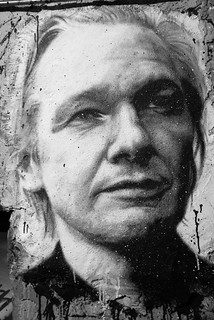
Julian Assange painted portrait - Wikileaks
Julian Assange painted portrait - Wikileaks (Photo credit: Abode of Chaos)
Are we subject to a type of censorship that curtails freedom of speech and prevents honest debate of issues of vital importance to civilisation?

In the West, we pride ourselves on our tolerance. This is especially the case in Europe and even more so in the UK, a land noted for its cultural diversity and its acceptance of the beliefs, customs and traditions of others. In order to protect those institutions, beliefs, sensibilities and creeds that differ from our home-grown varieties, government has implemented laws intended to prevent prejudice and insult. But, because of the undeniable threat of terrorism, they’ve also set in place watchdogs to detect activity that may be considered a threat to the State.

It’s my belief that the combined effect of these two factors is to stifle serious debate about religious bodies and/or traditions and customs.

Let me illustrate my point. If I wish to write a feature, or even a piece of fiction, highlighting perceived dangers presented by extremist groups, my first recourse is research, so I can get my facts right. So, I start to  investigate terms like Al-Qaeda, mujahadeen, taliban, islamist, the Army of God, Ku Klux Klan, etc. In common with most modern writers, my first port of call is the web. But wait: if I start typing such words into my search engine, am I going to immediately become a target for the anti-terrorist organisations that filter such words from our emails, texts and online searches? The danger certainly exists. And, I suspect, for many that’s sufficiently worrying to prevent them even taking the first steps.

In writing this piece, I wanted to ensure I spelt the words correctly (many of them have variant spellings, after all). For me, spelling is the prerogative of the SOED, a 2 volume version of the Oxford English Dictionary, which comes as a printed book of 20 volumes with 3 additional volumes to account for more recent words. My copy of the smaller book was printed in 2007. Al-Qaeda has been active since 1988, but doesn’t feature in the SOED. So I went to the web. I used the roundabout route of searching for Al-Jazeera, a respected broadcasting company, and was directed to the inimical Wikipedia. From there, I was more comfortable searching for the other terms.

But you see my point? Fear of the heavy-handed authorities descending on the house to remove my computer for forensic dissection, especially in light of the fate of such protectors of free speech as Edward Snowden and Julian Assange, makes me, and many others, wary of even investigating certain topics.

The other cause for concern in writing about such matters stems from the potential outcry and threats of death that may result. We have only to recall the cases of Salman Rushdie and his Satanic Verses (a book I actually read at the time, forming my own ideas about the real reason for the fatwa), and of Jyllands Posten, the Danish newspaper that published cartoons of the Islamic prophet, Mohammed. But it isn’t just Islam that poses such problems. There’s evidence that raising the subject of Christian, Budhist, Hindu or any other form of religious extremism can cause serious problems for those daring to criticise such organisations.

Even at a less heated level, the criticism of many religious groups, no matter where those beliefs originate, is invariably seen as an attack on faith and belief, so that simply questioning these issues often results in tirades of abuse, threats and even physical atttack.

Those of a rational turn of mind are effectively silenced by a system that was ostensibly put in place to protect the rights of minorities. It’s become very difficult to even venture an opinion on the validity of faith, the truth about religion, or the real value of certain rites and rituals unless the writer couches such ideas in the most delicate language.


Fear of causing offence, coupled with very real concerns over both official and extremist responses, has effectively neutered those who wish to hold open and honest debates about certain religious beliefs, traditions and customs. It takes a brave writer to raise these contentious issues. I suggest that the balance of the law has shifted dangerously toward censorship of those who employ reason and rationality and is now overprotective of those who wish to maintain what are often erroneous and frequently dangerous belief systems. This fear stifles the very necessary discussion of subjects that are often directly responsible for much injustice and harm in the world. What do you think?
Enhanced by Zemanta

Monday, 2 December 2013

My Writing Process - Blog Tour

Today is Blog Tour Day where authors answer questions about their writing process. Linda Acaster, novelist, writing tutor, and professional editor, posted last week, and I thank her for my invite. Check out her writing process here: 

As for my post: welcome. Can’t get many of you in here; the box room of a small bungalow isn’t big enough to house all my books, desk and equipment, never mind a group of interested visitors. One day I’ll get that house with a view over the sea, a large study and the antique desk I deserve. Until then, perhaps best if we continue to meet in the virtual world, or I might be accused of emulating the Black Hole of Calcutta!

1) What am I working on?

Last month, I took part in the NaNoWri Mo challenge (if you’re not familiar with it, have a look at the November posts for info). My project was the completion of the 1st draft of book 3 of the fantasy trilogy I’ve been writing for a while. Now I’m about to start the lengthy and involved process of editing that raw draft to make it into a piece of writing that people will want to read. It currently stands at around 195,000words. Whether it will grow or shrink depends on what I decide to exclude and how much further description I include. Whilst I’m doing a first draft, I tend to concentrate on story and leave the details of setting and atmosphere until I start the editing stage. I think that’s one of the reasons I enjoy editing almost as much as the initial creation. I am also working on other writing projects: a novel in embryonic form, still growing in the subconscious; short stories, and I’m exploring poetry as a way of expressing some of my emotional responses to injustice, beauty, environment and other issues that arouse my passions.

2) How does my work differ from others of its genre?

Genre? Did someone say ‘genre’? I’m all for rules, when essential, but the idea that a book can be somehow labelled in any sort of precise way is anathema to me. Yes. Works of art can be pigeon-holed as ‘portrait’, ‘landscape’, ‘abstract’, ‘figurative’, etc. But I don’t think anyone would then subdivide these identifying labels into ‘male portrait with feather in hat’, or ‘landscape painting including characters from a mythical scene taken from Greek legend’. Okay, I know I’m exaggerating a tiny weeny bit, but it seems to me that the simple labels, ‘Romance’, ‘Mystery’, ‘Thriller’, ‘Crime’, ‘Historical’, ‘Sci-fi’ and ‘Fantasy’ ought to be enough for most purposes. The rest is just an effort to encourage readers to restrict themselves to very narrow forms of storytelling. And that is hardly healthy for readers, is it?

So, my work differs inasmuch as I stray outside the normal boundaries set by those who wish to attempt to restrict me to a specific genre. Breaking Faith is a romance featuring an element of the thriller and the mystery novel. My current fantasy trilogy, A Seared Sky, is an epic fantasy tale involving a quest within an invented world and all that implies, but including elements of the thriller, romance, crime and philosophy. Does that answer the question?  

3) Why do I write what I do?

My inspirations are multitude. My interests are wide. I’m a storyteller at heart, so I want to spread my imagination’s offspring to as wide an audience as possible. I write because I’m compelled by some weird internal guiding entity to express myself in the written word. My mind is full of ideas, characters, thoughts and questions and, since they excite, delight and intrigue me, I hope I can share those emotions with readers as I marshal them onto the page in the form of stories.

4) How does your writing process work?
I’m one of those writers for whom plot is a cage, so I write by the seat of my pants. For short works, I sit down at the keyboard and write. Usually, a story emerges. Sometimes, that story is usable, after a bit of editorial work to smooth the raw edges. If it isn’t, I discard or completely re-write it. With longer works, I am visited by an idea that demands attention. This can be something as simple as a question that floats out of the ether at a particular time. For example, Breaking Faith arose from a simple question that entered my mind as I stared into the depths of a slightly sinister natural hole in the ground: ‘What if there was a woman’s body down there?’ I’ve no idea where this came from, or why. But it was the trigger for the story. I generally start with interesting characters I’ve devised in advance. Then I work out a very, very loose framework on which I can hang challenges for my characters to face. I generally know the end, but I never know the journey I will take to reach that destination. I think it’s this lack of pre-ordained form and structure that prevents me entering the lucrative world of crime writing. That requires an approach that involves the solving of puzzles and the laying of false and true evidence along a trail. And that is too much planning for the way I work.
The current trilogy came out my questioning why it is that religion, as a general rule, is so fixated on sex and nudity and why, since most worshippers seem to be generally good people, those in charge are so often very far from good. But, avoiding the urge to preach my own version of what should be believed, I’ve turned the themes into a story that moves through landscapes and entangles many disparate characters into its multiple threads to take the reader on a ride that I hope will make them gasp, sigh, laugh and cry. Emotion, after all, is what reading is all about, so it is also what writing must be all about, too.

Monday 9th December: a very different author explains her writing process: Lynne Constantine is co-author of Circle Dance, a novel about two Greek-American sisters thrust into life-changing circumstances. There should have been two more authors to continue this tour from here, but, well, authors can be dreadfully unreliable you know!
Lynne Constantine’s love of the written word began early. An avid Nancy Drew reader in elementary school – the highlight of her week was going to the store with her father and buying the next book in the series. When the day arrived that she was able to solve the mystery half way through – she reluctantly set them aside and moved on to other books. For as long as she can remember, she has been prodded to “get her nose out of the book” when vacationing with friends. Her love of mystery and suspense is as strong today as it was back then and she is a voracious reader of thrillers and suspense.
She wrote her first book, Circle Dance, with her sister Valerie. Circle Dance was a legacy of love fueled by the desire to pass on to their children the traditions and experiences unique to them as second generation Greek Americans. Lynne was raised in a close-knit family surrounded by extended family and “adopted” family through the Greek community. Both she and her sister wanted to leave a legacy for their children and future generations of a bygone era.
Lynne attended Hellenic College where she earned her undergraduate degree in Human Development. She went on to earn her masters degree in Business Administration at Johns Hopkins University. She has an extensive marketing background and over eighteen years of business experience. She left the corporate world in 2000 to pursue her writing full time. She has written for magazines and journals but her true passion is fiction.
A native of Baltimore, Maryland, Lynne relocated to the New York area with her husband and children. In addition to her writing, she is active in her church and local community. She serves on the board of her town’s Women’s League – a philanthropic organization dedicated to helping women and children. She is passionate about education, reading, health, and wellness. She enjoys traveling, spending time on the beach and talking walks with her family and their adorable golden retriever.
Lynne is currently finishing up her next novel – a thriller.
Enhanced by Zemanta