Google+
This blog has moved. Please go over to this link to see my new website.
Showing posts with label Islam. Show all posts

Monday, 20 October 2014

#BookADayUK; A Reader Event For October. Day 20

Reader of novels
The Reader of Novels by Antoine Wiertz. (Photo credit: Wikipedia)
Today's theme is: 'Favourite bookworm in literature'. As with so many of these ideas, I find myself spoilt for choice.

I was initially tempted to choose Alan Bennett's The Uncommon Reader, which gives a delightful picture of our own Queen as a reader. But it's a while since I read that one.

So, for this theme, I'll again select the most recent example I can recall. In this case I'll go for the eponymous The Reader in The Reader of Acheron, by Walter Rhein. This character is a mystery figure loathed by those in authority and more or less worshipped by others. The Reader lives in a world where books are banned and reading is a crime punishable by death.

So far our own culture has largely avoided such excess. But there are various sects in existence that would evoke such a rule if they had the power. The recently evolved Islamic State is such a threat - the only reading allowed by these extremists is the Qur'an, and, one suspects, a modified and censored version at that. As those of us who've witnessed and learned from history know, such censorship never results in lasting authoritarianism, since human beings are thirsty for knowledge by nature. The imposition of such restrictions is generally guided by a combination of fear and ignorance coupled with a desire to reduce the intellectual standards of everyone to the lowest possible in order to impose control. The leaders of such cultures invariably fall foul of their natural greed and hunger for power and fall as a result. Unfortunately many ordinary people suffer horribly along the way. Such is the nature of politics and the cult of leadership, however.

Saturday, 19 April 2014

Courting Contentious Content.

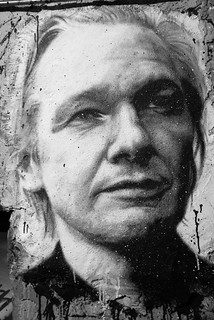
Julian Assange painted portrait - Wikileaks
Julian Assange painted portrait - Wikileaks (Photo credit: Abode of Chaos)
Are we subject to a type of censorship that curtails freedom of speech and prevents honest debate of issues of vital importance to civilisation?

In the West, we pride ourselves on our tolerance. This is especially the case in Europe and even more so in the UK, a land noted for its cultural diversity and its acceptance of the beliefs, customs and traditions of others. In order to protect those institutions, beliefs, sensibilities and creeds that differ from our home-grown varieties, government has implemented laws intended to prevent prejudice and insult. But, because of the undeniable threat of terrorism, they’ve also set in place watchdogs to detect activity that may be considered a threat to the State.

It’s my belief that the combined effect of these two factors is to stifle serious debate about religious bodies and/or traditions and customs.

Let me illustrate my point. If I wish to write a feature, or even a piece of fiction, highlighting perceived dangers presented by extremist groups, my first recourse is research, so I can get my facts right. So, I start to  investigate terms like Al-Qaeda, mujahadeen, taliban, islamist, the Army of God, Ku Klux Klan, etc. In common with most modern writers, my first port of call is the web. But wait: if I start typing such words into my search engine, am I going to immediately become a target for the anti-terrorist organisations that filter such words from our emails, texts and online searches? The danger certainly exists. And, I suspect, for many that’s sufficiently worrying to prevent them even taking the first steps.

In writing this piece, I wanted to ensure I spelt the words correctly (many of them have variant spellings, after all). For me, spelling is the prerogative of the SOED, a 2 volume version of the Oxford English Dictionary, which comes as a printed book of 20 volumes with 3 additional volumes to account for more recent words. My copy of the smaller book was printed in 2007. Al-Qaeda has been active since 1988, but doesn’t feature in the SOED. So I went to the web. I used the roundabout route of searching for Al-Jazeera, a respected broadcasting company, and was directed to the inimical Wikipedia. From there, I was more comfortable searching for the other terms.

But you see my point? Fear of the heavy-handed authorities descending on the house to remove my computer for forensic dissection, especially in light of the fate of such protectors of free speech as Edward Snowden and Julian Assange, makes me, and many others, wary of even investigating certain topics.

The other cause for concern in writing about such matters stems from the potential outcry and threats of death that may result. We have only to recall the cases of Salman Rushdie and his Satanic Verses (a book I actually read at the time, forming my own ideas about the real reason for the fatwa), and of Jyllands Posten, the Danish newspaper that published cartoons of the Islamic prophet, Mohammed. But it isn’t just Islam that poses such problems. There’s evidence that raising the subject of Christian, Budhist, Hindu or any other form of religious extremism can cause serious problems for those daring to criticise such organisations.

Even at a less heated level, the criticism of many religious groups, no matter where those beliefs originate, is invariably seen as an attack on faith and belief, so that simply questioning these issues often results in tirades of abuse, threats and even physical atttack.

Those of a rational turn of mind are effectively silenced by a system that was ostensibly put in place to protect the rights of minorities. It’s become very difficult to even venture an opinion on the validity of faith, the truth about religion, or the real value of certain rites and rituals unless the writer couches such ideas in the most delicate language.


Fear of causing offence, coupled with very real concerns over both official and extremist responses, has effectively neutered those who wish to hold open and honest debates about certain religious beliefs, traditions and customs. It takes a brave writer to raise these contentious issues. I suggest that the balance of the law has shifted dangerously toward censorship of those who employ reason and rationality and is now overprotective of those who wish to maintain what are often erroneous and frequently dangerous belief systems. This fear stifles the very necessary discussion of subjects that are often directly responsible for much injustice and harm in the world. What do you think?
Enhanced by Zemanta

Wednesday, 5 September 2012

‘You Always Get What You Deserve’: Another Blatant Bloody Lie?

Major religious groups
Major religious groups (Photo credit: Wikipedia)

Last week, I wrote a post titled, ‘Work Hard and You’ll Succeed: the Biggest Lie?’ Today, I want to explore, with you, another blatant lie.

We’re told, frequently and with much volume, that we get what we deserve. I think this is an attempt by some to encourage the first lie in the minds of those as yet unschooled in reality. It’s also, of course, a saying completely founded in the religious concepts that underpin the Abrahamic religions of Judaism, Christianity and Islam. Their sacred texts explicitly tell followers that their rewards will follow from their actions.

But is it true? Do we, or indeed anyone else, get what we deserve?

Does the innocent child deserve to starve to death by an accident of geographical location? Does the winner of millions on a lottery actually deserve this piece of great fortune? Does the drug baron deserve a life of luxury and ease at the expense of those who suffer and die through his activities? Does the Chairman of a business empire deserve the exorbitant income he awards himself?

There are millions more examples of people receiving things they don’t deserve. In fact, I’d say that more people get what they don’t deserve than get what they do. In fact, I can think of very few people I know who have actually been given what they deserved.

I hear those of a religious mind-set yelling that we get our real rewards in heaven, paradise, or whatever other presumed afterlife they believe in. But such destinations are pure speculation. There’s no way of knowing whether they even exist except by taking that final step to enter them. By then it’s too late to discover that all your effort, good, bad or indifferent, has, in fact, resulted in you reaching the same end as all living things on death: i.e. the recycling of your components. If there is an afterlife, and it’s something we can never know since no one has ever returned with a reliable report, then surely the creator of such a splendid reward system would want us to be certain?

There’s little point in any deity permitting us to have doubts about such things, since these are supposed to be the very motivations that make us do the bidding of that deity. Yet the tales that are sold by the various religions are so different and contradictory. Surely any deity worthy of the name would at least remove the elements of doubt and dispute and provide a means whereby we could actually experience such rich rewards? Nothing else makes sense.

Of course, I understand that many are now yelling at me that I have to have faith. I’m sorry, but faith in something for which there is no evidence, let alone proof, strikes me as little short of imbecility. Does anybody seriously believe in fairies, a flat Earth, that Mars is inhabited by little green men or any one of thousands of such tales? We’ve dismissed the myths of ancient times, the tales of Zeus and his clan, Odin and his cohorts, Ra and his comrades, as early attempts to explain what was then inexplicable. A similar fate is already undermining current deities as reason and rational thought supersede superstition and folklore.

It isn’t that I deny absolutely the possibility of religious dogma having a basis in truth; it’s that I see such division in interpretation and I don’t believe it can be proven. The very existence of God is a matter we, as humans, will probably never be able to determine one way or another. If such a power actually exists, it must, by its very nature, be so far outside our experience and knowledge as to be incomprehensible. Any attempt to define such a power must inevitably diminish any reality it might possess. So, I take the only sane and reasonable attitude possible: I can’t know, which is why I style myself agnostic.

I’d like to say, ‘religious considerations aside’ and give examples of my argument on that basis but, unfortunately, the world in which we live is so deeply imbued in religious foundation that it’s impossible to escape its influence.  

But I will set a challenge.

Can anyone, without citing religious concepts, please provide more examples of people actually getting what they deserve than those who most clearly do not deserve what they get? I’m open-minded enough to be converted to a different view, if I can be given evidence that ‘just deserts’ is something more than a meaningless lie disguised as truth by those with vested interest in maintaining the status quo. Go ahead; change my mind.

Enhanced by Zemanta

Monday, 23 April 2012

Ancient Symbol Worship, by Westropp & Wake, Reviewed.


This is a modern version, not the one I read,
and may contain more information.
Subtitled, Influence of the Phallic Idea in the Religions of Antiquity, this book came my way as one of a small collection given me by my brother when he was sorting stuff out prior to a move to a new house with less space. He used to work in a book store and has a number of fairly unusual titles in his library. This was one he hadn't got round to reading, but the title and subtitle intrigued me.
This small volume, first published in 1875, sets out to examine the influence of the phallic, or male, component in ancient religion. But it takes this idea into modern religion, suggesting that the ancient beliefs, customs and rites have been absorbed and altered by modern celebrants in forms recognisable to those who wish to see.
There's some Latin, untranslated, and a colossal amount of reference to often obscure issues that were, presumably, well known to scholars of the time. But, for a modern reader, these references remain unexplained and would require a great deal of research to track down and more time than most people have these days for such esoteric issues. Whilst those who already have a deep interest in the symbolism employed in worship will undoubtedly understand the references, the rest of us will remain confused. However, much is clarified by context and, having an interest in many subjects, I was able to apprehend a lot of what the authors allude to, though other items consisted of listings of arcane information lacking any hook on which I could hang it.
That the book was written in the Victorian era, with its dreadful hypocrisy regarding all matters sexual, shows in the circumspection that rules the writing. Where, today, we would name the penis, testes, vulva and breasts without fear or embarrassment, the authors are constrained by the customs of their times and therefore have to express much of their ides in convoluted form or by the use of metaphor, much of which is couched in classical references that will be lost on many modern readers.
A second factor in preventing the authors expressing themselves frankly and with clarity is their sensitivity to the feelings of those who profess a faith. Again, today, such sensitivities can be dealt with more openly, showing respect rather than reverence. In the time the book was published however, such frankness, leading to real clarity, would have probably prevented publication.
So, an already difficult subject is made more obscure for reasons that are no longer valid. As the ideas and information explored are still valid and in need of wider publicity, I'd love to see some modern scholar produce a similar volume for today's reader with a much clearer text. Perhaps it's been done and I simply haven't come across the book.
As it is, this book can really only be read by the general reader as a partial glimpse into the subject. Those with a good knowledge of ancient history, religion and symbolism will glean a good deal more, however. Many of the ideas expressed as certainties have, of course, been placed in doubt or even refuted by more recent discoveries of texts from such sources as the Dead Sea Scrolls and other ancient records and parchments retrieved from many different sources by modern archaeologists.
Members of religious organisations will no doubt be outraged by suggestions that the roots of their current dogma and rites grew from ancient forms of worship that were definitely based in reproduction and sexuality, often in very explicit acts of devotion, sacrifice and propitiation to the early deities. But a dispassionate and disinterested examination of the rites, customs and beliefs of such groups quickly establishes their ancient links with many practices and myths no longer considered either right or sensible.
A demanding read, not for the faint-hearted.

Enhanced by Zemanta

Thursday, 22 December 2011

Are Traditions and Customs Really Worth Keeping?

Map showing the prevalence of Abrahamic (pink)...
Image via Wikipedia

Such a question will inevitably promote discussion, debate and perhaps some outrage at the mere suggestion. But, before I say my piece and invite your comments and contributions, perhaps I should define the terms, so that we all know what we're discussing:

Tradition is defined as belief, custom, etc., passed along from generation to generation by non-written means; those beliefs, collectively; established and accepted practice or custom; principles held and generally followed by a branch of the arts, adopted from and handed down through experience and practice; doctrine regarded as possessing divine authority with no written evidence; the spoken messages of Christ and the apostles, passed on by word of mouth through generations; words and actions of Muhammad not incorporated in the Qur'an but transmitted orally before being recorded.

Custom is held to be habitual or common practice; a usual way of behaving; usage, fashion or habit; established usage which, because it has continued for a long time, has taken on the force of a law or right.

The world is overrun with examples of custom and tradition; many are religious in origin, others stem from early ignorance of certain realities, yet others have developed as responses to threats from outside the boundaries set by those groups practicing them. We, mostly, take such things for granted and promote their continuance without much thought for either their origins or their real social effects. So, is any harm done by such continuation? Is it possible that some customs and traditions are not good things?

Let's look at some of the most popular and widespread. Christmas is almost on us. This celebration of the birth of a notable prophet, a figure responsible for the formation of one of the world's great religions, is touted as a demonstration of love, generosity and general goodwill to all men. Peace and harmony are tied into the very meaning of this tradition. So, can it be seen in any way as other than a good thing?
Well, the timing of the ceremony, as most people are aware, is way off if it is an actual commemoration of the prophet's birth, since it's believed he was actually born in the summer months. So, the first aspect I question is the lack of honesty in the dating. Of course, it's well known that the old Pagan ceremony that was traditionally held at the mid-winter point long before Christianity came on the scene, was hijacked by the church in order to allow the celebrants to more readily accept the new religion. So, the timing of the celebration immediately takes on the nature of a con-trick, something devised to make more palatable a set of beliefs that were at variance with those of the people it was invented to convert. Such trickery is hardly the way to promote a doctrine that purports to have truth at its heart, I think.

In Islam, the position of the woman is traditionally that of subordinate; traditionally, though not according to the holy book of the faith. The Qur'an states quite clearly that men and women are of equal value and worth. However, the later commentaries, supposedly recorded as the words and actions of the prophet, Mohammed, are open to interpretation that women are rightly considered subordinate to men. Such downgrading of the gender would fit in well with the beliefs of a man brought up in a brothel, of course. And they fit in well with the traditions of a culture which has regarded women as goods and chattels since the beginning of recorded history. One has only to look at the ethnic communities where Islam first developed and note the custom of awarding their leaders numerous wives and concubines to see that the male attitude to the position of women in such societies was less than generous. The Islamic belief that men who are martyred in the cause (whatever that cause may be determined to be) will be rewarded by an eternity in paradise served by anything up to 72 virgin maidens, indicates that women are seen as the playthings and servants of men. No such reward awaits those women who sacrifice themselves to the cause, however. And, clearly, the fate of the 72 virgin maidens is hardly something to be relished. So, I question the custom and tradition held so dear by the sects of this religion in this regard.

The tradition of regarding pork as unclean, elevated to quasi-legal status in certain communities, stems from early observations that pig meat can cause many illnesses. Of course, with modern farming techniques and the knowledge that such meat must be well-cooked to avoid the problems, the risk has been reduced to similar proportions as those of eating any other meat. But it's noteworthy that the ban on eating pork remains. It's been enshrined into the culture of those communities and is upheld as something positive simply on the grounds that it is customary, traditional. Another example of the religious authorities being unwilling to accept that the basis for their laws might actually be questionable.

In certain parts of the Middle East and Africa it's customary for young women to be circumcised. This, of course, is a euphemism for brutal damage to the victims genitalia. The custom, carried out without anaesthetic, involves the removal of the clitoris and, frequently, the stitching together of the labia minor to prevent penetration. This tradition, often continued and encouraged by the mothers of the victims, is designed entirely to serve the men of the communities. The thought behind it is that women will not 'stray' if there is little pleasure for them in the sex act. The victim's stitched labia are cut open once the woman marries so that her husband may penetrate her, regardless of any pain she may suffer. This custom is defended by those within the community on the grounds that it is a long held tradition. And, of course, it the combination of the status of tradition with subliminal brain-washing that allows the mothers to continue to perpetrate this violence on their daughters.

I could go on. There are many examples of similar customs and traditions: wife burning at the death of a husband, the disfiguring of women who refuse a suitor's advances, the killing of daughters who 'dishonour' a family by refusing to marry the chosen husband. All, of course, with serious consequences for those affected. There are also lesser customs and traditions that do more subtle harm. The custom of the Abrahamic religions in their elevation of commerce to the level of some sort of divinely inspired activity, for example, has allowed business to proceed without any real concern about its effects on those who are less well off. And the custom of giving at Christmas, whilst producing some very real generosity of spirit as well as actual charity, has caused many millions to put themselves into debt in order to avoid being thought either mean or too poor to give as much as their neighbours.

So, to return to my question: is it possible that some customs and traditions are not good things? I think you'll know my answer, but I'm interested to learn yours. Are you willing to get involved in the discussion here? It's easy enough to make a comment below.

Enhanced by Zemanta

Tuesday, 28 June 2011

Stuart's Daily Word Spot: Sa


Sa, as the word for today, represents another of my occasional dives into the complex and diverse world of deities and gods.
Sa one of a pair of underground or chthonic creator gods from eastern Guinea on the west coast of Africa. He lived in the primeval swamps in the area before any other living things appeared on Earth; before even the sky or light existed. His daughter eloped with his partner deity, bearing 14 children of different colours and speaking different languages. Sa gave these children the tools to survive in the world.
As with so many creation stories, there are the seeds here of an attempt by primitives to explain what must have been inexplicable at the time the myth was born. In this respect, of course, it bears a striking resemblance to the story of creation told in the Bible and borrowed from Judaism by both the Christian and Muslim religions.

Sunday, 1 May 2011

Stuart’s Daily Word Spot: Qaynan

Zanzibari muslim ca 1880Image via Wikipedia
Qaynan was just one of the many gods worshipped by the people who ultimately became the first Muslims. This one was a god of smithies, but there were a great many more.

Unrelated fact: 1 May 1961 - First betting shops opened in UK.

Enhanced by Zemanta

Saturday, 30 April 2011

Stuart’s Daily Word Spot: Paraprosdokian

1970s Surfer print fiberglass skateboardImage via Wikipedia
Paraprosdokian: noun - a figure of speech in which the latter part of a sentence or phrase is surprising or unexpected in a way that causes the reader to reinterpret the first part. This time, I’ll give some examples, rather than use the word in an illustrative sentence:

‘Denis prayed fervently for a skateboard, knowing prayer doesn’t actually work like that. In the end, he lifted a skateboard from a small child and prayed for forgiveness instead.’

‘Attending a mosque won’t make you a Muslim any more than taking a woman against her will makes you a lover.’

‘Why do you believe every word the pastor tells you, no matter how unlikely, but always touch the paint to check, regardless of the sign telling you it’s wet?’

‘Knowledge is knowing that pepper is a hot spice; wisdom is not using it to warm up the custard.’


Enhanced by Zemanta

Monday, 19 July 2010

Interview with Yorkshire author Stuart Aken


A short while ago, one of my writing group offered me an interview on her website. I was so taken with this idea that I have decided to adopt it for my own blog. I shall issue an open invitation in the next post, giving details of how authors can participate. Those who contact me will be featured on a first come first served basis. Author interviews are a source of interest for both readers and writers, and it is that group of people I am trying to reach here. As a taster for the series, I am featuring the interview Avril did with me, reproduced below, with Avril's permission.

Interview with Yorkshire author Stuart Aken.


Farmland near Wharfe, Yorkshire Dales National...Stuart Aken is a talented man in all senses of the word. He has overcome reverses that would flatten most people. Happily married for many years, he has found success in various spheres of the working world. His abiding passion, though, is writing, although he would probably call it a compulsion. Successful crime writer Penny Grubb says of Aken's writing that it has a magic quality achieved by few. High praise indeed.

You can find out much more about Stuart on his website:

http://http://www.stuartaken.co.uk

AFT: Breaking Faith is set in the Yorkshire Dales during the 1976 heat wave. What prompted your choice of location and period?

SA: In the words of Max Boyce, ‘I was there.’ Believe it or not, the initial inspiration for the book came to me on a visit to the Buttertubs, in the Dales, at that time. I looked into the depths and wondered how I would feel if I discovered a body down there. From that simple question, the rest of the book eventually flowed. The Yorkshire Dales is acknowledged for its exceptional landscapes and it’s a place I know well. The heat wave was a useful backdrop to a story which needed a credible climate in which the action could take place: few would enjoy being naked in the area’s usual weather conditions. 1976 was long before the era of the ubiquitous mobile phone, an item that would have altered the tone of the novel. It was a time when fashion and the ideas of youth were still fresh enough to encourage experimentation. Cameras used film and a good printing assistant was still necessary for any professional photographer.


AFT: Some might consider there is a strong erotic edge to the novel; is this a marketing ploy or does it serve another purpose?

SA: I’m fascinated by our modern attitude to nudity and the body in particular. As a culture, we are fast approaching the extreme level of hypocrisy that has long existed in the USA. It’s the largest producer and user of pornography but has a puritanical attitude bordering on insanity. Our world is dominated by double standards imposed by Judo-Christian ethics that pretend to celebrate creation whilst denigrating the means of creation in humans. The Islamic world has, of course, taken this duplicity to even greater extremes. The word, ‘love’ is misused to the extent it has no real meaning to many people. Yet, for those who have experienced it, love is so superior to mere sex that it almost defies definition. I wanted Faith to be subject to the prevalent attitudes regarding sex but to actually experience love. She is forced to witness the destructive forces that can accompany sex whilst appreciating the positive force of love; her choice of honesty over deception is what the book is about.

AFT: What made you choose an innocent as your eponymous lead character?

SA: We live in a world where innocence is damaged almost from birth. Goodness, truth and honesty are qualities we pretend to value whilst we indulge in behaviour that destroys these things. Faith was an innocent in the material sense but damaged by her father’s hypocritical insistence on adherence to an extreme version of Christianity. This is only hinted at in the novel, as I wanted his cult to represent all organised religion. The effect of organised religion, as opposed to spirituality, is to distort truth and turn it into a commodity that can be exploited and used as a power base for the unworthy to govern those too lazy to think for themselves. Children are effectively brainwashed from infancy into believing the set of myths and untruths that their parents and peers were brought up with. It is such an insidious force in society that most people are not even aware of its continuing influence on their lives. The very language we use is riddled with religious imagery and ideas, so that it is impossible to escape its influence. I wanted to employ an innocent so that she could rise above much of the hidden influence and expose it, but I had to make sure I didn’t overdo this and proselytise.

AFT: One can’t help but be aware that photography plays a huge part in the story, almost like another character, in fact. Or is it perhaps an allegory?

SA: I was a professional photographer for some time, and worked with models during my early career. Photography is an excellent recording medium that is also capable of functioning as an art form. It has an unfortunate side effect in its representation of reality in two dimensions, as this can affect the photographer, making him unaware of depth in other aspects of life. It is this superficiality that Faith makes clear to Leigh, of course. But there is also a sense in which the mistaken 'belief' of the photographer in the purity of his images, echoes the blind faith that religious people place in their particular doctrines, ignoring the fact that theirs is but one interpretation amongst many when it comes to defining both God and true morality. Organised religion, by its very nature, cannot help but be superficial, since it reduces enormous questions to a set of dogmas that barely address the real issues, let alone provide answers. Photography is, of course, also considered ‘glamorous’ and is therefore a fitting occupation for the necessary alpha male of the romance.

AFT: You have had a number of short stories published as well as a radio play on BBC Radio 4. What advice would you give to new writers?

SA: Write only if you are compelled to. Writing is something that almost every literate person can engage in but good writing, writing with something worthwhile to say, even writing that is simply entertaining, requires a degree of dedication bordering on the obsessive. There are many people who write for fun but then want to be published. Such writing is fine for personal fulfilment but it’s self-indulgent to impose it on the reading public and it clogs up the works for those who have real talent. If you must write, and I mean that literally, then do so but ensure that everything you write is the best it can possibly be.

AFT: What are you currently writing?

SA: I’m working on the first volume of a three part fantasy series. It’s an adventure and a quest set in an invented world and centres on, surprise, surprise, organised religion and its corrupting power. I’d like to entertain those with open minds whilst inciting the dogmatic into fits of apoplexy. And, yes, I intend to make it a good read.


Enhanced by Zemanta