Google+
This blog has moved. Please go over to this link to see my new website.
Showing posts with label Language. Show all posts

Saturday, 27 April 2013

The Last Word, by Ben MacIntyre, Reviewed.


The Last Word, subtitled ‘Tales from the Tip of the Mother Tongue’, is a collection from the writings of Ben
MacIntyre, a columnist writing about books for The Times.

If you’ve ever pondered the mysteries of military euphemisms, considered the last words of heroes, wondered at the geek-speak of the computer nerd, laughed at inadvertently skewed translations or been curious about almost anything else to do with words, there’s something here for you.

The author has collected, listened to, been sent by readers, and purloined from reviewers many examples of neologisms, epitaphs, mistranslations, vanished words, malapropisms and many other interesting, amusing or downright odd usages of the words we use (or not) in everyday language.

Split into short sections, so that the book can be picked up for even a couple of minutes at a time, the material is varied in content but not in quality. All of the 300 pages are presented in a style easy to read, well-written, and generally tinged with humour. There are a few exceptions, when serious issues are up for discussion. The odd personal anecdote sneaks in amongst the more general observations and tales and brings a more intimate feel to the book.

I was entertained, educated, startled, intrigued, surprised, moved, and made to laugh out loud as I read the different pieces. If you have any interest in language at all, and, as a reader and/or writer, you clearly must have, you’ll find this a worthwhile addition to your library. Not only do I heartily recommend the book, I place it on that short and vital list of those volumes I’d save from the burning house or take with me to that famous desert island.

Enhanced by Zemanta

Thursday, 1 November 2012

Useful Tips on Writing Good English (Especially for Students)

Testtakingstudent
Testtakingstudent (Photo credit: Wikipedia)
I was doing some research for my daughter, who is at university, and, by pure chance, came across this website, which, although intended for university students, is open to the public. If you've ever had questions relating to correct English usage, this is a really useful tool, with easy to follow guides on a number of technical, grammatical and associated issues. Certain worth a visit.
http://www2.hull.ac.uk/student/studyadvice/studyskillsresources/studyguides.aspx

Good luck with your writing.
Enhanced by Zemanta

Thursday, 13 October 2011

Stuart's Daily Word Spot: Verbal or oral?

Pompeii oral sex depictionImage via Wikipedia
Verbal or oral?
Verbal: adjective - of someone - dealing with or using words, especially in contrast to things or realities; using a lot of words; talkative, verbose; articulate; of or pertaining to words; consisting or composed of words; of the nature of a word; in Grammar -  derived from a verb, of the nature of a verb.

Oral: adjective - performed with or by the mouth as the organ of eating and drinking; in Medication - taken by mouth; involving such administration; uttered or communicated in spoken words; conducted by word of mouth; spoken, verbal; delivered or transmitted verbally; of or pertaining to the mouth, as a body part; sexual activity where the genitals of one partner are stimulated by the mouth of the other, cunnilingus and fellatio; in Psychoanalysis – relating to a supposed stage of infantile psychosexual development, where the mouth is the main focus of energy and feeling.

As you can see, Verbal can refer to both written and spoken communication, but oral is more useful for distinguishing the spoken word from the written.

'The press secretary produced a verbal statement from the politician, in which he attempted to explain, in as many polysyllabic words as he could devise, the steps that had led to his fraudulent expenses claims.'

'Standing on the steps of the cathedral, the bishop made an oral declaration of his intent to root out child abuse by priests, which had been endemic in the parish prior to his appointment.'

'Stanley and Joyce were so committed to oral sex that they rarely achieved orgasm any other way and therefore found it impossible to become parents.' 

Enhanced by Zemanta

Sunday, 10 July 2011

Stuart's Daily Word Spot: Different from or different than


Different from or different than: In British English, and its cousins, you can’t follow ‘different’ with ‘than’. Although people use both ‘to’ and ‘from’, the preferred use is ‘from’. Fowler, ‘English Usage’ doesn’t even mention ‘different than’, probably because he wasn’t aware of it at the time: it is definitely US usage. And, here in Britain, it’s generally considered unacceptable. Things are logically different from one another, and using ‘than’ after ‘different’ is regarded as a grammatical blunder.

‘The bikini Elle's wearing is different from the one worn by Corinne, but I think that Elle’s is better than hers.’

Picture: the North Sea at Bridlington, East Yorkshire.

Wednesday, 1 June 2011

Stuart's Daily Word Spot: Bête noire

The Hound of the BaskervillesImage via Wikipedia
Bête noire: noun phrase – French; literally means ‘black beast’; bane of a person’s life; someone or something insufferable, an object causing aversion.

‘Rather appropriately, the hound in ‘The Hound of the Baskervilles’ could be described as the ‘bête noire’ of the piece.’

‘Along with many authors of renown, Hemingway found his bête noire was excessive drinking.’


1 June 1946 – TV licences were first introduced into the UK. For those who don’t know, the British Broadcasting Corporation isn’t allowed to use advertising to raise revenue (long may it remain so) and has to rely on the income accrued by issuing a licence for viewers and listeners to its services. This has long been a bone of contention for those who believe in the supremacy of the free market. But, for those of us who prefer not to have our entertainment, education and information constantly interrupted by banal pleas for our money, the licence system allows the BBC to provide a broadcasting service second to none, which remains respected the World over.

Enhanced by Zemanta

Thursday, 26 May 2011

Stuart's Daily Word Spot: Alright or all right

Jennifer Lopez at ISC Miami.Image via Wikipedia
Alright is considered as substandard.
The correct term is ‘all right.’: adverbial, adjectival, & noun phrase - as desired; duly; satisfactorily; certainly, indeed; In good condition; safe and sound; satisfactory, acceptable; An interjection of acquiescence, assent, or acknowledgement; a noun phrase, as in ‘a bit of all right’ - someone or something very pleasing. Although ‘alright’ is often considered wrong, analogous forms such as ‘already’, ‘although’, etc. have long been accepted. Just one more example of the irregular nature of the English language.

‘Tell you, what, Jimmy; that J-Lo’s a bit of all right.’

‘All right, all right! Let’s have a little calm here, please; it’s only a small fire, not a conflagration about to consume you all.’

Enhanced by Zemanta

Wednesday, 18 May 2011

Stuart's Daily Word Spot: Each other or one another?


In formal writing, when more than two things are being discussed, ‘one another’ is often preferred. But, in fact, according to Fowler's Modern English Usage, either phrase can be used. They are interchangeable and the choice becomes one of personal taste.

‘Penny and Prudence were always arguing, getting at each other by any means possible so that their friendship was constantly in doubt.’

‘Fred and Josh were the best of friends and would lend one another any gadget or item of clothing without hesitation.’

The picture is nothing to do with the words. But my widget failed to identify anything relevant, so I thought |I'd give you this picture of Yorkshire instead.

Enhanced by Zemanta

Sunday, 1 May 2011

Stuart’s Daily Word Spot: Qaynan

Zanzibari muslim ca 1880Image via Wikipedia
Qaynan was just one of the many gods worshipped by the people who ultimately became the first Muslims. This one was a god of smithies, but there were a great many more.

Unrelated fact: 1 May 1961 - First betting shops opened in UK.

Enhanced by Zemanta

Thursday, 28 April 2011

Stuart’s Daily Word Spot: Nacho

beef, beans, and cheese on a bed of tortilla chipsImage via Wikipedia
Nacho: noun - snack or appetizer made of fried tortilla chips covered in melted cheese, peppers and spices.

‘Jennifer was an absolute glutton when it came to nachos, devouring all that came her way and ignoring the effects of the spices on her delicate stomach.’

Enhanced by Zemanta

Tuesday, 12 April 2011

Stuart’s Daily Word Spot: Babu

East Indian coolies on a Trinidad cacao estate...Image via Wikipedia
Babu: noun - a Hindu title of respect, gentleman; Indian clerk or official who can write English; a derogatory term for an Indian who’d had some English education.

‘That there Debdan is a real babu, you know; a proper gentleman worthy of real respect, not like those upstart coolies who think they know everything just because they’ve been to an English school.’

Enhanced by Zemanta

Friday, 18 March 2011

Edit Going Well

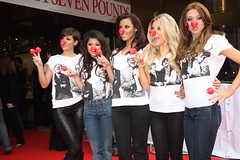
Red Nose Day - Press LaunchImage by Red Nose Day 2009 via FlickrAn interesting and, in some ways, productive day. Chapter 4 of the new book 2 is now done, with some small additions to reflect its new position in the scheme of things. Book 1 is now up to chapter 16 with the alterations and corrections to the text.

The buddleia is trimmed back, the hedge bordering the south western side of the garden is tamed. And both will now give better displays when spring comes into its own. Two of the four borders are now free of their weeds and a couple of plants that were in unsuitable spots have been transplanted to better locations.

Tonight, in the UK, is Red Nose Day, a celebration of comedy on the TV, run to raise money for charitable organisations here and in Africa. Its a biennial event, alternating with Children In Need, which does the same sort of thing exclusively for children's charities. For me, these are two nights when I must participate and watch. There is  mix of pathos and comedy and a great deal of money is generally raised for good causes, so I shall sign off now and spend the evening in front of the box with my family.
Enhanced by Zemanta

Wednesday, 16 March 2011

Stuart's Daily Word Spot: Abate

The Great Mississippi Flood of 1927, U.S. Rout...Image via Wikipedia
Abate: verb - in law, make a nuisance or action stop; become null and void; bring down a person physically, socially, or mentally; depress, humble; fall; curtail, deprive of; reduce in size, amount, or value; lessen in force or intensity; moderate, diminish; take away part of something, deduct; beat down.

'I shall abate Master Cromwell and make him eat his words for the damage he has done to our land and monarchy.'

'Flood defences that are better constructed, might abate the waters next time we have torrential rains and save the town from a repeat of the destruction caused by the last deluge.'

Enhanced by Zemanta

Monday, 14 March 2011

Stuart's Daily Word Spot: Yada-yada

Brad Pitt signs autographs for troops during h...Image via Wikipedia
Yada-yada: noun  tedious, trivial or meaningless talk, chatter.

'Caroline comes up to me with that expression she wears when she thinks I'm doing something I shouldn't and gives me this long lecture on how I should be more like Brad Pitt; yada-yada.'

Enhanced by Zemanta

Sunday, 13 March 2011

Stuart's Daily Word Spot: Xanthippe

An Emblem book print portraying Xanthippe empt...Image via Wikipedia
Xanthippe: noun - The wife of Socrates, a bad-tempered or scolding wife or woman.

'When George lazily referred to his wife as Xanthippe, she picked up the frying pan and demonstrated the accuracy of his description by beating him over the head with it, whilst yelling imprecations about his manhood at him.'

Enhanced by Zemanta

Saturday, 12 March 2011

Stuart's Daily Word Spot: Wad

Banknotes of 5000 denomination in different cu...Image via Wikipedia
Wad: noun - a small bundle of soft, loose, material used as a plug, pad, or to keep things apart; plug of paper or cloth to keep the powder and shot in position in a gun; something rolled tightly, a bankroll; a lot of something, especially money; a mass, a heap; bun, cake, sandwich: verb - place a wad in a gun, plug a hole with a wad; to force soft, or fibrous material into a small space; to form into a wad.

'The kidnapper forced open her mouth and stuffed a wad of bank notes in to keep her silent.'

'Jane formed a plug from discarded clothing and used it to wad the hole in the dyke, thereby saving the city from a disastrous flood.'

Enhanced by Zemanta

Wednesday, 9 March 2011

Stuart's Daily Word Spot: Tabard

The tabard of an English pursuivant of armsImage via Wikipedia
Tabard: noun -  A coarse outer garment worn by common folk, monks and foot soldiers; a short open surcoat worn by a knight over his armour; a jerkin worn by a herald; woman's sleeveless jerkin or loose overgarment.

'She wore a highly decorated tabard in prime colours over her small white bikini, though it did little to hide her figure, as was her intention.'

'In my adult fantasy, currently undergoing the editing process, I've used the tabard as a universal and non-sexist garment for one of the societies depicted in the story, because it's an essential part of their religion that they're able to remove their covering quickly when at prayer.'

Enhanced by Zemanta

Saturday, 5 March 2011

Stuart's Daily Word Spot: Pacesetter

Elvis mugshot2Image via Wikipedia
Pacesetter: noun - someone who sets a pace, trend, or fashion; the leader in a particular field.

'Elvis was considered by some as a pacesetter, leading trends in fashion as well as music and dance styles.'

Enhanced by Zemanta

Friday, 4 March 2011

Stuart's Daily Word Spot: Oak

Pedunculate Oak foliage and acorns - photo en:...Image via Wikipedia
Oak: noun – A tree of the genus Quercus, with acorns and lobed leaves; common oak, English oak, pedunculate oak, sessile oak; timber of the oak; wooden outer door, usu. of university rooms; in some Bible translations, the terebinth tree; leaves of the tree worn as a wreath; a shade of brown; flavour or aroma given to wine from oak casks; something made of the wood.

'It's said that the English oak, used as timber for ships of the fleet, made England into the mighty nation it was in days of empire; whether that was a good or a bad thing, depends on your point of view, of course.'

Enhanced by Zemanta

Thursday, 3 March 2011

Stuart's Daily Word Spot: Nabob

Map of Indian subcontinent with Mughal Empire ...Image via Wikipedia
Nabob: noun - certain Muslim officials acting as deputy governors of provinces in the Mughal Empire; a governor of an Indian town or district; someone of great wealth or high rank, particularly one returning from India with a large fortune.

'They all referred to Brian as "the nabob", after he returned from unknown lands with more money than he could possibly account for and his hint that his ill-gotten gains had somehow been acquired on the sub-continent.' 

Enhanced by Zemanta

Wednesday, 2 March 2011

Stuart's Daily Word Spot: Mac

Map of Scottish clansImage via Wikipedia
Mac: noun -  also as Mc- the patronymic prefix in many Scottish & Irish names; someone whose name contains the prefix Mac-; a Scotsman, a familiar form of address to an unknown male; the trade name for a specific type of computer.

'There was some unintended irony in the way MacDonald called every man he met, "Mac", without ever realising it was an oblique reference to his own surname.'

Enhanced by Zemanta