Google+
This blog has moved. Please go over to this link to see my new website.
Showing posts with label BBC. Show all posts

Friday, 20 September 2013

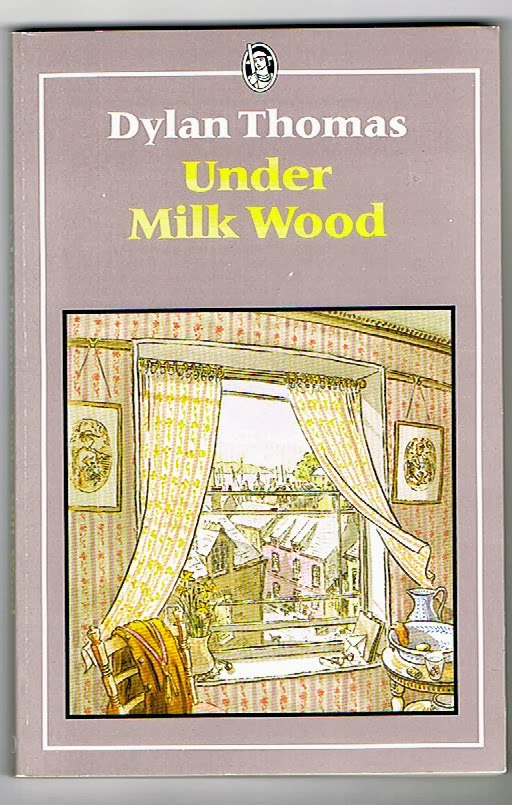
Under Milk Wood, by Dylan Thomas, Reviewed.

Many years ago, I bought the vinyl LP of the BBC radio production of Dylan Thomas’ Under Milk Wood. It’s subtitled, ‘A Play for Voices’, and that’s about as accurate a description as I can think of. The radio production is superb, with the brilliant Richard Burton articulating the First Voice in his own inimitable style. A wonderful listening experience.

But what of the text? I picked up a copy from a small independent bookshop whilst shopping in Beverley with my daughter for a student cook book, which we also found.

The text is inevitably flavoured by my memory of the broadcast. I hear the various voices, all of them Welsh, as I turn the pages. It’s a dazzling piece of writing. The characters are alive and so distinctive. The words bring to life real people, individuals drawn from Dylan’s past. He must have been a great observer of people, if his understanding of them is anything to go by. The stories they tell, the opinions they express, the incidents they cause and observe, all point to a creator who lived with them on intimate terms.

The occasional melancholy and touch of genuine sorrow apart, the play is bursting with humour. Here is a piece that celebrates life, celebrates what it is to be a human being. It is, unescapably, very Welsh in terms of language and a view of village life, but it manages to encompass all human experience in spite of its parochial setting. I laughed out loud through much of the reading, so full of joy and exuberance is the text.


If you want a brief interlude of fun, entertainment and wonder at the sheer genius of a man who could do amazing things with words, this is for you. This is one of those rare experiences in life: a perfectly created piece of imaginative storytelling. Brilliant. You’ll love it!
Enhanced by Zemanta

Sunday, 8 April 2012

As it Seemed to Me, by John Cole, Reviewed.


This political memoir examines the journalist's thirty-odd years in the trade. It covers a period through which I lived, not quite contemporaneously with the author, who's senior to me by twenty years. Nevertheless, I watched his television reports through the period and, in reading this work, I could again hear the tortured vowels of his Ulster accent.

I always admired the man as a political commentator and reading the book only serves to increase that admiration for someone for whom honesty and pragmatic realism were clearly guiding principles. His neutrality continues, as it did during his long and illustrious career in a field for which he was truly fitted. Moving from his native Northern Ireland to England early in his working life, he served on such august bodies as the Guardian, the Observer and, of course, the BBC in various roles from reporter to editor, ending up as the senior political commentator for that broadcaster.

The book is written very much from the point of view of the observer of political life and there are places where the author's assumption of the reader's knowledge and interest in some of the minutiae is taken for granted. I never reached that level of absorption at the time and so certain passages became less clear to me and there were a number I skipped completely. But there are over 400 pages of dense prose here, so some skipping is, perhaps, excusable.

John Cole's delivery is clearly that of the experienced and professional journalist, with never a word wasted. He packs a great deal into each sentence and the writing can hardly be faulted for its presentation of a complex period of British history.

That I find myself in sympathy with his misgivings about many events and the attitudes of some politicians, particularly the imperious and overbearing Margaret Thatcher, obviously makes me more sympathetic to what he has to say. It's encouraging to know that my impression of our first female Prime Minister as an inflexible martinet with fixed ideas based on ideology rather than pragmatic reality is reinforced by this man who lived close to the action.

This is a book I read initially because it was on my shelves and I'd promised myself I'd read all such volumes before I bought any more. I can't recall how I came by it. Probably, it was one of a package offered by one of the many book clubs I've belonged to during my lengthy reading career. I'm sure I didn't buy it as a separate and targeted book at the time. But I'm glad I've given it the time it deserves, even if somewhat belatedly (it was published in 1995).

It's reinforced some of my impressions of the period, repudiated others, educated me about many and filled in gaps I hadn't realised existed in my knowledge of the time I lived through.

For any reader whose idea of a good book is restricted to the fantasies of fiction, there's nothing here for you. But for those interested in recent British history, the shenanigans of politicians or the profession of journalism, this is a damn good read and I recommend it to you.

Thursday, 5 April 2012

Motivating the Writer.

Cover of "All Quiet On The Western Front&...
Cover of All Quiet On The Western Front

We write for different reasons; our motivations are many and varied. So, what drives you?
I'll play the lead and tell you what drives me, shall I?
Words have fascinated me since I began to understand what they were, their power, their beauty, their precision and duplicity. I read from an early age and, with no intervention by television into my life until I was 14, I read voraciously. In fact, I exhausted my local library's children's section by the age of 11 and dared ask the fierce librarian if I could borrow books from the adult section. I was a regular visitor, of course, and well known to this large and intimidating woman, so she allowed me this privilege on certain conditions: I was to pass the books I borrowed before her personal scrutiny and I could borrow only one at a time. My first title was All Quiet on the Western Front by Erich Maria Remarque. Anyone who's read this classic will be aware of its content, which includes incidents involving prostitutes as well as the necessary brutality of the First World War. Looking back as an adult, I can find no reason, beyond ignorance of its contents, for this severe lady to allow me to read such a disturbing book. But, no matter, I did and thus started on a road that has twisted and turned its way through adult literature to include almost every genre ever classified in both fiction and non-fiction.
When I was in the Royal Air Force, and worked, as a teenager, for five men in their mid-fifties approaching retirement from the service, I was often faced with empty days and took to visiting the camp library. By the end of my service at RAF Lyneham, I'd read every book on the shelves. Of course, I can now recall only a few of those titles but the information, imagination and content all wormed their way into my brain, to help form the man I've become.
So much for my introduction to reading; something I do now whenever I find the time.
But what about my own motivation for stringing words together and placing them on paper? At school I carried my love of language over into my studies, so that English came to be my favourite subject, and the one in which I excelled. Most of the other stuff seemed no more than an attempt to fill my head with information I could easily glean from encyclopaedias and I had difficulty understanding why we spent so much time on remembering what seemed to me irrelevant facts. If I needed to know the annual rainfall in Argentina, I could find it in a book: I didn't need to learn it by heart. This attitude, together with a singular intellectual rebellion that was left unnurtured by my teachers, and coupled with the death of my mother two days after my 16th birthday and only weeks before I faced examinations that would determine my future in the world of work, meant I left school at 16 with few qualifications. But I did enjoy and was encouraged to develop English as a means of communication and expression. I suspect that the attractive nature of my young English teacher and her habit of leaning forward over the desk, exposing her cleavage in the opening of her loose blouses, had some formative effects on a teenage boy. But, that aside, my first success at school was the winning of a cup for an essay in a competition I entered at 14.
I had always enjoyed writing essays, which were, in fact, often opportunities for expressing imaginative ideas in the form of stories. My mother would listen to my efforts when these were written for homework and was always encouraging. With her loss and the poor exam results, coupled with the change in life at home, I decided to join the RAF as a photographer. My mother was a painter and my father a photographer, so the move into the world of visual creativity was more or less inevitable. I did so well in my first year at the school of photography that my writing was eclipsed as I took to the expression of my creativity through photographs. This led, through a series of events and jobs, to a life largely spent dealing with photography or those aspects in which it featured. Writing took second place, though I did regularly submit illustrated articles to the photographic press, and had many of these published.
Life often seems to come along with reminders of our purpose and, during a period when I was no longer employed but working as a freelance, I came across a contest run by the well-respected UK weekly magazine, the Radio Times. The play I wrote for the entry came third. Second place was taken by Shirley Gee, wife of a professional actor and first place was won by Willie Russell of 'Educating Rita', Blood Brothers' and much other fame.
Thus began a long period of writing radio and, once I was approached by a literary agent, TV scripts. I was another 'nearly man' in this world. My skills and ideas, my characters and ability to frame a great plot were never at issue. But my subject matter and the themes I espoused were too radical for the editors and gate-keepers of those organisations to which my work was submitted. Several plays reached the 'round table' stage only to be refused the light of day by those in charge of subject matter deemed suitable for public consumption. So, I never got further than the first play, broadcast in a truncated form that my inexperience permitted the producer to develop for the airways. A shame. My second play was purchased by the BBC but got no further than commissioning as the producer, a man with whom I had little sympathy or connection, left the drama department to go on to some other subject. At that time, the BBC was structured such that no other producer was able to take over the reins and the second play never reached production.
I could, I suppose, have tried to conform to the requirements of the broadcasting authorities but I have always been a bit perverse: what I write, I write. It would be great to be published, broadcast, heard etc., but I refuse to modify my words to suit the preconceptions of men in grey suits. In fact, I did try to write a best-seller on one occasion. Long before the days of the electric typewriter (yes, I'm THAT old), I wrote the first 76,000 words of a thriller in longhand on lined foolscap paper. But I read the thing through before I'd finished it and threw it in the bin in disgust. It didn't do what I wanted my writing to do, so I ditched it.
Life came along and a troubled first marriage gradually impacted on my writing in a number of subtle and not-so-subtle ways. I produced a few stories and began the ground work for a fantasy, drawing a detailed map and gathering together the geographical, political, social and spiritual history of the tribes I would eventually include in this epic trilogy (I've written the first two volumes of that, but I'm not releasing any of it until I've started on the final volume).
The necessity of earning a living is possibly the single most destructive element of our creative lives in current society, but it must be done. I wonder how many great works are denied us by this insistence. However, I ended the destructive marriage after 18 years and found a new soul mate; a woman who understands my creative needs even though she lacks such desires for herself. A loving, trusting relationship naturally brought a child into our lives and for some years I gave over much of my energy and creative spirit to the development, education, amusement and care of our daughter.
If the foregoing sounds like a series of excuses for my lack of commercial success, so be it. We each develop our own sense of what matters here and now and what can be left for the future. Suffice it to say that my later years have been my most productive. I've written five novels and published one, had several short stories published, some as prize-winners in contests, and, of course, written the first two volumes of the epic fantasy. In November last year I took part in the NaNoWriMo challenge, which requires the writer to complete 50,000 words of a novel during the month of November. With typical individuality, I set myself the target of completing an entire first draft of a novel in the same period. I managed 112,242 words and am currently battling with the editing, trying to find the right voice after several false turnings. But, I think now that I shall allow the book to take the course it directed during the writing and stop trying to turn it into something it is not. I allowed myself to be talked into the idea of making it a best-seller. I'm not, and never will be, 'best-seller' material. My ideas and themes of importance are too off the wall to be generally accepted by the book-producing community. Thank heavens for independent book publication!
Have I told you what motivates me to write? Well, I may have deviated here and there, but I think you'll get the general impression that I write to some extent because I'm driven to do so.
But what I write about is largely motivated by my need to dispel many of what I see as false beliefs and ideas that exist in the world and cause most of its problems. I'm a frustrated teacher and agnostic preacher, but hopefully without the arrogant zeal of those pastors and missionaries who wish to inflict their set of religious values and beliefs, mostly unproven, on the unsuspecting and ignorant. But that will have to wait to be expanded. I've made enough of this post. Perhaps I'll develop those last thoughts next week? Who knows?
And now, as ever, I invite your comments, your thoughts, your sparkling gems in response. Thank you for reading.

Enhanced by Zemanta

Sunday, 19 February 2012

Alphabetical Order, a Play by Michael Frayn, Reviewed

Michael Frayn - Cambridge - 2011
Michael Frayn - Cambridge - 2011 (Photo credit: Chris Boland http://www.distantcloud.co.uk/ )

Plays are, of course, intended to be seen, experienced, rather than read. However, as a writer who has had a radio play broadcast by the redoubtable BBC, I have an interest in play scripts, and enjoy reading them as well.

Michael Frayn has a reputation as a playwright who understands comedy. And Alphabetical Order is a great example of his strength in creating humour. The stage setting remains unchanged throughout the 2 acts, except for some 'tidying' essential to the story. So, the whole action takes place within the library of a local newspaper and involves the librarians and some of the reporting and editorial staff.

Having worked on a local paper, as a photographer, I have some empathy with the characters portrayed and some understanding of their peculiar pressures and priorities. The characters are well drawn, using the playwright's only real tool; that of dialogue. It's possible to picture them on the stage from the script, because they are so well described by their chosen words and what they have to say or what is said about them by other characters; the essence of a stage play.

The action is minimal, as is the plot, but the play covers a great deal of ground in terms of character building and relationship development. There are plenty of jokes and many occasions given to laughter, both with and at the characters. But there is pathos too. The aura of gentle decay and the overriding sense of futility combine with the overall frivolity of the dialogue, which hides those secrets that lurk beneath the surface of the spoken text. So, there are some surprises but the drama plays out more or less as expected.

The denouement is slightly surprising in the way it happens, but the reader realises that the outcome was, in fact, inevitable, given the natures of the characters and their employment. Typical of the very English setting and characterisation, there is a lot more beneath the surface, unstated but alluded to, making the play a multi-layered experience.

I enjoyed this, and recommend it to those who enjoy their drama in thoughtful but gentle comedy form.

Enhanced by Zemanta

Tuesday, 2 August 2011

Stuart's Daily Word Spot: Sobriquet


Sobriquet: noun – an epithet,  nickname.

Sobriquets are nicknames that most people know when they come across them; common examples are:

‘The Big Apple’ for New York City.
‘The Iron Lady’ for the disastrous former British Prime Minister, Margaret thatcher.
‘The Bard’ for William Shakespeare, possibly the world’s greatest playwright.
‘The Big Yin’ for Billy Connolly, a very funny Scottish comedian.
‘The Boss’ for Bruce Springsteen, a great US musician
‘The City’ for the City of London, which is the central business district of London or for San Francisco, California
‘The Dark Continent’ for the much neglected and exploited continent of Africa
‘The Fab Four’ for The Beatles, possibly the most famous pop band ever.
‘The Golden Bear’ for Jack Nicklaus, the American golfing hero
‘The Great White North’ for Canada; no surprises here, especially for those who live there.
‘The Holy Land’ for Israel / Palestine; possibly the least appropriate sobriquet, given the determination of its inhabitants to continue an unholy fight that could have ended decades ago with the application of tolerance and common sense.
‘Joltin’ Joe’ for Joe DiMaggio, USA Baseball player and former husband of Marilyn Monroe
‘The King’ for Elvis Presley, a very popular rock artist from the States.
‘The Land of the Long White Cloud’ for New Zealand; a meteorological reference to possibly the world’s most picturesque collection of islands.
‘Madge’ for Madonna; a singularly terse name for one of popular music’s most enduring and creative artists
‘Old Nick’ for Christianity’s Devil; a mythical creation developed to frighten the gullible by those who wish to have power over them.
‘Pommy’, ‘Pom’ for an English person; Australian name, vaguely affectionate except when preceded by ‘whingeing’ or succeeded by ‘bastard’
‘The Red Planet’ for Mars; a result of the planet’s appearance when viewed through a telescope
‘Satchmo’ for Louis Armstrong; possibly the greatest jazz musician to come out of the USA
‘The Smoke’ for London; and no longer appropriate, since the pollution has largely disappeared
‘The Sultan of Swat’ for Babe Ruth, a Major league Baseball player from USA
‘Tinseltown’ for Hollywood, California, USA, where triviality and superficiality reign supreme
‘Tricky Dicky’ for Richard Nixon, 37th President of the United States, after his involvement in the Watergate scandal
‘Westminster’ for the British Parliament, because of the location of the Houses of Parliament.
‘Yankee’ for an American of European ancestry unsympathetic to the South, originally only from those states that fought the Confederacy in the Civil War but now from any non-Southern state. Used outside the USA for any American, along with ‘Yank’ and often derogatory.

2 August 1911 Einstein urged all scientists to refuse to do military work.


Pic: A track just outside North Dalton, East Riding of Yorkshire.

Saturday, 21 May 2011

Writing: 1800 Words Anew

Inside the medieval church at Wharram Percy 
Strange sort of day, but this morning's session brought me 1800 new words and a couple of new twists to the tale, which is all good. I've made allusions to a new part of the created world, which will shortly feature strongly in the story, so I had to develop and name a new character. Fortunately, my data base of character names came to the rescue and I was able to progress without too much of an interruption in the creative flow. I'm feeling excited by what I did the morning; always a good sign.
Later, following breakfast, the garden called. I'm at the start of a fairly major project and it requires a good deal of preparation, so I've reduced the bulk of an old bust that I thought had died. In fact, the very centre of the plant was still very much alive, once I stripped away all the dead wood, so I've left it in place. Still room in the spot to transplant another bush from the front garde. So, that was a success.
Needed a good long rest after that, so watched an old Miss Marple on one of the channels that repeats such things. A walk after tea and then the obligatory Dr Who with the family.
Now, once I'm done here, I shall go and read more of The Gathering Storm; it's a real tome and I'd like to get it finished this weekend.
Enhanced by Zemanta

Stuart's Daily Word Spot: Abbreviate

BBC Broadcasting House, Portland Place at the ...Image via Wikipedia
Abbreviate: adjective - shorten, cut short. Noun - An abridgement.

‘Gloozan, the mythical monster from the underworld, threatened to abbreviate the hero, Parrostalsis, by removing his head; a singularly effective way of cutting him down to size.’

Some abbreviations, as examples:


AWOL = absent without leave,

NB = nota bene (note well).


Enhanced by Zemanta

Sunday, 27 March 2011

Edit, Close to Complete.

Brian CoxCover of Brian CoxWell, the final chapter of the original typescript is now edited in pen and awaiting its turn, along with the other 14,  for the typing corrections to the file. Then begins the job of continuing the writing of book 2, which is what I really want to do.
So, today, I have written and posted a review for Stacey Danson's amazing 'Empty Chairs', sending the review to all the places where people should see it. We've had our usual Sunday walk. I've been in the loft to start on the process of sorting the stuff up there. A few more posts scheduled for the blog. The census form is now complete and ready to post. Have you done yours, if you're in the UK?
And, now I shall go and watch a couple of TV programmes I've been following. The one on Western Civilisation is quite interesting and the other, Brian Cox's 'Wonders of the Universe', is so full of breathtaking images, it's worth watching for the pictures alone.
Enhanced by Zemanta

Friday, 18 March 2011

Edit Going Well

Red Nose Day - Press LaunchImage by Red Nose Day 2009 via FlickrAn interesting and, in some ways, productive day. Chapter 4 of the new book 2 is now done, with some small additions to reflect its new position in the scheme of things. Book 1 is now up to chapter 16 with the alterations and corrections to the text.

The buddleia is trimmed back, the hedge bordering the south western side of the garden is tamed. And both will now give better displays when spring comes into its own. Two of the four borders are now free of their weeds and a couple of plants that were in unsuitable spots have been transplanted to better locations.

Tonight, in the UK, is Red Nose Day, a celebration of comedy on the TV, run to raise money for charitable organisations here and in Africa. Its a biennial event, alternating with Children In Need, which does the same sort of thing exclusively for children's charities. For me, these are two nights when I must participate and watch. There is  mix of pathos and comedy and a great deal of money is generally raised for good causes, so I shall sign off now and spend the evening in front of the box with my family.
Enhanced by Zemanta

Thursday, 24 February 2011

Edit Hits a Highspot

Neil OliverImage via WikipediaToday, I finished at chapter 43, page 418 and discovered, quite unexpectedly, this was a place I could end the first volume. All three threads of the interwoven story come to natural ends, of one sort or another, at this point and all end with the knowledge that there must be more to come, almost on cliff-hangers, in fact.
Of course, this means I'll have to now write an introductory chapter for book 2 before I can properly continue with the edit. It also means I'll have to merge part of the old volume 2 with this new version, but that brings the completion of volume 2 that much nearer, which is good, since I intend to start looking for agents/publishers only when I have both of the first 2 books ready to offer.
On the way, this afternoon, I found a way to incorporate some of the historical information I'd gleaned from the BBC's history documentary I have been following, A History of Ancient Britain by Neil Oliver. By pure good fortune, in the episode we'd recorded from last night, I also discovered a fact about funeral pyres that meant I had to modify part of the penultimate chapter to make it more credible. It was relatively easily done, but without that knowledge, I might well have ended up with egg on my face. So, thank you Neil for your experiment. Just goes to show: research can always be improved upon, no matter how thorough you think you've been.
Enhanced by Zemanta

Saturday, 12 February 2011

Progressing more slowly than the editing deserves.

Fancy DressImage via WikipediaI've now completed 22 chapters and will start on chapter 23, page 209 tomorrow. The chapter is entitled 'Consequences' and I'm forced to consider that there have been consequences from my activities last night and today. Last night I was the taxi driver for my daughter and her friends as they attended a fancy dress party some distance from home. not only did this mean I couldn't have a drop of the red stuff during the evening, but the ending of the party resulted in me climbing into bed at 02.10 this morning. Knackered.
A late rise as a result and then the visit to my brother, who celebrates a birthday tomorrow, and for whom my wife and I wished to give a card and present. So, a social visit. We found his son, daughter and her boyfriend there and the short visit inevitably became a prolonged one in which, all of us being readers of one sort or another, books were discussed. Tomorrow the rain is promised, so today also became the designated day for our usual weekend walk.
The consequence of all this is that I have done so little of the edit. Sometimes, life gets in the way of writing.
And, this evening, I had to catch that TV programme of Sebastian Faulkes talking about the role of the lover in novels, of course. Not to be missed, by the way, and if you didn't catch it, have a look on the BBC iPlayer. Well worth the time spent in viewing. Add to that my attempt to finish Jane Eyre so I can discuss it with my daughter (studying it for A level) and the day is gone.
Ah, well, perhaps tomorrow will be more fruitful.

Enhanced by Zemanta

Sunday, 12 December 2010

Anthology: A Sackful of Shorts

A Sackful of Shorts is an anthology of 13 diverse short stories from Hornsea Writers, a group of published authors from the East Riding of Yorkshire in England. They're a mixed bunch (I'm one of them) with many different books, stories, plays and articles to their names. Here's a little more information about the collection, the individual stories, and the writers themselves:

Karen Wolfe;  Squirrels - This story won the 2008 BBC Radio 4 Square Dog short story competition, and the Aesthetica Magazine literary prize in 2009.
Karen, writing since early childhood, is never without a headful of Book. Her first love is dogs, and she has, rather appropriately, won the BBC 4 'Square Dog' competition twice in succession, contributing to the American Wolfsongs anthology, and also winning the Aesthetica Magazine literary prize in 2008 and the Village Writers short story competition 2010 with Sparrowban. Her novel, Seers, was published in December 2008, with its sequel, Seers' Moon following in November 2009. She's currently writing Dogwatch, the second in a series of crime-novels (with dogs!) Contact Karen. Interview with Karen.

Avril Field-Taylor; The Gloves Are Off - This story was a prizewinner in 2008 in the Wellington competition.
Avril has been writing most of her adult life, whilst working as a librarian. Giving up work and moving to the east coast, she's found success in writing competitions as well as two published novels. In 2009, she won the Emerging Talent prize for Abbey Hill Literary. Her first book, Dearly Ransomed Soul features her 20th century detective, Georgia Pattison, professional singer and sleuth and Murder at Oakwood Grange is a tribute to Sherlock Holmes. Avril is now writing a series of crime fantasy novels set in an alternate Tudor history at Hampton Court Palace and hopes to see them in print soon. Avril's blog. Interview with Avril.

Stuart Aken; The Best Possible Time - This story won first prize in Writers' Forum Magazine Short Story competition and was published in the July/August issue of the magazine in 2007.
The story was adapted from the original opening chapter of Stuart Aken's novel, Breaking Faith, before changes to the book as it now appears both in ebook form with Smashwords and as a print edition; see his website for details. He runs this blog, tweets regularly on Twitter, and can be found amongst friends on Facebook, where you're welcome to join him.
Many of his short stories have been coontest prize-winners and 3 such have been published in UK national writers' magazine, Writers' Forum. He's also had a play broadcast on UK national radio; BBC Radio 4.

Linda Acaster; Shared With The Light - Linda's published work includes over seventy short stories in genres as diverse as women's, horror, crime, fantasy, mainstream and SF, published in UK, USA and Europe. Her paperback novels include three historicals and contemporary time-slip thriller, Torc of Moonlight, the first of a trilogy set in British university cities. She's also written travel features and opinion pieces for the UK press, and an abundance of articles on the techniques of writing fiction.
Two of her historical novels are available as ebooks, Hostage of the Heart and Beneath The Shining Mountains. Torc of Moonlight : Special Edition includes research features and an interview with the author.

Annie Wilkinson; Sidestepping King David - Annie was born into a northern mining family, which provided material for a quartet of novels, A Sovereign for a Song, Winning a Wife, No Price too High, and For King and Country. The novels are set in north east England, starting at the beginning of the twentieth century and ending after the Armistice. All the novels are published by Simon and Schuster and are available from Amazon UK , Fantastic Fiction  and Love Reading. A Sovereign for a Song won the Romantic Novelist Association's New Writers' Award in 2004.

Deborah Sutcliffe; Annals Of The Space Clinic (Extracts) - Deborah doesn't 'write' as such, but enjoys wordsmithing when the necessity arises, such as writing indignant letters to the papers, Council, Queen etc. In the case of the 'Annals' she wanted to explore our language and its wonderful spelling. A retired midwife, she believes her past probably explains the direction it took.

Madeleine McDonald; Sisters - This story was first broadcast on BBC Radio Newcastle in 1998
Madeleine left school with a shorthand-typing certificate and the intention of working her way round the world. Life had other plans and she got no further than where Alsace borders Switzerland and Germany. Living in France and cycling over the border to work in Switzerland, she coped with overlapping Germanic dialects. Later she worked as a freelance conference translator for international organisations, which took her to diplomatic capitals all over Europe.
She didn't start writing until her thirties, when she married an Englishman and moved to East Yorkshire. She's a regular newspaper columnist and has had short stories and humorous pieces broadcast on BBC radio, as well as poems published in anthologies. Her romance novel, Enchantment In Morocco, is available from Red Rose Publishing and Fictionwise. Madeleine's blog. Interview with Madeleine.

Penny Grubb - A Fine Kettle Of Fish - This story was shortlisted in an animal-themed competition in 2001 and first appeared in a UK anthology sponsored by the RSPCA in the same year.
Penny is a novelist, writing crime fiction including a series set in the UK featuring PI Annie Raymond. A writer all her life, she penned her first story at age 4 and won her first writing competition at age 9. In 2004 under the name Ellen Grubb she won the Crime Writers' Association's Debut Dagger for her novel, The Doll Makers. In 2010, her novel Like False Money was nominated for the CWA John Creasey Dagger. Her third novel, the Jawbone Gang, is published in May 2011. As well as being a writer, scientist and academic, Penny devotes much of her time protecting writers' rights. Since 2007 she's been Chair of the Authors' Licensing and Collecting Society which collects money due to writers for secondary use of their work, paying out millions of pounds to many thousands of writers every year. Penny's writing has been published in various contexts – novels, non-fiction books, textbooks, academic papers, articles and radio broadcasts. The story in this anthology is one of her rare excursions into short fiction. Contact Penny. Interview with Penny.

Wayne Scott Ross; A Day In The Bowl - This story is part of Wayne's most recent novella and was a prize winner in the prestigious 'New Writers' awards; 'The Black Alice Tales' being a humorous description of life on a Scottish deer estate, based in part on personal experience.
Wayne is a multi genre writer, covering both fact and fiction. L. Ron Hubbards Writers of the Future judges commended him on his novella entry, The Seeds of Legend, and he's had success in the Sci-fi or Fantasy section of the Plane Tree competition. He's currently looking for a publisher for the sci-fi short story anthology, Nastassia in the Rain. Recent novel projects include a contemporary thriller set on a small Scottish island, being a mix of lesbian love, drugs, murder and the shipping forecast.
A graduate engineer, engineering lecturer and consultant, with many years of senior industrial management experience behind him, he had published 'Continuous Improvements, a Step by Step Guide' by Management Books 2000. It has been extremely well received and is standard reading in a number of major British companies. A recently completed film screenplay, Time and Time Again was favourably received by agents, and garnered good reviews. He's also written articles for diverse publications.
Currently he's developing a range of city travel guides for children, each a stand alone adventure story set in the likes of York, Lincoln, Oxford and so on.

Rick Sumner; The Funeral - This story is from an audio tape, Kilby Welfare – Stories from a pit village, read by Paul Copley and Tony Capstick.
Rick, born in Manchester in the early thirties, worked for 11 years in coal mines in Lancashire and Yorkshire. He also made several trips as a deck hand on deep sea trawlers before eventually spending 17 years heading a community advice and support team in Manchester's inner city. Rick moved to Hornsea when he retired. He's had quite a number of short stories published in literary journals but his favourite achievement was the production of the audio tape, Kilby Welfare, Stories from a Pit Village. Copies of the tape can be obtained through Rick at his email address but it's possible the stories may soon be available on a CD.

Pippa Ireland; Men! They're All The Same - This prizewinning story was first published in Bonmarché magazine, winter 2005
Pippa, published poet and award-winning equestrian, made a big splash in the writing world when she organised La Scala Studios' first short story competition in 2010 as a feasibility study for her University course. The competition attracted almost £2000 in sponsorship, a record entry, and culminated in a prestigious prize presentation, following which two of the winning stories were accepted for publication in a national magazine. For her efforts, Pippa won an award for academic excellence and was offered the opportunity to organise the competition on an annual basis for La Scala Studios. Pippa is currently writing a novel, and has previously had poetry and short fiction published.

Mary P Stanley; Construction Over Water - This story was awarded third place in The New Writer Prose and Poetry competition, 2009
Mary is currently completing an MA in Creative Writing at the University of Hull, where she was awarded the Philip Larkin Prize for mixed-genre work in 2008. Her first published literary work, Construction Over Water; An Elegy For Wanda, appeared in The New Writer Collection, July/August 2010. She's previously worked in theatres across Canada as a member of Canadian Actors Equity Association and combines an interest in writing with a love for live theatre.

Len E. Wilx; James Sorts Things Out - Len E. Wilx was born in Yorkshire in 1973. Married to a real life 'James', she currently works full time developing packaging for class A drugs. She has two small children and enjoys food (especially chocolate!), racquet ball and holidays.

So, you can see we're a very mixed bunch. Professionalism, however, links us, along with our love of language and story-telling. We offer one another open, honest and constructive criticism and provide support, advice and practical help where needed. Our weekly gatherings are lively affairs, good-humoured in spite of the frank nature of our discussions. I've gained a huge amount of knowledge and experience by being a member of this group and was delighted to act as editor of this collection of excellent stories. I hope you'll be tempted to read the offering and follow that up by visiting the links to the authors. 
Enhanced by Zemanta