Google+
This blog has moved. Please go over to this link to see my new website.
Showing posts with label Yorkshire Dales. Show all posts

Saturday, 2 November 2013

September and October Combined Results

The usual monthly progress report covers 2 months this time. We had reason to celebrate and decided
to do so in style, since it’ll be the last for a long while. The silver wedding combined with my retirement from employment and ability to work full time as a writer called for a special break. That occurred across the 2 months, starting toward the end of September and ending in the second week of October. Added to that was a short break we took to visit my brother and his wife in the Yorkshire Dales. So a somewhat interrupted work period.

Of course, the fact that I had to stop writing the fantasy for a while meant I needed to re-read what I’d already written on our return from Santorini, before I could continue with it. I completed that re-read just in time for the month end, which is just as well, as I’m taking part in NaNoWriMo this year and using it as a deeper motivation to finish the fantasy book. (See post below, if you’re interested).

On holiday, I’d intended to read quite a lot, but the company, surroundings, events we took part in and the need for rest in between meant I didn’t read quite as much as expected. Nevertheless, I did read a few books, and reviewed them on my return. I also reviewed on Tripadvisor all the places we’d visited whilst on holiday.

So, the chart gives an indication but is not as reliable or accurate as usual. Make of it what you will.
November will be dedicated to the writing of the final book in the trilogy and I’ve already written 5,700 words over yesterday and this morning. I’m aiming at 3,500 words a day, so a few more to do after I’ve posted this piece.

Once again, let us all know how you’re progressing with your writing. It’s easy to place a comment here, after all.

The chart, explained:
Writing - initial creation of stories, blog posts, reviews and longer works.
Editing - polishing of all written work to make it suitable for readers.
Research - discovery of info for story content, market research, contests and blog posts.
Reading - books and writing magazines.
Networking - emails, Twitter, Pinterest, Facebook, LinkedIn, Google+, and comments.

Admin - story submission, blog posting, marketing, organisation, tax, and general admin tasks.
Enhanced by Zemanta

Tuesday, 2 April 2013

The End of an Old Life and the Start of a New One.


I write this in the new role of full time writer. Officially, my retirement starts on 5th April and my 65th birthday isn't until next month. But, for reasons I won’t bore you with, I finished employment on 21st March. Last week was supposed to be a holiday, to ease the passage from one stage to another. However, outside events intervened and I spent some of that in hospital and much of the time since in recovery. The knee’s progressing well and I’m now able to walk unaided for short distances.

It’s been a mixed month: emotionally demanding. In spite of the fact that I was eager to finish my time as an employee, the conditioning we receive from society confers the role of breadwinner on most men and entrenches that expectation, so I experienced some muddled emotions. The turmoil was short-lived. I shall continue to be the provider, but using pensions instead of wages. And, now I have the freedom, my writing will contribute to my earnings more than it has.

What was intended to be a short period of relaxation, to allow me to settle into retirement, turned out to be a physically demanding period in the hands of skilled and caring medics. I chose to have the operation under local anaesthetic, as previous experience with general anaesthetics has caused violent vomiting; something I prefer to avoid. Also, being able to witness the procedure allowed me to collect further experiences for my writing.

English: Right knee.
English: Right knee. (Photo credit: Wikipedia)
I managed to give the anaesthetist a bit of a problem. My blood pressure was textbook but my pulse rate rather slow (much to my pleasure, he compared it to that of an athlete). The spinal anaesthetic has the effect of fooling the heart into believing that the lower half of the body has lost interest in receiving blood, so the pump slows down. In my case, rather too much, so that I began to faint. Oxygen and an injection of some stimulant soon had me performing normally again. For associated reasons, however, I began to shiver with cold as my core temperature dropped a couple of degrees in the air-conditioned theatre. That was readily cured by the use of an inflatable blanket attached to its own supply of hot air (something I can generally provide without difficulty). I was kept wonderfully warm throughout.

The most surreal aspect of the experience was seeing the surgeon lift a leg that was mine, but appeared to belong to someone else, so convinced was my body and brain that it remained flat on the table. Extraordinary!

The offending intruder in the joint (matchstick for scale)
Watching the images from the camera as it toured my knee joint was fascinating. The obstruction, a piece of bone about the size and shape of an unshelled almond, was located fairly early in the procedure. But the normal route of extraction turned out to be unsuitable, so a third incision was made to give better access and, after 40 minutes on the slab, the offending invader was removed. The surgeon showed me the hole, at the rear of the patella, where the piece of bone had once resided, evident even 19 years after the incident that caused the injury. He cleaned up the rough and damaged surfaces of the cartilage within the joint and on the back surface of the knee cap, flushed out the other small bits of detritus, and sewed up the wounds.

Once out of the recovery suite, I was wheeled back to my private room (this is the NHS so such luxury is a treat) and fitted with a surgical stocking to match the one on my ‘good’ leg. These help prevent the dreaded deep vein thrombosis that can afflict older patients, especially following surgery on the legs. As an added precaution, I was provided with five pre-packed injections of anti-coagulant and shown how to inject the first of these into my stomach so I could do the rest over the following days.

The medical aspects done, I had to drink (something I was very ready to do), eat, and pass urine before I could be released. By late afternoon I was free for my wife to take me home. The anaesthetic began to wear off during the journey and I understood I was in for a period of pain, of course.

Subsequent days have seen me hobbling and then walking with the aid of my father’s old walking stick. Yesterday, I managed about 1 mile, so I’m clearly well on the road to full recovery. Now looking forward to longer walks in the wonderful Yorkshire Dales and bike rides around the local countryside.

You’ll understand that the month hasn’t been what could be called a ‘regular’ period of time, especially as the Easter holiday intervened. I’ve also begun the touch-typing lessons I alluded to in a previous post. So far, I can manage asdfghjkl; and am now starting on t and y. I’ve discovered I have to do the exercises in short bursts as my fingers ache at present. This, of course, will reduce as I become used to the movement. One other thing I’ve noticed is how sensitive the keys are. Last time I tried touch-typing it was on a manual typewriter and required considerable force to move the keys. Different technique required. But it’ll be worth the effort and time to increase my 2 finger, 1 thumb speed above its current 45 wpm. And, of course, I’ll be able to copy type, without looking at the keyboard as I do now.

At last, then, to the chart. You’ll note that a significant part of the month has been spent reading, which is hardly surprising, given the above. I managed some writing: reviews, blog posts and a short story. Did some editing; the epic fantasy, short stories, blog posts etc. A great deal of internet research, largely in preparation for the future, and much work done under the catch-all label of ‘Admin’, which includes the typing lessons and the conversion of some textual quotes into tweets. The contests page has been updated a couple of times, and that’s always time consuming. Needs doing again, of course. But I failed utterly in the submissions department. Not a single story sent to either contest or magazine. I intend to correct those omissions in the coming weeks. And, of course, I’ll be doing more real writing from now. That, of course, is the exciting stuff.

A longer piece than envisaged when I began, but I thought my experience might help those who face similar interventions. I hope so, anyway.

How did you do during this third month of the year? Hit your targets, increased your output, experienced anything new? Let us know and share it with us here.

The pie chart, explained:
'Writing' - initial creation of stories, blog posts, reviews and longer works.
'Editing' - polishing of all written work to make it suitable for readers.
'Research' - discovery of info for story content, market research, contests and blog posts.
'Reading' - books and writing magazines.
'Networking' - emails, Twitter, Pinterest, Facebook and Google+ activity.
'Admin' - story submission, blog posting, marketing, organisation and general admin tasks.

Enhanced by Zemanta

Thursday, 14 June 2012

The Writing Den; What's Yours?


Whether luck or prudence provided me with a room of my own is for others to determine. My suspicion is that, in common with most things in life, it's a mixture of these things. Be that as it may, I have the good fortune to have a room in which I can lock myself away from other concerns when I write.

It's not ideal. Small, with a window, behind me, that overlooks the end of the drive with the fence between us and the neighbours beyond and the garage door to the right. As I sit, at a desk built from a flat-pack kit bought some twenty or so years ago, I face the door into the hallway of our bungalow. At present, because I'm writing this before my wife and daughter have emerged from sleep, I have that door closed. Hanging from a hook on the back is a hand drawn map of the land I'm using to set my epic fantasy. Beside that, a cork board bears a few documents as aids in my everyday writing as well as a collage I made as part of the creative aspect of Julia Cameron's The Artist's Way course I'm currently undertaking. It depicts those things I most want in life and is intended as both motivator and reminder of why I do this thing; writing. Next to that is a portrait of my wife and a couple of self-designed posters to act as reminders about certain of my less positive aspects - positive statements to keep me on track.

A large, four drawer cabinet sits below these, housing an assortment of things that have nothing to do with my writing; it lives here as the only suitable location for such a metal monstrosity. Utilitarian but exceedingly useful.

Directly in front of the desk a small chest of drawers stores various bits and pieces and acts as base for my printers. Printers? Yes. A monochrome multifunction laser printer for my physical submissions; it gives the best quality text. And a colour inkjet for my drafts and to print off those things that need to be in colour, including photographs.

My desk holds the computer, which actually sits on the desk as there's no room on the floor, where my feet rest on a plastic footrest. A pair of headphones sits on top of the computer box, for those times I want to exclude all external noise, playing the music I have recorded onto the system. My flat screen monitor is directly ahead, on one of those rotating stands that allows it to be moved out of the way. The speakers sit either side and the mouse, along with a graphics pad rest to my right. The box of gubbins that projects the internet signal to my wife and daughter's computers also lurks there, under the monitor. A document stand rises with various bits of essential paperwork to the left and a coaster holds a glass of water (I never drink alcohol in here, though wine is stored in a rack just behind the door.)

I have pens, pads and post-it notes at hand either behind me on the windowsill or on the desk itself. The drawers to my right hold all the essential stationery and other stuff I might need.

The walls on either side are lined from floor to ceiling with shelves bearing most of my books. My essential reference volumes are within easy reach for all those occasions I need to consult an oracle.

I play music as I write. Not because I listen to it, but because it excludes those external sounds that might otherwise distract me. I have two playlists. One mostly of popular music and giving 2 days of tunes if played constantly. The other contains classical music and would last for a day and a half if played without stopping. I play them alternately and use the random selection option so I never know what track is coming next.

A radiator at my back keeps me warm in winter and the window above it can be opened for fresh air and cooling breezes in summer.

There is little decoration, largely because there's very little spare wall space. But there's room for a few pictures and I intend to fill that soon. I also have a couple of small statuettes; one a porcelain slip cast in white of a female torso that I picked up from a potter in the Yorkshire Dales many years ago. The other is a fairly primitive carving of a kneeling woman, which I found in a shop on the Greek island of Rhodes, a favourite holiday destination. I like it for its simplicity and natural quality.

So, there you have it. The place I use to create my works.

Is it ideal? Of course not. I'd love a large library room, with an antique desk and plenty of space to spread out, and a view overlooking the sea, to which I could walk in minutes. But that's the dream and it'll take a lot more work to make it reality.

But it is my own room. My private space. I can relax in here and do as I wish. My wife and daughter respect my need for solitary times and rarely interrupt me, unless they have some sudden computer issue that needs sorting or some domestic emergency arises that I'm best suited to resolve.

I have my space and I make great use of it. I admire those writers, usually women, who are forced to carry out their craft at the dining table with family as constant distraction. To create under such conditions would be almost impossible for me, and I salute their dedication and ability.

So, where do you write? Share your space with others who visit this site and see if we can't, between us, inspire some creativity.  

Enhanced by Zemanta

Thursday, 29 March 2012

Why I Set my Novel in the Yorkshire Dales.


Writers choose locations for their fiction for all manner of reasons. Sometimes it's because the place is a familiar haunt. Sometimes the setting is exactly right for the fabric of the story. Sometimes the landscape is so alien to the author that it stimulates his imagination.

I grew up in Yorkshire and it has been my home for much of my adult life, though by no means all of it. Many years ago, when I was married to my first wife, in fact, (and I've been married to my current lovely lady for coming up to 24 years) we were walking in a particularly remote and rugged part of the Yorkshire Dales. There are some sink holes in this area. For those who don't know, these are geological features that are best described as vertical caves. Often quite deep, usually narrow, they are places where water has eaten away the porous rock and left a deep pit in the surface of the Earth. The Buttertubs, as this particular set of sink holes is known, are a series of pits close to the narrow and precipitous road that leads from Hawes to Muker. Readily accessible, they are a tourist attraction for many motorists but few walkers.

It was a chill and windy day when I approached these holes in the ground, grey clouds skimmed a pale sun, and the gusty wind made waves through the long grass. At that time, the pits were unfenced and entirely open to public gaze with none of the modern obsessive concern for 'health and safety' rules. It was possible to step right up to and, indeed, over, the edges of these shafts. I am uncomfortable with heights and, since I was determined to gaze into the bottom of the largest and deepest, I sank to my knees and crawled forward until I could safely peer into the dim depths. As I did so, quite inexplicably, I was visited by a brief image of a woman's body at the bottom and the question was posed in my writer's mind, 'What would you do if you found a dead body down there?'

That thought stayed with me over the years. A divorce and remarriage took me to different parts of the country and overseas for the first time. But I was drawn again and again to the Yorkshire Dales until, almost on a whim, my wife and I with our new daughter just 2 years old, moved into the area to live. Our walks became regular events, regardless of weather. We experienced everything from dry thirsty heatwaves to icy winters cloaked in deep drifting snow and everything in between, as can only happen in good old island Britain.

It was whilst we lived in this location that the initial question slowly coalesced into a plot, peopled by the characters I had long lived with in my imagination. The story developed and the setting became part of the narrative, as much a character in the tale as Faith or Leigh, in fact. It was the natural setting for the rugged and tough tale and the fact that I was living in it made the descriptions so much easier. So, the first draft was completed at the same time as I renovated the house we'd bought and worked part time for a local holiday accommodation company.

Life came along, in the form of redundancy, just days before the new millennium was about to commence. At the age of 51, I understood my chances of re-employment in the area were slim and I moved the family back to my native East Yorkshire, where I found a job. It was some years before I found time to write again and dug out that first draft. I changed the viewpoint characters, giving both the male and female protagonists a chance to have their say in first person. I changed relationships that formed essential background to the story. I changed incidents. I changed the ages of the protagonists. What I didn't change was the setting. The Yorkshire Dales remained as valid a landscape as it had been from the beginning.

For those who don't know the area, it is a National Park. An area of outstanding natural beauty and considered by many to be the best walking country in Europe. It's populated by a native people who are as tough as the characteristic dry stone walls, as stubborn as the local sheep, as different as individuals as are the inhabitants of any region.

I changed the time frame to a period that was historically real: the severe drought of 1976, since the weather and the burgeoning philosophy of 'free love' allowed me to introduce a degree of external nudity that would otherwise be unlikely in this wild country. The nudity was an essential element in the relationship of the two protagonists and a useful tool in examining the fight between innocence and corruption that is at the heart of the story.

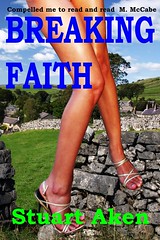
So, there you have it. Those are the reasons I came to set my romantic thriller, Breaking Faith, in one of the most beautiful parts of the English countryside. Many readers have commented on how apt the setting is. Whether you'll agree or not can only be determined by reading the book. And I give you the opportunity to do that for free here on this blog. Each week of this year I am posting a chapter. There are 50 in all, so it'll last for almost the whole year. And each post is accompanied by one of my photographs taken in the Dales, so you can experience the landscape for yourself. I started in January and the link to that first instalment is here. You'll find the rest of the early chapters listed in the archive and you're welcome to join the readers as we take the journey together to the end.

Enhanced by Zemanta

Monday, 18 July 2011

Stuart's Daily Word Spot: Malapropism


Malapropism: noun -  taken from the surname of Mrs. Malaprop, a character in R. B. Sheridan's comedy ‘The Rivals’ (1775) noted for her misuse of words: unintentionally humorous misuse or distortion of a word or phrase; use of a word sounding like the one intended (homophones) but ludicrously wrong in the context.
Used well, the deliberate replacing of words with different ones can really make a humorous scene.

‘If it’s true that Jesus sent them gabardine swine into the sea to drown, it’s not very Christian, is it?’ (Gadarene).

‘Them women was jus’ sayin’ that there fellah’s fallacy ain’t nowhere near as huge as ‘e says it is.’ (phallus)

Picture: Overlooking the Yorkshire Dales.

Monday, 19 July 2010

Interview with Yorkshire author Stuart Aken


A short while ago, one of my writing group offered me an interview on her website. I was so taken with this idea that I have decided to adopt it for my own blog. I shall issue an open invitation in the next post, giving details of how authors can participate. Those who contact me will be featured on a first come first served basis. Author interviews are a source of interest for both readers and writers, and it is that group of people I am trying to reach here. As a taster for the series, I am featuring the interview Avril did with me, reproduced below, with Avril's permission.

Interview with Yorkshire author Stuart Aken.


Farmland near Wharfe, Yorkshire Dales National...Stuart Aken is a talented man in all senses of the word. He has overcome reverses that would flatten most people. Happily married for many years, he has found success in various spheres of the working world. His abiding passion, though, is writing, although he would probably call it a compulsion. Successful crime writer Penny Grubb says of Aken's writing that it has a magic quality achieved by few. High praise indeed.

You can find out much more about Stuart on his website:

http://http://www.stuartaken.co.uk

AFT: Breaking Faith is set in the Yorkshire Dales during the 1976 heat wave. What prompted your choice of location and period?

SA: In the words of Max Boyce, ‘I was there.’ Believe it or not, the initial inspiration for the book came to me on a visit to the Buttertubs, in the Dales, at that time. I looked into the depths and wondered how I would feel if I discovered a body down there. From that simple question, the rest of the book eventually flowed. The Yorkshire Dales is acknowledged for its exceptional landscapes and it’s a place I know well. The heat wave was a useful backdrop to a story which needed a credible climate in which the action could take place: few would enjoy being naked in the area’s usual weather conditions. 1976 was long before the era of the ubiquitous mobile phone, an item that would have altered the tone of the novel. It was a time when fashion and the ideas of youth were still fresh enough to encourage experimentation. Cameras used film and a good printing assistant was still necessary for any professional photographer.


AFT: Some might consider there is a strong erotic edge to the novel; is this a marketing ploy or does it serve another purpose?

SA: I’m fascinated by our modern attitude to nudity and the body in particular. As a culture, we are fast approaching the extreme level of hypocrisy that has long existed in the USA. It’s the largest producer and user of pornography but has a puritanical attitude bordering on insanity. Our world is dominated by double standards imposed by Judo-Christian ethics that pretend to celebrate creation whilst denigrating the means of creation in humans. The Islamic world has, of course, taken this duplicity to even greater extremes. The word, ‘love’ is misused to the extent it has no real meaning to many people. Yet, for those who have experienced it, love is so superior to mere sex that it almost defies definition. I wanted Faith to be subject to the prevalent attitudes regarding sex but to actually experience love. She is forced to witness the destructive forces that can accompany sex whilst appreciating the positive force of love; her choice of honesty over deception is what the book is about.

AFT: What made you choose an innocent as your eponymous lead character?

SA: We live in a world where innocence is damaged almost from birth. Goodness, truth and honesty are qualities we pretend to value whilst we indulge in behaviour that destroys these things. Faith was an innocent in the material sense but damaged by her father’s hypocritical insistence on adherence to an extreme version of Christianity. This is only hinted at in the novel, as I wanted his cult to represent all organised religion. The effect of organised religion, as opposed to spirituality, is to distort truth and turn it into a commodity that can be exploited and used as a power base for the unworthy to govern those too lazy to think for themselves. Children are effectively brainwashed from infancy into believing the set of myths and untruths that their parents and peers were brought up with. It is such an insidious force in society that most people are not even aware of its continuing influence on their lives. The very language we use is riddled with religious imagery and ideas, so that it is impossible to escape its influence. I wanted to employ an innocent so that she could rise above much of the hidden influence and expose it, but I had to make sure I didn’t overdo this and proselytise.

AFT: One can’t help but be aware that photography plays a huge part in the story, almost like another character, in fact. Or is it perhaps an allegory?

SA: I was a professional photographer for some time, and worked with models during my early career. Photography is an excellent recording medium that is also capable of functioning as an art form. It has an unfortunate side effect in its representation of reality in two dimensions, as this can affect the photographer, making him unaware of depth in other aspects of life. It is this superficiality that Faith makes clear to Leigh, of course. But there is also a sense in which the mistaken 'belief' of the photographer in the purity of his images, echoes the blind faith that religious people place in their particular doctrines, ignoring the fact that theirs is but one interpretation amongst many when it comes to defining both God and true morality. Organised religion, by its very nature, cannot help but be superficial, since it reduces enormous questions to a set of dogmas that barely address the real issues, let alone provide answers. Photography is, of course, also considered ‘glamorous’ and is therefore a fitting occupation for the necessary alpha male of the romance.

AFT: You have had a number of short stories published as well as a radio play on BBC Radio 4. What advice would you give to new writers?

SA: Write only if you are compelled to. Writing is something that almost every literate person can engage in but good writing, writing with something worthwhile to say, even writing that is simply entertaining, requires a degree of dedication bordering on the obsessive. There are many people who write for fun but then want to be published. Such writing is fine for personal fulfilment but it’s self-indulgent to impose it on the reading public and it clogs up the works for those who have real talent. If you must write, and I mean that literally, then do so but ensure that everything you write is the best it can possibly be.

AFT: What are you currently writing?

SA: I’m working on the first volume of a three part fantasy series. It’s an adventure and a quest set in an invented world and centres on, surprise, surprise, organised religion and its corrupting power. I’d like to entertain those with open minds whilst inciting the dogmatic into fits of apoplexy. And, yes, I intend to make it a good read.


Enhanced by Zemanta

Sunday, 11 July 2010

A Shameless Plug for my Own Book

perf6.000x9.000.inddImage by stuartaken via Flickr

Here are some reviews of Breaking Faith, my self-published novel. I hope they might tempt you into buying the book. But, if you want a flavour of it first, visit my website www.stuartaken.co.uk and use the BookBuzzr widget to read the first 30 pages or go to the ‘Novels’ page and read the first 2 chapters, all for free. You can then buy it through amazon or any of a number of other booksellers.

By S. D. Mace "Shirley Mace" (High Bentham)
After several years of not having the time or making time to read novels I could not believe how determined this book was to make me read it and was surprised how quickly I read it and how much I enjoyed reading it. 
"Breaking Faith" is about a young naive, innocent girl, set in the summer of 1976, it details Faith's journey from one of isolation, deprivation and abuse where she is bullied by Heacham, acting as his skivvy and financial support and also nursemaid to her brain damaged sister, to enlightenment and self-knowledge in which she slowly falls in love with Leighton and overcomes all the obstacles that are put in her way. Writing from alternating perspectives (Faith and Leighton) adds detail, richness, interest and understanding of the characters. A shocking but captivating story that is definitely worth reading.

By  Mr. P. F. Field (UK)
"Breaking Faith" is the story of Faith, ignorant, naive and completely overshadowed by the sadistic bully Heacham. Faith struggles to nurse her brain-damaged younger sister, skivvy for Heacham and be the family's total financial support. 
Awakening comes as she gets a job with Leighton, the local glamour photographer and she falls in love with him, despite the terrifying threats from Leighton's assistant, the disgusting Mervyn.
I read this book in one sitting, unwilling to put it down, immersed in the Yorkshire of the sweltering summer of 1976 and Faith's journey from darkness to self-knowledge. Her sometimes frightening honesty wash all hypocrisy away, for she is a girl who sees things as they are and tells it the way it is. The book is written from the alternating perspective of Faith and Leighton, giving the reader a greater understanding of their interactions with each other and those around them. The characters are drawn with a fine brush, especially Faith's mother and father. The denouement is sudden, violent and completely satisfying.

By Michelle Mccabe (Gateshead, North East England)
I thought this was a really original story with an intriguing hero and an even more intriguing eponymous heroine. I also felt an intense dislike for some of the other characters meaning Stuart Aken's characterisations were really well done and the denouement tied all of the plots up to a surprising conclusion. Switching the first person narrative from one to the other and looking at the same events from both sets of eyes was a wonderful means of seeing the reasoning behind both of their actions. The story compelled me to read and read and read (a habit that, with an eight year old son, I confess, I have lost recently). 
I would recommend it to anyone and look forward to reading Stuart's next novel!
A triumph of good over evil and an enthralling read

Posted April 13, 2009, 1:37 PM EST Barnes and noble, by Retreiver470:
"Breaking Faith" is the story of Faith, ignorant, naive and completely overshadowed by the sadistic bully Heacham. Faith struggles to nurse her brain-damaged younger sister, skivvy for Heacham and be the family's total financial support. Awakening comes as she gets a job with Leighton, the local glamour photographer and she falls in love with him, despite the terrifying threats from Leighton's assistant, the disgusting Mervyn. I read this book in one sitting, unwilling to put it down, immersed in the Yorkshire of the sweltering English summer of 1976 and Faith's journey from darkness to self-knowledge. Her sometimes frightening honesty wash all hypocrisy away, for she is a girl who sees things as they are and tells it the way it is. The book is written from the alternating perspective of Faith and Leighton, giving the reader a greater understanding of their interactions with each other and those around them. The characters are drawn with a fine brush, especially Faith's mother and father. The denouement is sudden, violent and completely satisfying.
A compelling human story

Review by AJ Field
I have read some of Stuart Aken’s earlier work and he always writes with an immediacy that goes straight to the heart. “Breaking Faith” is the story of one girl’s journey from horrific abuse and bullying, through emotional turmoil, to finding love. But, of course, Aken doesn’t make it easy for her. This is no girl meets boy moonlight and roses book. It is, in parts, deeply disturbing, especially the character of Heacham and his treatment of Faith and her brain-damaged sister. Richness comes from the alternating perspectives of the two main characters, Faith and Leighton. Faith is a girl who sees things as they are and tells it like it is. The way Aken writes his characters pulls your emotions from one to the other. And over all of this is another character, the Yorkshire Dales in the searing summer of 1976. It pervades the action of the book, mirroring the lives of the characters in its landscape. The story builds to a wholly satisfying climax that is sudden and violent, but fitting. It is a book I shall read again.

Karen Wolfe
This is a story of triumphant human spirit. Heroine Faith's rite of passage from horrific neglect and abuse to fulfilment and true love is an inspiring one. Stuart Aken's novel, set in the summer of 1976, simmers with heat, lust, decadence and sexuality, all of which Faith transcends to become her own woman. I loved the Yorkshire Dales setting, and I was rooting for Faith all the way to her well-deserved happy ending. Stuart Aken is indeed a writer to watch.

Word of the Day: joy – delight, vivid pleasure, happiness; ‘Returned from the battlefields of Flanders, he was filled with joy as he approached his beloved wife.’

Enhanced by Zemanta