Google+
This blog has moved. Please go over to this link to see my new website.
Showing posts with label Genre fiction. Show all posts

Thursday, 7 February 2013

What’s Your Greatest Weakness, as a Writer, and Why?

"Study drawing shows the allegorical figu...
"Study drawing shows the allegorical figure of Romance nude. She bends her head to read a book on her lap. Romance was one figure in a painting, The arts, in the north end lunette of the Southwest Gallery in the Library of Congress' Jefferson Building." Graphite drawing (Photo credit: Wikipedia)

And, How Are You Overcoming It?

Last week, I looked at strengths. This time, I want to take a gander at weaknesses. We all have them. I know what my major weakness is, one of many, but this one is the most important: I spread myself too thinly.

What do I mean?


I do this in many ways:
1.      I divide my time between many activities instead of concentrating on what's most important.
2.      I can't settle on any given genre, spreading my ideas into many different types of writing so that I find it difficult to label myself as a practitioner in any one field.
3.      I support too many different campaigns, giving my voice and action to a multitude of worthy causes.
4.      I read many differing titles, failing to concentrate on a specific topic or genre.

Okay, I hear many of you choosing one or more of these instances and arguing that these are not necessarily bad things. And, I agree. Variety is essential to anyone who creates. A wide-ranging interest is vital to the development of knowledge and intellect. Compassion is a response given by a caring heart and restricting it may seem selfish. Ideas can either be adapted and crammed, made to fit a specific genre of writing, or they can be given the freedom to express themselves in whatever form seems most appropriate for the story.

Let's deal first with those things that are outside the narrower field of writing, those things that fall within the normal life choices of us all, regardless of what we do for a living.

The causes are always a personal matter. I feel as if I get involved with many, but, in reality, I tend to concentrate on 4 main areas. (a)The environment and those things that impact on the future of the planet. (b) Poverty and it's destructive effect on those under its heel. (c) Religion and its negative input to society in general. (d) Education for all, especially women. Of course, these interests tend to spread and merge with others and bleed off into associated topics. And, yes, I do find myself sometimes pulled into a fight for farm animals, wild animals, even pets. It would be possible for me to spend my entire waking life fighting for causes in one way or another. But I feel I wouldn't be doing the best possible with the few talents I possess, so I have to consciously curtail and restrict those activities. They do, nevertheless, consume large amounts of my time and energy. Will I stop? Of course not. It's who I am and I'm willing to put up with that for the sake of those things I care about. Could I do more? Of course. Will I? Probably not, simply because I have a limited amount of time and energy at my disposal and there are other aspects of life I wish to become involved with.

Reading is another personal choice. The experts and pundits would have us believe that we, as writers, must read all we can of the contemporary genre(s) in which we write. I have some sympathy with the point of view. But I'm interested in many different things and my reading time is as limited as all other aspects of modern life. Let's have a 72 hour day and the need for no sleep and I might get close to reading some of what I'd like to sample. But the reality is that we are, again, limited by time and energy and therefore must select those books that we feel are most likely to entertain, inform, educate and inspire us. I currently have a 'to read' list over 130 titles in length, all sitting on my shelves. I had made a decision to read them all before I bought, borrowed or accepted as gifts, any new books. But, in writing this piece, I find myself subject to a small epiphany. I shall go through that list and extract all those titles that I was going to read in reality because they 'ought to be read'. They can go back on the shelves, to be read at leisure once I no longer have the urge to write. So, they can accompany me in my coffin and I'll read them by the light of slow putrefaction. I'll read those that I actually want to read and the rest can wait. I'm curious to see how that will reduce the list. See, this exercise has already produced positive results, for me at least.

Finally, my inability to settle on a specific genre. Will I tailor my future writing to, say, thrillers, or perhaps that most popular genre, romance? Maybe I'll concentrate on science fiction, or its brother, fantasy. Should I dive into the dark world of horror? Maybe I could dig up some crime. A bit of mystery? History calls from afar. A bit of sex in the form or erotica might spice things up a little.

But, actually, I'm not the sort of writer who can even begin a story with an idea of genre. When an idea takes me, I start to write and the genre emerges from the tale as I tell it. I am, at heart, a story teller. I love character and those threads of event that characters cause during interaction. I cannot envisage sitting down and writing out a plot. Oh, believe me, I've tried. Plot is a device, an artificial construct on which a story may be built. It's suitable for many types of stories. But not for the stories I develop. I write organically, I write by the seat of my pants. A plot would simply get in the way and, in any case, I'd deviate from it as soon as the first character decided he or she didn't want to go in that direction. So, I guess I'm stuck with being a multi-genre writer. I accept that means I'll never be known in any given field; I'm unlikely to be considered a commercial prospect by any publisher. I understand that my chances of making a million with my writing are significantly reduced (as if that chance ever really existed anyway. Even if it did, it was never a motivator for me). But I write because I must and I write because I love it and I write because I have things to say. If I don't do that in my own way, with my own voice, what's the point?

So, those are my confessions, which, they say, are good for the soul. This has been a useful exercise for me. It might help you; it depends on the sort of writer you are and what motivates you, I suppose. Why not share your thoughts in the comments? I love to know what others think.

Enhanced by Zemanta

Thursday, 10 May 2012

Does Indie Book Publishing Let Authors Write in Multiple Genres?

Caxton Showing the First Specimen of His Print...
Caxton Showing the First Specimen of His Printing to King Edward IV at the Almonry, Westminster: With Edward are his wife, Elizabeth Woodville, and their children, Elizabeth, Edward, and Richard. (Photo credit: Wikipedia)

Publishing is an ancient industry. Ever since Caxton ran the first press, publishers, in many and varied guises, have intervened in the process of the author getting his book to his readers. In the early days, such intervention was necessary. It wasn't possible for an author to write and to get to know all those people who would be involved in the complex machinery of designing, producing, marketing and actually selling a physical book.

In those early days, and right up to the turn of the 21st century, the traditional publisher was seen as a vital part of the process. In fact, in many cases, books were actually initiated by publishers; authors being employed as jobbing writers by the book producers. For most authors, the prospect of getting their book into print was daunting and often became no more than an impossible dream. It's unknown how many great books never actually got published, but history is full of examples of those books that publishers, often in large numbers, turned down on various grounds, only for them to become best-sellers or even classics once a publisher with vision got hold of them. For the author in those not so long-gone days, it was generally the publisher who dictated what the writer would produce next. Genre was everything and woe betide the crime novelist who wanted to turn his hand to mystery, science fiction or, heaven help us, fantasy! Women were shoehorned into writing romance even when they had talent that developed character and story in a way suitable for literary novels. Men were forced to turn out series of adventure stories, even if they had a gift for displaying relationships and emotions.

Okay, I know I'm generalising, but this was more or less the state of the industry for all but the most fortunate and talented of writers. Many very good writers never had a book published. Some didn't even get as far as submitting their work because the process was too daunting for many sensitive souls. And when an author was fortunate enough to be recognised as having some talent by a publisher, often they were required to abandon their hopes of telling their own stories and made to turn out books that fitted into the narrow confines of the publishing house's list.

Nowadays, with the advent of both POD and digital book production, the publisher has become irrelevant for many writers. Not only does the lack of that publisher give greater freedom of expression but it also allows many writers to make more money from their creations than was possible in the past. One straightjacket from those early days, however, seems to persist into the modern field of writing. It seems that many authors continue to be caught in the genre trap. They believe they must write a series of books that all fit into a particular pigeonhole otherwise readers will be confused and won't know what they're buying. But is this true?

My belief is that readers, as a bunch of individuals, are generally amongst the more intelligent of human beings. I think they're perfectly capable of examining the blurb, character, and selling points of a book and determining whether they're looking at a murder mystery, a soft romance, a spy thriller or a historical romp where bodices will be ripped with gay abandon.  In other words, readers do not necessarily expect authors to write in only one vein. Publishers and their literary agents did expect this, because it made life easier for them, not for the reading public.

But is it true that an author can write in various different genres, under the same name, without confusing his readership? I believe it is. And I intend to prove it by doing precisely that. I've already published a romantic thriller, a sci-fi novelette, an anthology of dark speculative fiction, a collection of soft love stories and a short comic tale, all under the same name. The next book will be a collection of erotic stories and that will be followed by a comedy thriller and then, probably, an epic fantasy trilogy. I don't intend to alter my name or online presence in any way for these books, relying instead on the intelligence of readers to decide whether they're interested in the subject of the stories. The writing quality will remain the same throughout, i.e. the best I can possibly produce. The style of writing, however, will naturally suit the subject and the type of story I'm telling.

No one expects a painter to specialise entirely in one field, or an architect to design only sheds, or a musician to play only rock or pop or classical jazz. The whole point of being a creative artist is to produce and create those things that matter most to you as an artist. So, that's what I intend to do. I'd love your company as I travel this road. But whether I succeed commercially or not, I'll continue to do my own thing. Otherwise, what's the point in being creative? Oh, I know I could probably make a lot more money if I was willing to write formulaic fiction to fit in with some preconceived idea of what a good story should be, but it wouldn't really be my story, would it? In any case, I've spent my life going my own way, often rejecting opportunities to make more money simply because I refused to compromise along lines set by men who had no idea of my personal priorities and goals. If being a creative artist means anything, it means being true to yourself, doesn't it?

So, I invite you join me on my journey and, hopefully, to inspire you to do the same yourself. Let's show those who fear to take a step beyond the boundaries of convention that such steps often lead to the greatest adventures. Are you with me? Let me know what you think. Commenting is free and easy, you know.

Enhanced by Zemanta

Tuesday, 21 June 2011

Hostage of the Heart by Linda Acaster – from Ebook to Audio download


Some time ago I interviewed Linda Acaster about her Mediaeval romantic suspense Hostage of the Heart, when I reviewed the ebook. Today it is being launched as an mp3 audio download and I’ve invited her back to talk about the process.

How did this come about?
I followed a couple of links. Writers need to allot time to keep abreast of news and possible opportunities, just as they spend time publicising their work and activities. This new era of digital publishing is expanding at a rate of knots and, as I discovered, it’s not confined to the printed word.

Audiolark is an audio book publisher based in Canada which concentrates on all sub-genres of Romance, from short fiction to full novels. At the time I followed the link it was looking for a sweet romance to augment its list - not everyone wants erotica bellowing out of the car stereo system during the school run – and Hostage of the Heart was snapped up within days.

Remind us of the storyline
The novel is set in 1066 on the eve of two devastating battles that change the course of British history. On the Welsh borderlands Rhodri ap Hywel sweeps down from the mountains to reclaim stolen lands, taking the Lady Dena as a battle hostage. Tutored to believe the Welsh are barbaric, she finds herself abandoned by her Saxon kin and used as a pawn by the Welsh. Amid the intrigue and power-plays, dare she place her life in the hands of a warrior-knight shielding secrets of his own?

A Mediaeval novel with North American accents?
It’s what I braced myself for, but when the first proof arrived I was delighted to hear an English voice. Audiolark takes great care to match its narrator to the text, and I was asked to consider both the pronunciation and stresses placed on the sentence structure, and report back.

This was an interesting exercise. I’m used to proofing galleys of print books, and checking the html formatting for ebooks, but it was my first experience of proofing an audio download. I had to be very accurate in noting the timings – what at first sounds odd might take up less than a second; I kept having to ask myself whether it was just me being pedantic or whether there was a possible problem – and then I had to be specific in describing what I thought was the problem.

Just as proofreading text is not simply a matter of reading it through, proofing audio is not simply a matter of listening for enjoyment. I found it far more taxing than proofreading text. The list of queries, thankfully short, went back to Audiolark where each query was checked against the master. I thought that would be it, but no, I was sent a second proof. I love this level of professionalism. Audiolark wants the best for its customers and its authors, which is wonderful for us all.


Hostage of the Heart launches as an 8-hour DRM-free mp3 download on 21 June at the discounted price of $3.49 for one week, $9.99 normal price.

Hostage of the Heart ebook:

To catch up with Linda Acaster’s other fiction:

Sunday, 20 February 2011

Stuart's Daily Word Spot: Cabal

Title page of first printed edition of the Zoh...Image via Wikipedia
Cabal  nounKabbalah, a conspiracy, secret intrigue, a faction, petty plotting, secret meeting, political clique: verb - come together for a private end, intrigue against.

'The cabal of opposition senators plotted to overthrow the incumbent leadership, intent on establishing their own version of government regardless of the wishes of the people.'

'Members of the secret conspiracy caballed underground to discuss the assassination of the president.'
Enhanced by Zemanta

Thursday, 10 February 2011

Toni V Sweeney is open for Blogslots and Book Reviews

Toni V Sweeney runs an active website and blog aimed at writers and readers (much like my own). She invites writers, in all genres, to post blogs and offers book reviews on her site. You can contact her here

Saturday, 5 February 2011

Published Authors: Do You Want an Interview?

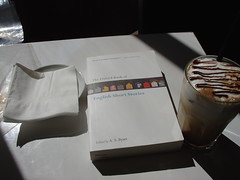
The Oxford Book of English Short StoriesImage by dalcrose via FlickrIf you are a writer who has published any form of writing, (fiction - novel, novelette or short story, poetry, non-fiction, biography, drama, film script, articles, anything where words appear in some form) in any medium and by any route from the traditional paths to the rocky road of self-publishing, I'd love to hear from you and have the opportunity to interview you here.

If you're interested, please contact me here
It would be helpful if you give me an idea of your writing and include any appropriate links, but don't worry if that's a technological nightmare for you; I can generally discover what I need.
Enhanced by Zemanta

Wednesday, 17 November 2010

What Does Genre Really Mean?

There are, as most writers and readers will know, almost infinite genres and sub-genres available. So, how do you define the book you’ve written or the books you’re most interested in reading?
I suppose we have to start by listing the most popular genres with their sub-genres. And I will immediately offend some writers/readers, because I will inevitably exclude some of their favourites. That is the nature of the beast.

First, are we talking FACT or FICTION – not so much genre as a label to identify whether a book is a work of imagination or a piece of writing depending on factual information.

Under FACTUAL we could include the following:
Autobiography
Biography
Comedy (or humour)
Educational
True Story
Documentary
And these are themselves generic terms to cover wide-ranging subjects as diverse as History, Travel, Arts, Science and Collecting, to name but a random few.

But my interest is in the genres that appear under the heading of FICTION:
Action
Adventure
Comic (or humour)
Crime
Detective
Erotic
Fan-fiction
Fantasy
Historical
Horror
Gothic
Literary
Mystery
Romance
Saga
Science Fiction
Sequel
Thriller
True Story
Western  
Just 20 separate genre headings there. Let’s break one of them into some sub-genres, and see where we go.

Romance:
Adventure
African-American
Bisexual
Category
Chick-lit
Contemporary
Dark Fantasy
Erotic
Fantasy
Futuristic
Gay
Gothic
Historical
Inspirational
Interracial
Lesbian
Literary
Mainstream
Military
Multi-Cultural
Mystery
Novel With Strong Romantic Elements
Paranormal
Regency
Science Fiction
Suspense
Sweet
Teen
Thriller
Time-Travel
Traditional
Transgender
Urban Fantasy
World War II-Era
Young Adult
So, only another 35 sub-genres there – no problem!

No wonder the issue of genre is difficult for both writers and readers. This imposition of pigeon-holing by the industry does, however, have a purpose. Most readers want a clue to the sort of book they are picking up and genre is a reasonable, if sometimes less than accurate aid.

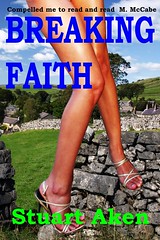
My own novel, Breaking Faith, is listed as a Romantic Thriller. But what does that tell you about it, as a book? Does the term ‘Romantic’ put you off, as a male reader, or the term ‘Thriller’ make you wary, as a female reader? (sorry for stereotyping here, but sometimes it’s necessary to generalise to make a point). The story is basically a love story set against a historical backdrop (1976), but it examines relationships, familial domestic and romantic. Murder, rape, love and erotic sex lurk within the pages. In some senses, there is an element of the adventure novel and there is also the softer romance depicting a man and a woman in love. The story has made readers of both genders cry, laugh, exclaim with indignation, rant at injustice, sigh with frustration and smile with satisfaction. So, Romantic Thriller does not really do it justice. But how else would you label it?

In the end, we are stuck with genre as a way of classifying books into defined areas of treatment. But it is clearly wise for readers to remember that the labels attached are not by any means accurate or exclusive of other themes and topics than those expected from the genre.

If you use genre as a buying/reading guide, you might be well advised to read the blurb, the opening page and another random page in order to get a more accurate flavour before you commit yourself. Sometimes, you might be offended, disgusted, horrified or disappointed, and at others you might find yourself reading something that delights, surprises, elevates and astounds. I just ask that the simple label or genre doesn’t prevent you considering a book.

Enhanced by Zemanta

Saturday, 24 July 2010

A Review of website, Writing World

Writing-World.com is absolutely bursting with advice on all topics to do with writing. This free site provides articles under several headings, including; Beginner’s World, The Business of Writing, The Writing Life, Freelancers’ World, Commercial Corner, International Writing, General Fiction, Romance, and other genres. There is much more, but lists can be so boring; something this site most definitely is not. There are hundreds of articles under each topic heading. If you write, in any capacity and at any level from beginner to best-seller, you’ll find something of interest here. They produce a weekly newsletter, crammed full of up-to-date information. The site is free to use, but they also offer opportunities to have your book featured and to advertise services etc, for a small fee.
This is essentially an advice site. But it offers useful services and there is a personal touch, with articles on the author’s life, experiences and thoughts.
I urge you to give this writer-friendly site a look. I visit frequently and subscribe to their newsletter. All really good stuff.


Word of the Day is divorced from the blog that precedes it and produced in response to a request from a follower to provide just such a service.
Word of the Day; satire – a lampoon, usually humorous, used to expose folly or vice in those who should know better, usually employing ridicule, sarcasm and irony. ‘Jennifer’s satire on the sexual proclivities of the Rt. Hon. Geoffrey Muddinghampton MP, caused such hilarity amongst her audience that some had to be given first aid by the Speaker of the House; a fate none of them really deserved.’


Enhanced by Zemanta

Thursday, 22 July 2010

Interview with Avril Field-Taylor


Avril Field-Taylor, writer, singer and librarian, has written more or less since she could form words. A lover of crime fiction, she is engaged in a series of novels about her singing sleuth, Georgia Pattison: the first is published as Dearly Ransomed Soul and is a very good read. The second is currently seeking a publisher and more are on the way. But, a fan of Conan Doyle’s famous detective, she has also published a Sherlock Holmes novel, Murder at Oakwood Grange. This is a great detective story and I thoroughly enjoyed it. At present, Avril is working on a Tudor detective story, set in an alternative historical background around the time of Henry VIIIA prize-winning short story writer, she lives and works on the coast of East Yorkshire, where she can take her beloved dog for a walk by the refreshing sea after a day spent bashing the keys or researching.


SA: What qualities do you need to be a successful writer?

AFT: Persistence. Determination. Belief that somebody, somewhere, sometime is going to want to publish what you’ve written. Never to be precious about your prose.

SA: What is your working method?

AFT: It’s a job. Begin at 8 or 8.30, break for lunch, knock off at 4. I do lots of research, know my last line and my first line. Write about five chapters and then write the end, go back and work towards it. The end usually gets trashed, but it gives a good sense of direction.

SA: How do you know where to begin any given story?

AFT: I don’t always. Sometimes, it will be a phrase that comes along with a mental picture of a scene. I might write it and it doesn’t gel. I keep going until there’s a sentence that is essentially in the middle of the action and the first line becomes clearer in my head.

SA: How long does it normally take you to write a novel?

AFT: Between 3 and 4 months, first draft.

SA: Do you have support either from family and friends or a writing group?

AFT: All three. My husband is a constant rock on whom I lean and, truth be told, without his encouragement, I couldn’t write. My close friends have complete belief in me and one, in particular, is my Ideal Reader – the one person I know and trust to tell me it’s rubbish if it is. The local writing group are all published authors, unfailingly supportive, but ruthlessly honest, something every writer needs.

SA: What are you writing now?

AFT: The sequel to “Duty of Evil”, my alternate history crime novel. It doesn’t have a title yet.

SA: Is there any aspect of writing that you really enjoy?
AFT: Yep! Plotting. The more convoluted and complicated the better and then ensuring that all the twisted strands can be put in their proper place, so that the story holds together in a coherent whole.

SA: Given unlimited resources, what would be your ideal writing environment?

AFT: In front of windows with a stunning view.

SA: Do you have a website or blog?


AFT: www.avrilfieldtaylor.co.uk. There is a link to the blog from there.

SA; Where do you actually write?

AFT: In my office and hopefully, soon, my writers’ cabin, The Word Shed.

You can get the books online from Amazon, Barnes & Noble, WH Smith, Waterstones, Book Depository, etc and to order from bookshops. Both are £6.99. Murder at Oakwood Grange - ISBN9781906558871. Dearly Ransomed Soul – ISBN9781849231336

Enhanced by Zemanta

Sunday, 11 July 2010

A Shameless Plug for my Own Book

perf6.000x9.000.inddImage by stuartaken via Flickr

Here are some reviews of Breaking Faith, my self-published novel. I hope they might tempt you into buying the book. But, if you want a flavour of it first, visit my website www.stuartaken.co.uk and use the BookBuzzr widget to read the first 30 pages or go to the ‘Novels’ page and read the first 2 chapters, all for free. You can then buy it through amazon or any of a number of other booksellers.

By S. D. Mace "Shirley Mace" (High Bentham)
After several years of not having the time or making time to read novels I could not believe how determined this book was to make me read it and was surprised how quickly I read it and how much I enjoyed reading it. 
"Breaking Faith" is about a young naive, innocent girl, set in the summer of 1976, it details Faith's journey from one of isolation, deprivation and abuse where she is bullied by Heacham, acting as his skivvy and financial support and also nursemaid to her brain damaged sister, to enlightenment and self-knowledge in which she slowly falls in love with Leighton and overcomes all the obstacles that are put in her way. Writing from alternating perspectives (Faith and Leighton) adds detail, richness, interest and understanding of the characters. A shocking but captivating story that is definitely worth reading.

By  Mr. P. F. Field (UK)
"Breaking Faith" is the story of Faith, ignorant, naive and completely overshadowed by the sadistic bully Heacham. Faith struggles to nurse her brain-damaged younger sister, skivvy for Heacham and be the family's total financial support. 
Awakening comes as she gets a job with Leighton, the local glamour photographer and she falls in love with him, despite the terrifying threats from Leighton's assistant, the disgusting Mervyn.
I read this book in one sitting, unwilling to put it down, immersed in the Yorkshire of the sweltering summer of 1976 and Faith's journey from darkness to self-knowledge. Her sometimes frightening honesty wash all hypocrisy away, for she is a girl who sees things as they are and tells it the way it is. The book is written from the alternating perspective of Faith and Leighton, giving the reader a greater understanding of their interactions with each other and those around them. The characters are drawn with a fine brush, especially Faith's mother and father. The denouement is sudden, violent and completely satisfying.

By Michelle Mccabe (Gateshead, North East England)
I thought this was a really original story with an intriguing hero and an even more intriguing eponymous heroine. I also felt an intense dislike for some of the other characters meaning Stuart Aken's characterisations were really well done and the denouement tied all of the plots up to a surprising conclusion. Switching the first person narrative from one to the other and looking at the same events from both sets of eyes was a wonderful means of seeing the reasoning behind both of their actions. The story compelled me to read and read and read (a habit that, with an eight year old son, I confess, I have lost recently). 
I would recommend it to anyone and look forward to reading Stuart's next novel!
A triumph of good over evil and an enthralling read

Posted April 13, 2009, 1:37 PM EST Barnes and noble, by Retreiver470:
"Breaking Faith" is the story of Faith, ignorant, naive and completely overshadowed by the sadistic bully Heacham. Faith struggles to nurse her brain-damaged younger sister, skivvy for Heacham and be the family's total financial support. Awakening comes as she gets a job with Leighton, the local glamour photographer and she falls in love with him, despite the terrifying threats from Leighton's assistant, the disgusting Mervyn. I read this book in one sitting, unwilling to put it down, immersed in the Yorkshire of the sweltering English summer of 1976 and Faith's journey from darkness to self-knowledge. Her sometimes frightening honesty wash all hypocrisy away, for she is a girl who sees things as they are and tells it the way it is. The book is written from the alternating perspective of Faith and Leighton, giving the reader a greater understanding of their interactions with each other and those around them. The characters are drawn with a fine brush, especially Faith's mother and father. The denouement is sudden, violent and completely satisfying.
A compelling human story

Review by AJ Field
I have read some of Stuart Aken’s earlier work and he always writes with an immediacy that goes straight to the heart. “Breaking Faith” is the story of one girl’s journey from horrific abuse and bullying, through emotional turmoil, to finding love. But, of course, Aken doesn’t make it easy for her. This is no girl meets boy moonlight and roses book. It is, in parts, deeply disturbing, especially the character of Heacham and his treatment of Faith and her brain-damaged sister. Richness comes from the alternating perspectives of the two main characters, Faith and Leighton. Faith is a girl who sees things as they are and tells it like it is. The way Aken writes his characters pulls your emotions from one to the other. And over all of this is another character, the Yorkshire Dales in the searing summer of 1976. It pervades the action of the book, mirroring the lives of the characters in its landscape. The story builds to a wholly satisfying climax that is sudden and violent, but fitting. It is a book I shall read again.

Karen Wolfe
This is a story of triumphant human spirit. Heroine Faith's rite of passage from horrific neglect and abuse to fulfilment and true love is an inspiring one. Stuart Aken's novel, set in the summer of 1976, simmers with heat, lust, decadence and sexuality, all of which Faith transcends to become her own woman. I loved the Yorkshire Dales setting, and I was rooting for Faith all the way to her well-deserved happy ending. Stuart Aken is indeed a writer to watch.

Word of the Day: joy – delight, vivid pleasure, happiness; ‘Returned from the battlefields of Flanders, he was filled with joy as he approached his beloved wife.’

Enhanced by Zemanta

Thursday, 17 June 2010

And the Query Letter has landed

tHE wrItiNg oN tHE wAll...Image by poonomo via Flickr
Well, to tell the truth, it's actually still here with me, since I've yet to complete the final edit. Though, as I'm now on chapter 31 of 68, it's going quite well and, now I'm no longer concentrating on the letter or synopsis, I should be able to move that process along at a rip-roaring speed. My writing group, the redoubtable Hornsea Writers, gave their usual unstinting aid last night and I think I now have a synopsis and query letter I can present with the first three chapters with some confidence. So, on with the work.
Enhanced by Zemanta