Google+
This blog has moved. Please go over to this link to see my new website.
Showing posts with label Publish. Show all posts

Thursday, 26 May 2011

Author Interview with Chris Hambleton


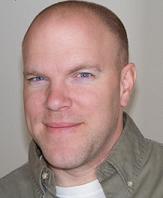
Chris Hambleton resides in Denver, Colorado, where he is employed as a software developer and consultant. He has authored several websites, software applications, and other programming-related articles.

Chris is also the creator and administrator of BookBlitzer.com, a website that helps authors get more exposure for their books through reviews, contests, and other networking tools. In 2008, he developed the iWriterPro book-writing software to help authors manage and write books more efficiently.

His other interests include spending time with his family, reading, hiking, studying Bible prophecy, Ice Age/ancient civilizations, and archaeology.

To learn more about Chris Hambleton and his other books and writing, please visit his website at http://www.cwhambleton.com

Other Books by Chris Hambleton
"Endeavor in Time" (2008)
"The Cell – Twilight’s Last Gleaming" (2010)
"The Last Aliyah – Book 1 of The Time of Jacob’s Trouble" (2011)
"The Son of Shinar – Book 2 of The Time of Jacob’s Trouble" (2011)
"The Siege of Zion – Book 3 of The Time of Jacob’s Trouble" (2011)
"The Castors of Giza" (2011)

Connect with Me Online:

Tell us about “The Time of Jacob’s Trouble” in a few sentences.
My current book is part of a trilogy called “The Time of Jacob’s Trouble” – it’s a saga about an Israeli family as it goes through the End Times as described in the Bible. It was the first novel I wrote in 2008, but I decided to rewrite it after touring Israel in 2010. The trilogy heavily builds upon current trends in the Middle East and weaves in passages from various parts of the Bible (especially the Book of Daniel and the Book of Revelation). I also have another book in progress called “The Castors of Giza” which is a adventure story about how the Great Pyramid was built.

What qualities do you need to be a successful writer?
First and foremost, you need to have a good story to tell, one that hopefully can catch (and hold) your readers’ interest. Secondly, you need to be able to describe characters, settings, and scenes in such a way that the reader feels like they can ‘see’ what’s happening as though they were watching it in the theater or on television. Third, you need passion and a certain ‘flair’ for story-telling.

What is your working method?
Typically, I start with a handful of ideas for a story and weave in an underlying message I want to communicate, such as repentance, forgiveness, etc. From there, I begin adding in the main characters and secondary characters, along with some of the scenes I think would catch the readers’ attention. Then I begin plotting out the book in rough chapters and scenes, and then plug them into the writing software I use – iWriterPro (http://www.iwriterpro.com). I developed this software specifically for writing novels in 2009, and it’s been one of the best investments of my time I’ve ever made.

What is the single biggest mistake made by beginners to writing?
For myself, it was not reading “Self-Editing for Fiction Writers” before writing my manuscript. I found I spent far too much time describing scenes and settings to the reader instead of showing them through the eyes of the characters. I used to have a big issue with “telling” instead of “showing”, which I’m getting better at. The trick of seeing and writing novels from the perspective of a camera was a big help in improving my books.

How did you come to write this particular book?
I first took a passing-interest in Bible prophecy in 1996, and then in 1998 began to study it much more seriously. In 2006, I began writing "The Time of Jacob's Trouble", which was then published in 2008. Several years later in 2010, I was fortunate enough to visit Israel on a study-tour, and I saw for myself the miracle of modern Israel.

When I reviewed my book after visiting Israel and learning more about the land and its people, I realized there were numerous inaccuracies that I felt compelled to resolve. Several reviewers also recommended that the original book be divided into three and expanded to focus more on the characters than the mere circumstances/settings of the End Times.

If you have a favorite character in your novel, why that particular one?
Since most of my books have underlying themes of redemption and spiritual change, my favorite characters are usually the main character (or one of their friends or supporting characters), who the stories revolve around. Some sort of spiritual transformation is nearly always involved in the plot and in the development of the character.

How can people buy your book(s)?
My books are available on my website at http://www.cwhambleton.com, and also at Amazon.com, Barnes and Noble, Smashwords, and most other book sites. “The Last Aliyah” is the first book I’m releasing exclusively in eBook format rather than paperback.

To what extent are grammar and spelling important to a writer?
Spelling and grammar are quite important, as they directly reflect on the time and care the writer has put into their manuscript – not necessarily their story, but their finished work. However, sometimes proper grammar can interfere with the beat and dialogue in the story, so using proper grammar may not always be the best way of communicating your story. For example, “Tom Sawyer” and “Huckleberry Finn” would sound terrible if Twain had used “proper grammar”.

How much revision of your MS do you do before you send it off?
Typically, I revise a manuscript at least three times after the initial draft, with typically a “week off” between revisions. When I find I start to hate the story/book, I know I’m about done with it.

Where and when is your novel set and why did you make these specific choices?
My latest novel, “The Last Aliyah”, is set in the near future in various parts of Israel, but predominantly in the north at Haifa. I decided to have the story take place in Israel because that’s where most of the ‘action’ in the End Times occurs, and I had noticed that few other authors had placed their End Times story predominantly in Israel and from the perspective of the Jewish people.

To what extent do you think genre is useful in the publishing world?
I think the importance of genre depends largely upon the author and their purpose (such as trying to make a living from their work). My genre would likely be much different if I was trying to sell thousands of books a year. However, since novel-writing is primarily my hobby and an “escape” from the exciting world of software-development (LOL), I have the freedom to write what I want, when I want, and how I want.

What are your writing habits?
I do most of my writing with the book-writing software I’ve developed called iWriterPro (http://www.iwriterpro.com). I will often go to a coffee-shop either early in the morning or after work to hammer out the manuscript (especially the first draft). Much of the revision-phase then takes place either at home in the evenings or before work.

How do you know where to begin any given story?
I typically “sketch” out the book in my head in the weeks/months before I begin working on it and jot down some notes or rough scenes I think would make a good story/plot. Once I think the plot is workable, I create a rough plot outline and then develop it. If the story makes it through that phase, the story-writing phase is ready to begin.

As for where to begin a story, I often try to throw the main characters right into the action from the beginning and start off the story with a BANG! to get the reader immersed in the story as quickly as possible. I’m a big fan of “24” and “Lost”, and that was a hook those screenwriters always used quite effectively.

What sort of displacement activities keep you from actually writing?
Since I’m still working full-time as a software developer, my work schedule cuts into the time I’d love to spend writing, along with family time and church/friend activities. Also, I’m in the process of creating several websites/services centered around authors-helping-authors and social-networking (such as http://www.bookblitzer.com), and those development/support activities cut into my time also.

Do you have support, either from family and friends or a writing group?
Certainly! My family, friends, and extended family have been very supportive in my work. Sometimes I feel bad about announcing/giving them my books all the time, since it seems like a new one is always coming out.

Is presentation of the MS as important as most agents and publishers suggest?
Yes – agents and publishers know what looks good and what is sellable (according to the market). If they’ve defined a format that sells better than others, then that’s what authors should try to use.

How long does it normally take you to write a novel?
I can usually crank out a first draft between 2 and 3 months, especially if I’ve been thinking about the story for awhile and have done much of the research beforehand. I love reading, and often a story will emerge from the various books I read. Often I’ll have several stories bouncing around in my head for months or sometimes even years before I actually begin writing them. The trilogy I’m starting later this year, “The Starstone Chronicles”, has been in my head for about five years now.

What are your inspirations?
My main inspirations are other authors who have written great stories – not necessarily the best-selling authors or books, but the best stories that I can identify with and relate to. There have been several books I’ve encountered where I’ve literally shouted, “I WAS GOING TO WRITE THAT!” and that inspires me to keep pushing. The potential of making money in the book-industry doesn’t really inspire me at all compared to being able to tell a great story (though making some good side-cash would be nice).

If there’s a single aspect to writing that really frustrates you, what is it?
The part of writing that really bothers me is finding extra or dropped words in my books once they’re in print. Something else that bugs me is when I think of a scene or character that I could’ve added to the story to make it better after the book has already been published. That’s one of the reasons I’ve transitioned over to writing eBooks, since I can improve them anytime I want without much cost or hassle.

Do you think writing is a natural gift or an acquired skill?
I think it’s a bit of both a natural gift and an acquired skill. I’ve heard that everyone has story inside them and just needs to drawn out, and I believe that’s true – the gift is being able to extract that story and turn it into a book (or several books). The “acquired skill” portion is developing that gift and turning it into a craft.

What are you writing now?
My current work in progress is called “The Castors of Giza”, which takes place in ancient Egypt during the design and building of the Great Pyramid of Giza. I’m very excited about it, since the idea for the book suddenly came about in early 2011 and was completely unexpected, and it gives me an opportunity to learn about a country/era I am relatively unfamiliar with.

Is there any aspect of writing that you really enjoy?
I particularly enjoy the research and plot-development phase of writing slightly more than working through some the scenes and dialogue (which can get tedious at times). And of course, I like thumbing through the finished product (or clicking through it, such as with my eBooks).

Do you have a website or a blog that readers can visit?
Sure – my blog is http://fictionsoftware.wordpress.com and my author-website is http://www.cwhambleton.com. My Facebook fan-page is under “Chris Hambleton (Author Page)” and my Twitter feed isat @chris_hambleton. I also run a website at http://www.bookblitzer.com which helps authors get reviews for their books and also provides other author-related services.

Given unlimited resources, what would be your ideal writing environment?
My ideal writing place would be at a beach-house somewhere sunny and warm, though I probably wouldn’t get as much writing done.

Where do you actually write?
I do most of my writing at Starbucks or Caribou Coffee, or at least the rough scenes and dialogue. A lot of the finishing work takes place at home after the kids go to bed or early in the morning. I find that I don’t write very well unless there are other people around, as long as there aren’t many interruptions.

Enhanced by Zemanta

Friday, 22 April 2011

Ten Love Tales Now Available as an Ebook:


I’ve just complied and published a new eBook anthology of gentle romantic stories. Ten Love Tales, published via both Smashwords and Kindle, presents love stories containing no explicit sex but showing gentle emotion for those looking for something that will make them feel good. I hope these stories will make readers sigh, smile and leave them feeling warm inside. Enjoy.


Buy it from Smashwords here - https://www.smashwords.com/books/view/52561


The link for the Kindle edition from Amazon.com is http://www.amazon.com/s/ref=nb_sb_noss?url=search-alias%3Ddigital-text&field-keywords=stuart+aken&x=8&y=20

And the link for the Kindle on Amazon.uk is http://www.amazon.co.uk/s/ref=nb_sb_noss?url=search-alias%3Daps&field-keywords=stuart+aken&x=13&y=18
Enhanced by Zemanta

Thursday, 21 April 2011

Author Kristie Leigh Maguire, Interviewed:


Kristie Leigh Maguire’s current titles are Second Chances, Affairs of the Heart: Desert Heat and Cabin Fever (Collector’s Edition), Desert Heat, Cabin Fever, You’ve Got Mail from Japan, and co-author of No Lady and Her Tramp.

She was voted Best Up and Coming Author of the Year and her novel Desert Heat was voted Romance of the Year by the Affaire de Coeur Magazine Reader/Writer Poll. Her novels Cabin Fever and No Lady and Her Tramp placed in the Top Ten in the Preditor & Editor’s Poll.  

Kristie Leigh Maguire and her husband have lived all over the United States and many foreign countries while following his career. While living in Japan, she found it very difficult to find books to read that were written in English. This situation was intolerable as she was an avid reader and had been known to resort to reading cereal boxes if nothing else was available. Have you ever tried to read a cereal box written in Japanese? It was not a pretty picture. Ms. Maguire began writing her own books just to have something to read. She discovered a new passion in writing.   

Although Kristie Leigh Maguire is originally from the South and will always remain Southern at heart, she and her husband now live in St. Croix in the U.S. Virgin Islands. During her expatriate years she lived in St. Croix, Aruba, Thailand, Japan and three times in Saudi Arabia and visited many other countries.

Tell us about Second Chances in a few sentences.

My latest release is Second Chances. It is a sweet contemporary western romance. Second Chances is a story of love, betrayal, and redemption.

Jane Porter’s dreams of marrying Mike Farley, the handsome cowboy who lives on the neighboring ranch, are shattered when Mike suddenly marries a redheaded stranger he met at the Wild Horse Saloon in Casper, Wyoming. After Mike stomped all over Jane’s heart with his cowboy boots, can Jane ever trust her heart to a man again?

Mike Farley marries beautiful Samantha Jo Smith after a whirlwind courtship with no thought to Jane Porter, his childhood sweetheart and the woman everyone in Fremont County thought he would marry one day. Mike soon learns to regret his hasty marriage to Samantha. Can Mike win back Jane’s heart even though he had shattered it into a million pieces?

Longtime friends and neighbors Jim Porter and Liz Farley turn to each other for support after the unexpected death of their spouses. Will Jim and Liz’s friendship turn into something deeper even though they both feel they have had, and lost, their chance at love?

Is it ever too late for love? Is it ever too late for second chances?

Set in rural Wyoming, Second Chances is a sweet contemporary western romance that will warm your heart. One reader stated, “I read it through in an evening, and felt as if I had spent that evening with ‘salt of the earth’ folk.” Another reader said, “I loved the double, no triple, second chance. It was a very sweet ending.”

How did you come to write this particular book?

I wrote Second Chances for my 95-year-old mother. Since my other books are a bit on the spicy side, I wanted to write a book my mother could read without blushing.

If you have a favourite character in your novel, why that particular one?

My favourite character in Second Chances is a secondary character named Samantha Jo Smith. She started out from nothing and overcame great odds to get what she wanted out of life. She hurt people along the way but in the end she didn’t let anything stand in her way of following her dreams.

Where and when is your novel set and why did you make these specific choices?

Second Chances takes place in Wyoming. Since I wrote this book for my mother, I picked her favourite state. She’s never lived in Wyoming but she visited there many years ago and fell in love with the state.

Where can people buy your books?


What qualities does a writer need to be successful?

Persistence to keep after it and a thick skin to take the criticism after you release your work into the world.

What is your working method?

I write by the seat of my pants. I get the idea for a story, sit down and start writing. I do not outline. I let the story go where the characters want to take it. Sometimes they go in a different direction than I had envisioned but I find the story flows better if I let them take the reins.

What’s the single biggest mistake beginner writers make?

Tell instead of showing.

To what extent are grammar and spelling important to a writer?

Grammar and spelling are extremely important. A writer should never publish until their manuscript goes through a fine toothed comb edit.

How much do you revise your MS before you send it off?

I revise until I am about 90% pleased with the story. I am never 100% satisfied. Even after publishing, I am always thinking of something I should have done differently or could have done better. That is the reason I hate reading my books after publication. I want to snatch them back and redo them.

As a writer of romance, to what extent do you think genre is useful in the publishing world?

Romance is the spice of life. Everyone needs a little love. A good romance novel provides that love even if it comes from between the pages of a book.

Marketing is often seen as a chore by authors. What's your opinion on this issue and how do you deal with it?

I totally agree. I would much rather spend my time writing than doing promotion. Being a shy person, I find it much easier to do promotion online rather than in person. I break into a cold sweat when doing book signings but I learned how to deal with it and try to have a good time.

How do you know where to begin a given story?

That is a hard question to answer. It depends upon the story. Sometimes I just have to play around with it to see what works and what doesn’t.

What sort of displacement activities keep you from writing?

Life in general. My family. Reading. Many things too numerous to list.

Do you have support from family and friends, or a writing group?

I have the full support of my husband. He is my biggest fan. He knows to let me alone when I am writing but he is there for me during my ups and downs. I do belong to a couple of online writing groups.

Is presentation of the MS as important as agents and publishers suggest?

I’m not sure I understand that question but I never submit a manuscript until it is as error free as I can humanly make it.

How long does it normally take you to write a novel?

Each book is different. I wrote Second Chances in about 5 months but then came the editing and the rewrites after I finished the story.

Who or what inspires you?

Nature whether it is the mountains, the ocean, or anywhere in between. God created an awe inspiring world that we live in.

If there’s a single aspect to writing that really frustrates you, what is it?

Editing, rewrites, and promotion. Oh, that was three things. Hmmm. If I had to narrow it down to one thing, I would have to say promotion.

Is there an aspect of writing that you really enjoy?

I enjoy creating an imaginary story and the characters to go with it, while trying to make it so believable people ask me if it really happened.

Do you think writing is a natural gift or an acquired skill?

I think it is a natural gift but a writer needs to learn the skills to go with that natural gift of storytelling.

What are you writing now?

Nothing at the moment. I do have several ideas percolating in my mind though.

Do you have a website or blog that readers can visit?

Given unlimited resources, what would be your ideal writing environment?

I would love to have a house on a tropical island in the Caribbean with an office that has wall-to-wall windows with a view of the sea, lots of bookshelves, a door to close out the world when I need to do so, and a maid to do all the work that needs to be done around the house.

Where do you actually write?

I set up a corner in my bedroom in my condominium on a tropical island in the Caribbean where I look out the windows but instead of having a view of the sea, I have a view of the trees and flowers and listen to the birds singing while I write.


Enhanced by Zemanta

Saturday, 26 March 2011

Edit, Almost Done

Today, I've completed the work on Book 1. It now consists of 216,000 words, broken down into 518 pages and 53 chapters. I can let that lie now and concentrate on book 2, which consists, at present, of 15 chapters that were originally the end of book 1, some other chapters, previously written but in need of editing, and a few short sections,ready for incorporation into new chapters. of the 15 chapters, I've now edited 14. I've also, today, amended my timeline, which is an Excel spreadsheet. I've closed the timeline for book 1 onto one sheet and opened a new one on a second sheet, so that everything is easier to follow. I'm getting quite excited about finishing the current editing session and starting n some new writing. It'll be a little while before I'm at that stage, but it's a lot closer than it was.
I thought I might start giving tasters of the first book. Any of you interested in reading some of that at this stage?
Been to the library to pick up some books I ordered on line. Taken rubbish and recycling to the local recycling facility. Also, selected some short stories for an anthology I intend to publish on romance, and then sought a reasonable picture from one of the online stockists to act as a cover background. Read some more of the current read - Empty Chairs, by Stacey Danson; a harrowing but inspiring book about and by a woman who suffered physical and sexual abuse from the age of 3, initiated at the hands of her own mother, would you believe?
Had a man in today, to move the Magnolia before it comes into bloom; a job too physically demanding for me. It was in the way of the proposed turning point I need to put in at the front of the house. Once I'm done here, I shall take a short walk with Valerie and then settle down to relax for the evening. Kate is out on the town with friends.
Enhanced by Zemanta

Thursday, 10 March 2011

eBooks V Paper Books: Pros and Cons.


There has been a lot of recent discussion in the press about the effect of ebooks on the production and dispersal of paper books. It seems that sales of physical books have fallen whilst electronic versions are increasing. Could cost be a factor here? Most hardbacks are priced at around £18.99, whilst a good many ebooks come in at around £2.99, or less; in fact, many are free. Obviously, the cost of the ereader is a factor, but that's a one-off purchase and has the advantage that it allows the buyer to store many volumes. Barnes and Noble report that they sold over 1,000,000 ebooks on Xmas day alone! And it's estimated that between 3 and 5 million ereaders were activated in the week following Xmas. On the other hand, the top selling paper book apparently sold 1,225,456 copies during 2010.
The New York Times recently announced that it will carry a weekly list of ebook bestsellers in fiction and non-fiction.

A new French study has predicted that by 2015 (that's just 4 years away) 15-20% of readers will own a digital reading device and 25% of books will be sold in digital form.

In the latest issue of The Society of Author's quarterly, The Author, member Stewart Ross mentioned that he'd asked a question of children in several schools he'd visited. The question, 'Would you prefer to have all your books on one electronic reader or as lots of separate paper books?' elicited an overwhelming choice from the children for the former. And it's clearly the case, from a great deal of research recently concluded, that the younger generation are very much in favour of ereaders.

Last week, I decided to see for myself, and bought a Kindle. I'm a traditional reader and have read thousands of books presented as printed works between hard and soft paper covers. Like many, particularly older, readers, I love the feel, smell and appearance of the paper book. But, to my surprise, I have enjoyed reading on the Kindle screen. It has an ink system, which has the advantage, over back-lit systems, that it can be read in any light and doesn't suffer from dimming in harsh sunlight. So, it will be ideal for those holidays in the sun, when I generally take five or six books with me. The device can store up to 1600 volumes. Many classics are now available as free ebooks, a lot of modern writers are either publishing their own work through providers such as Smashwords, at very low prices, and some traditional publishers are beginning to realise that they cannot expect a reader to fork out the same money for a digital copy as they would for something printed on paper, so their books are also reducing in price.

There are, of course, disadvantages to the ebook: at present, few of these devices allow for colour illustrations, for example, though some do. The screen size won't allow the usual number of lines per page and this makes the reading experience different, though not necessarily worse. The feel of the device is odd; the single sheet of plastic feeling solid in the hand. Pages are turned by either stroking the screen or pressing a button. And, of course, there is none of the sound of paper in motion (though, some devices have this as a sound effect), none of the smell associated with an old volume, none of the feel of the luxury binding in leather that so much enhance the experience of reading from a 'real' book. And, of course, for those who love the covers and dust jackets, there are none of these: the cover picture doesn't appear on the Kindle, only at the point of sale, or, if you upload the free Kindle to PC software from Amazon, on that program's index screen.

But, it is easy to enlarge, or reduce, the font size, so the reader can arrange the text to suit his eyesight. The device keeps the reader's place without a bookmark and has an easy system for finding any individual book stored. There are covers for the devices that render them more friendly to the hand that holds them. The Kindle also permits the user to highlight passages, such as quotes, and to store these in a separate place for future perusal and use. One can also make notes; a very useful device for those doing research. It is possible to subscribe to magazines, newspapers and blogs, and, with the 3G enabled devices, to surf the web.

Environmentally, the paper book clearly has the disadvantage of tree destruction, though many publishers are using either recycled paper or paper from sustainable forests. The waste and pollution caused by paper making is also a factor here, as is energy use. For digital readers the problems include the use of toxic chemicals and probable exploitation of cheap labour in the developing nations where these things are made. But, many of the electronic components can be reclaimed and recycled.

My own work has been published in both forms. Breaking Faith is available as a paperback (POD) and an ebook via Smashwords and on Kindle. And my own anthology, Ten Tales for Tomorrow, is available through Smashwords for all platforms and on Kindle. So, I have experience, as a writer, of both systems. The MS for Breaking Faith had to be edited and brought to publishing standard before it was published in paperback form, so converting it to the necessary format for Smashwords was a relatively simple, if tedious, task. The short stories in Ten Tales for Tomorrow, were a mix of previously published and non-published work, so the MS for that had to be compiled, edited and made suitable for conversion. Again, this was a time-consuming but relatively simple task. I also took on the task of compiling, editing and designing an anthology of short stories for my writing group A Sackful of Shorts by Hornsea Writers took a little more work than my own collection, as I had to convert stories from 13 different authors, many of whom don't use the standard format or employ different word processing packages. Nevertheless, the finished product is a good read and, I believe, well presented on both Smashwords and Kindle. I intend, in the near future, to compile more anthologies of short stories, since mainstream publishers seem reluctant to embrace this very popular genre. If you would like a little introduction to the topic of conversion, please see my earlier post, Kindle – the Process of Publishing Your Ebook.

I've come to the conclusion that I'll continue to read 'proper' books but will do a lot of reading on the Kindle as well. Far from feeling a need to support one method above the other, I think both have their place in modern society. Many, I know, will resist the technological route for a long time, whilst others will embrace the ereader with enthusiasm. Whatever your personal choice, it's worth considering that both ways of reading have their positive sides and both have their negative aspects. I believe, for anyone who reads in any real quantity, both methods of experiencing the written word have their place and I suspect the arguments pitting one against the other are unnecessary and false.

But I'd love to hear what you all think.

Enhanced by Zemanta

Saturday, 5 February 2011

Published Authors: Do You Want an Interview?

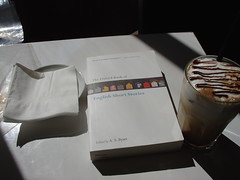
The Oxford Book of English Short StoriesImage by dalcrose via FlickrIf you are a writer who has published any form of writing, (fiction - novel, novelette or short story, poetry, non-fiction, biography, drama, film script, articles, anything where words appear in some form) in any medium and by any route from the traditional paths to the rocky road of self-publishing, I'd love to hear from you and have the opportunity to interview you here.

If you're interested, please contact me here
It would be helpful if you give me an idea of your writing and include any appropriate links, but don't worry if that's a technological nightmare for you; I can generally discover what I need.
Enhanced by Zemanta

Saturday, 11 December 2010

Smashwords Author Brian S. Pratt to Earn over $100,000 in 2011

As regular readers will know, I interview writers on this blog, with a particular fondness for indie authors, who have to do everything for themselves. The following is an interview by Mark Coker of Smashwords, with indie author Brian S. Pratt, who shares his experiences (good and bad) of independent publishing. My thanks to both Mark and Brian for their consent to this.

At first glance, Brian S. Pratt of Boswell, Oklahoma doesn't fit the stereotypical profile of a best-selling author. Yet he, and others Smashwords authors like him, represent the future of publishing.
Pratt began publishing with Smashwords in early 2009. His first quarterly royalty payment was $7.82. While most authors would find that number discouraging, Pratt was encouraged. It was a start.
In the quarters since, Pratt's earnings have grown, and in recent quarters he's become a veritable breakout success. Last quarter, he earned over $18,000 from sales across the Smashwords retail distribution network. This quarter, with three weeks to go, he's on track to break $25,000. He's on track to earn over $100,000 in 2011 at Smashwords, and up to $200,000 total when he includes his projected Amazon sales. Not one to count his eggs before they're hatched, though, he's fast at work on a next series.
The road to here was anything but easy. At age 43, he's held a number of eclectic jobs, ranging from an U.S. Air Force avionics technician to a taxi driver. Until recently, as he shares in the interview below, he was living below poverty level.
He writes fast-paced, can't-put-it-down fantasy. Pratt started writing because the series authors he enjoyed reading weren't completing their series fast enough. So he started writing books he'd like to read. Unlike some ebook series writers who carve up books into short serialized chunks, Pratt's books are full-length, with most clocking in around 150,000 words.
His writing style is completely his own, and any New York editor would surely bristle at the rules Brian breaks. His most popular series, The Morcyth Saga, is written in the present tense (though he changed to past tense for subsequent series). It's no wonder that after years trying to land an agent and a publisher, he faced unanimous rejection from publishing experts.
Yet readers had other plans for Pratt, as we learn today in this interview.
Lacking a traditional outlet for his work, Pratt self published in 2005, first in print and later ebooks. Today, his ebook sales far outpace his print sales by a factor of more than 100:1.
Today, Pratt has 17 books at Smashwords, and we distribute the books to Barnes & Noble, Apple, Sony and Kobo, as well as to online mobile app catalogs of Stanza and Aldiko.
His Morcyth Saga, a seven-book fantasy adventure series, is by far his most popular collection.
Below in this exclusive interview, Brian S. Pratt recounts the long road to his overnight breakout success.

[Mark Coker] Brian, tell us about your books

[Brian S. Pratt] I have 17 books completed spread across several series. Most are full length, epic fantasy type novels, each anywhere from 120,000-190,000 words. I have a few I call my mini's that are just plain fun and get the reader into the adventure from the get-go. These range from 60,000-90,000 words.

[MC] How did you get started as a writer?

[BSP] Back in 2005, I found myself waiting for several of the main authors to get around to finishing their next novel. The biggest one that annoyed me was The Wheel of Time by Robert Jordan. Don't get me wrong, I absolutely loved the series up to around book 6; then it lost me. Action grew infrequent and far between. It got bogged down in mundane details. Jordan wasn't the only one I was impatiently waiting for. So, on March 1, 2005, I sat down at my computer and decided to write The Morcyth Saga. Figured I could do a good job and write the kind of book I wanted to read. One that had action in every chapter, you followed the main character throughout, and descriptions were down to a minimum. That is exactly what you get in The Unsuspecting Mage; Book One of The Morcyth Saga.

[MC] What training do you have as a writer? 

[BSP] Training??? Not a bit. All I started with was the drive to write a story and everything else followed. I ended up writing a seven book series in Present Tense, rife with errors in grammar, spelling, and punctuation. Most of the errors have been fixed in subsequent editions. My word usage was not what one would find in the traditionally produced books, some said it was too simple. I don't know about that, but at least you don't need a dictionary at hand when you read my books. Some have liked it, others less so. My books feel different than others for that reason.

[MC] Tell us about some of the first customer reviews you received, and how you reacted?

[BSP] Reviews, yes there have been some dillies. Here's the first one-star I ever received. It was at Amazon.com less than a month after I first published The Unsuspecting Mage.
1.0 out of 5 stars - January 15, 2006
Present tense is an amateurish way to write....., 
.....and this book reads like it was written for a high school English class. Worst book I've read in a long time. I like lots of books, especially ones written by Robin Hobb, George Martin, and Stephen Donaldson to name but three. These books were well written. This one was not. Just wondering - how many of you are still in high school yourselves?
The last line was directed at the other reviewers who said they liked my book.
Needless to say, this devastated me and I stopped writing for a few weeks. Of course, I've had much worse ones since. But then, my books kept selling. And I always told myself that as long as my books keep selling, even if it is marginally, then it would be worth it to continue. I've come to realize that there will always be those that do not like my books, and so what? They simply are not in my target audience. And my target audience is me. I write what I would like to read. And it looks like there are many "me's" out there for I've sold lots of books. If you want to see what may be in your future, check out The Unsuspecting Mage at Amazon.

[MC] You joined Smashwords March 27, 2009 10:26pm (I checked!). Can you take us back to that moment in time, and recall what was going through your mind

[BSP] Let's see. I was a single dad living with three kids and boy, was I poor (under the poverty level). Up until then, I hadn't really thought much about eBooks. I tried Mobipocket for a while and had great sales for three months, then it died off. Sales for my paperbacks, which I had published through iUniverse had fallen off dramatically. Where I had been breaking 4 figures a quarter, I was now less than 600 per quarter and bleeding red. I typed in "self publishing" and saw a quirky little site called Smashwords. It said, Your eBook, Your way. Didn't cost a thing so what did I have to lose? First quarter sales at Smashwords were dismal, 2009-04-07 — $7.92 As it happened, April 7th is my birthday. That was cool. But I wasn't deterred. Books were selling. Sometimes, one or two a week, but they sold. I stayed with it and refused to allow all the naysayers (and there were those by the droves) to stifle my dream. Sales gradually improved and, well, here we are. Can't give up on your dream, EVER!

[MC] Your first quarter at Smashwords you earned $7.92. I've seen some new Smashwords authors jump for glee over a number like that, and others have unpublished their books and quit Smashwords in disgust. What was your reaction?

[BSP] My reaction was "I'm ahead, $7.92” By this time I had been published for a little over 3 years and had seen sales go up and down. Can't make any kind of decision based on just one quarter. Plus, I was getting the hang of how to make Smashwords work for me. You can't just publish your book, sit back and think, "Okay, the money is going to roll in now." It ain't gonna happen. The industry is stacked against anyone who is just starting out. You have to get out there and grab readers by the collar and shout, "Here I am!" They won't find you or care about you until you do.

[MC] Your sales started small but then grew steadily, and in more recent months you've broken out into the best-seller lists at some of our retailers. What was the secret?

[BSP] After receiving my second royalty check which was only $183.60, I figured I needed to get busy and get creative. So I first looked around for a good place to advertise and found Project Wonderful. They suited my needs perfectly; ads would run on websites for pennies a day. I then created a coupon code that would discount my first book for free. I then created a series of ads stating that a free copy was available, all they had to do was copy down the code and go to Smashwords for their free copy. Well, that bombed and bombed badly. Came to realize that I was asking way too much of customer. In order to get my book, they had to go to Smashwords, create an account, put in the code, then download.
People are inherently lazy about shopping, especially in this world where everything is a click away. I pondered on the lack of success with my coupon code, then realized that if I just made the book free, they would only have to click the link in the ad, then download a free copy. Simple. (Keep it Simple-Stupid) I made it so easy for people to download my book, that downloads jumped. Subsequently, sales for books 2-7 jumped as well.
If it’s free and downloading is just a click away, people will do it. Very few can walk away from a free deal. Unknown authors are risky to readers and few wish to risk money, or time, to try a book they are not sure they will even like.
When Smashwords signed the deal with Barnes and Noble, my sales jumped 300% that quarter. Barnes and Noble have one of the best “Free eBook” sections and now people could find my book without having to see a small ad. Without Smashwords free copy of book one at Barnes and Noble, I would hardly be doing the sales I am today. That was the one act that set into motion sales the likes I never thought possible for an Indie without agent, editor, or publisher.

[MC] Prior to publishing at Smashwords, multiple agents and publishers rejected you. Tell us about your most memorable rejections.

[BSP] No one wanted me. All the rejection letters were worded very politely, but you can’t help but adding phrases to them like “You suck as a writer” or “Your book would be good to keep my table level but as for making money, it has a better chance to spontaneously combust.” When I published it through iUniverse, I opted for an editorial review ($300 at the time). They basically said the manuscript would need a serious overhaul before it would become commercially viable. And oh by the way, we do have many such services available…for a price. At the time I thought it was a complete waste of time. But now looking back with five years experience under my belt, many of their comments had merit. Although one must keep in mind, had I continued working with my first book to get it right, I’d still be working on it to this day and all subsequent ones never having seen publication. There comes a point when a writer has to say, “It’s ready. Good or bad, let’s see what happens.” What happened in this case was that there were many people out there who enjoy a good adventure and have since traveled with James through 8 books and are patiently (impatiently might be a better word) waiting for the second installment of the follow-up series, Travail of The Dark Mage.

[MC] What does it mean to you to be described as a self-published author, or an Indie author?

[BSP] The biggest worry a writer had back in 2005 was whether or not they wanted to be stigmatized as “self-published.” Once stigmatized, I was told, never again would a traditional publisher take you on. Unless you sold over 50,000 copies. But then, I thought, if I sold 50,000 copies, what would I need a publisher for?
Now, I think of it as a badge of pride. My success is mine, no one else’s. Everything that comes from my books, comes because of the hard work I, and I alone, put into it. Others have helped, but I spearheaded it and got it done. Even if today I was to get a publisher, from what I’ve heard of other author’s experiences, they still do most of their own publicity and get tied into restrictive contracts and unrealistic demands. Case in point, the movie Back to the Future. The head of the studio sent the producers a memo in which he stated that “Frogman from Mars” would be a better title. What a nightmare to have to deal with that. As a self-published author I don’t have to worry about another’s “taste” or “ideas.”
Of course, if you fail, again you have no one else to blame. But the only failure you will have, is if you quit. Try new ideas, talk to those who have succeeded, most of all don’t give up.

[MC] What's your view of the future of indie authorship, and where do you think traditional publishers fit into your plans, if at all?

[BSP] Indie authorship is here to stay and the traditional publishing houses better get used to it. They also better not discount the effectiveness of its appeal or they’re going to regret it. I think they are going to wake up one morning and wonder where all their profits have gone. The better authors will do it themselves because they are going to make more money at it. Also, as the Indie Revolution continues, more and more authors being sought by publishers will be taking hard looks at their contracts. True, if you only have a single book, traditional publishers may be the best route. I make money because I have a series, a completed series, and give the first one away free. Can’t beat free for advertising.
As of today, I no longer send query letters (what a waste of time that was) to agents. No longer submit to publishers or even enter contests. My books are not award winners. They are merely fun books. I’ve tracked winners in the past and they don’t always do well.
What would happen if I got an email from a publisher asking for publishing rights? I’d listen to what they have to say. I’d carefully scrutinize any contract for how future books would be affected and so forth. I feel the restriction and demands made by them would far outweigh any increased royalties. But I could be wrong. Never say never to anything where money is concerned.

[MC] Where does print fit into your publishing strategy going forward?

[BSP] Print goes hand in hand with eBooks. You have to have a print copy of your book. I sell maybe 2 or 3 books per 1000 eBooks. Not much, right? Keep this in mind. eBook readers tell their book reader friends about your books. If you want them to buy it, it needs to be available. My biggest hurdle with print has always been pricing. Not much you can do about that, self-publishing print books is expensive no matter where you do it. I’d suggest Lightning Source Inc. they’re the best and will put your books before the most customers.

[MC] Imagine you're mentoring a new author today. What three secrets to success would you share, and why?

[BSP] Actually, I’ve already helped over a dozen authors with getting started. I take the time to answer questions and give advice freely.
  1. First thing I advise is to be approachable. Have an email address solely for those contacting you as an author and post it everywhere. If someone sees your book, that email address had better be there too. And remove the spam filter. About a year after I published my first book, I happened to check my spam folder and found 3 emails from readers. Made me mad. Also made me wonder how many others couldn’t get hold of me due to my (censored) spam filter. There was this one author, forgot who, but I saw his profile on Amazon. It basically said that he didn’t want to be bothered with questions from readers, nor did he want to hear from other authors. And oh by the way, won’t you buy my book? –Not word for word, but that was the gist of it. Needless to say, I didn’t even look as his book and have since forgotten the guy. I’ve earned many steadfast fans simply because I responded to them in a personal and friendly manner.

  1. Get a website. They’re pretty cheap and are absolutely invaluable. Your readers need a place they can go to learn more about the books, and about you.

  1. Listen to your heart, not reviewers. If you can’t stand criticism, find something else to do. Also, when you get your book first published, friends and family always like to post reviews. Well, there are certain things you need to explain to these reviewers before they post.

A.
 One line reviews are worthless. Saying, “This is greatest book I’ve ever read!!!” is a waste of time. It means nothing to no one.
B. Tell potential customers about the book. Why is it great? Why did you love it? Why should they spend time and money to read it? Give an example from the book. If you use an example, it gives your review more weight for it lends credence that you actually read the book.
C. Don’t talk about just the good. Pick something negative and write about that too. A balanced review is more helpful, and more believable than one that just gushes praise. No matter the book, there has to be something that bugged them. If the book is self-published, there will be something to criticize. I received an email from one reader that said he read a review in which a previous customer complained that my book read like a D&D game transcript. The reader, a gamer by the way, checked it out on that basis alone and ended up buying the entire series. So never assume that a negative review will be negative to all readers.

  1. Here’s the biggie. Write. Seems simple doesn’t it? You’d be surprised how often we come up with excuses why we can’t write. If you’re a writer, then you better be writing. Finished a book? When’s the next one going to be published? Don’t stand still and see if the first one sells well before starting the second. Do you believe in what you are doing? Then for heaven’s sake, write. Set a goal. In the beginning, my goal was 20,000 words a week, or an equivalent time editing. I met that and in fact wrote Shepherd’s Quest, a 130,000 word book in 5 weeks. I was on roll.

  1. Don’t go to your family with your manuscript and ask, “How is it?” If you want an honest answer, go to Fanstory.com and join. You’ll find out fast just how good/bad your manuscript is. Friends and family are biased and will have a hard time seeing your work for what it truly is. If you ask for an opinion from someone who knows you, the person answering you knows that they’ll have to deal with you afterward so will say “it’s great” or give some other affirmative response. They don’t want to crush your spirit. I watched this one show once where a guy wore this t-shirt that said, “My mom thinks I’m cool.” Enough said.

  1. I have posted lots of useful info for self-published authors, or those thinking of going that route on my website. If you’re interested, check out my site, Brian Pratt Books. It’s a year old, but most of the info should still be fairly current. It will definitely give you some things to think about.

  1. We’re all in this together. Email me should you have questions or anything.

[MC] Every author must compete against hundreds of thousands of other books. What's the secret to breaking out? 

[BSP] Write, keep writing, and when your fingers are sore, write some more. The more books you have out, available through the most channels, the better your exposure. Never cancel a channel unless you know another will fill the void. Best channels right now are Smashwords and Kindle. Neither costs you anything but time. From the first sale, you’re making a profit. If you give up, it’s over. Until then, anything can happen. I’m a prime example of that.
Find ways to get your book in front of people. Don’t expect glowing reviews to sell your book. After all, if readers don’t find your book in the first place, no amount of “good” reviews will help.

[MC] Now that you've achieved success as a writer, how might your writing change, if at all?

[BSP] I now understand why some authors take a long time in getting out the next book. The more books you have, the more time ends up being devoted to previous titles and other things (this Q&A is a prime example). Editing has always been a sore point with [my] readers, or rather, the lack of it. My books have never seen a professional editor and could use a touch of polishing. I’ll be looking into that with the new year.

[MC] Now that you're able to devote full time to your writing, what's your typical day like. What's your process?

[BSP] I spend far too much time on the internet checking sales, answering emails (I love that part) and seeing what’s going on in the world of publishing. Smashwords is usually the first page I visit in the hopes that sales have posted. Most days, I’m disappointed. There have been times when I thought, “What the heck is going on? Where are my sales?” But you know, they all come in before the quarter payout, and I’ve never had a problem with getting my money from Smashwords. [Note from MC: We hear you Brian! Faster reporting is one of our top priorities for 2011]
After that, I try to get some editing done on my newer works, then an hour or so of computer gaming. I write some, check emails again, and so forth. The longer a series goes, the more complex it becomes. You need to take into account all that has gone before, keep your characters consistent, and make it all seem flawless.

[MC] What's coming next?

[BSP] Finish Travail of The Dark Mage. I’m on book 2 and figure the series will be around 5 books. Never know for sure until I’m done. The initial plan for The Morcyth Saga was 10 books. Can you imagine what would have happened if I had contracted for 10 books with a publisher and instead came through with 7? Love being an Indie.
I do have ideas for another 2 series after Travail, as well as off-shoots like The Improbable Adventures of Scar and Potbelly, a series of short adventure books based on the duo from the series. One thing I do know for sure. I will not release another series unless I have it already completed. I hate making readers wait.

[MC] Thanks for sharing, Brian!

To sample or purchase the ebooks of Brian S. Pratt, visit his Smashwords author page


Enhanced by Zemanta