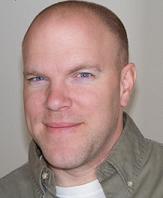
Chris Hambleton resides in Denver, Colorado, where he is employed as a software developer and consultant. He has authored several websites, software applications, and other programming-related articles.
Chris is also the creator and administrator of BookBlitzer.com, a website that helps authors get more exposure for their books through reviews, contests, and other networking tools. In 2008, he developed the iWriterPro book-writing software to help authors manage and write books more efficiently.
His other interests include spending time with his family, reading, hiking, studying Bible prophecy, Ice Age/ancient civilizations, and archaeology.
Other Books by Chris Hambleton
"Endeavor in Time" (2008)
"The Cell – Twilight’s Last Gleaming" (2010)
"The Last Aliyah – Book 1 of The Time of Jacob’s Trouble" (2011)
"The Son of Shinar – Book 2 of The Time of Jacob’s Trouble" (2011)
"The Siege of Zion – Book 3 of The Time of Jacob’s Trouble" (2011)
"The Castors of Giza" (2011)
Connect with Me Online:
Tell us about “The Time of Jacob’s Trouble” in a few sentences.
My current book is part of a trilogy called “The Time of Jacob’s Trouble” – it’s a saga about an Israeli family as it goes through the End Times as described in the Bible. It was the first novel I wrote in 2008, but I decided to rewrite it after touring Israel in 2010. The trilogy heavily builds upon current trends in the Middle East and weaves in passages from various parts of the Bible (especially the Book of Daniel and the Book of Revelation). I also have another book in progress called “The Castors of Giza” which is a adventure story about how the Great Pyramid was built.
What qualities do you need to be a successful writer?
First and foremost, you need to have a good story to tell, one that hopefully can catch (and hold) your readers’ interest. Secondly, you need to be able to describe characters, settings, and scenes in such a way that the reader feels like they can ‘see’ what’s happening as though they were watching it in the theater or on television. Third, you need passion and a certain ‘flair’ for story-telling.
What is your working method?
Typically, I start with a handful of ideas for a story and weave in an underlying message I want to communicate, such as repentance, forgiveness, etc. From there, I begin adding in the main characters and secondary characters, along with some of the scenes I think would catch the readers’ attention. Then I begin plotting out the book in rough chapters and scenes, and then plug them into the writing software I use – iWriterPro (http://www.iwriterpro.com). I developed this software specifically for writing novels in 2009, and it’s been one of the best investments of my time I’ve ever made.

What is the single biggest mistake made by beginners to writing?
For myself, it was not reading “Self-Editing for Fiction Writers” before writing my manuscript. I found I spent far too much time describing scenes and settings to the reader instead of showing them through the eyes of the characters. I used to have a big issue with “telling” instead of “showing”, which I’m getting better at. The trick of seeing and writing novels from the perspective of a camera was a big help in improving my books.
How did you come to write this particular book?
I first took a passing-interest in Bible prophecy in 1996, and then in 1998 began to study it much more seriously. In 2006, I began writing "The Time of Jacob's Trouble", which was then published in 2008. Several years later in 2010, I was fortunate enough to visit Israel on a study-tour, and I saw for myself the miracle of modern Israel.
When I reviewed my book after visiting Israel and learning more about the land and its people, I realized there were numerous inaccuracies that I felt compelled to resolve. Several reviewers also recommended that the original book be divided into three and expanded to focus more on the characters than the mere circumstances/settings of the End Times.
If you have a favorite character in your novel, why that particular one?
Since most of my books have underlying themes of redemption and spiritual change, my favorite characters are usually the main character (or one of their friends or supporting characters), who the stories revolve around. Some sort of spiritual transformation is nearly always involved in the plot and in the development of the character.
How can people buy your book(s)?
My books are available on my website at http://www.cwhambleton.com, and also at Amazon.com, Barnes and Noble, Smashwords, and most other book sites. “The Last Aliyah” is the first book I’m releasing exclusively in eBook format rather than paperback.
To what extent are grammar and spelling important to a writer?
Spelling and grammar are quite important, as they directly reflect on the time and care the writer has put into their manuscript – not necessarily their story, but their finished work. However, sometimes proper grammar can interfere with the beat and dialogue in the story, so using proper grammar may not always be the best way of communicating your story. For example, “Tom Sawyer” and “Huckleberry Finn” would sound terrible if Twain had used “proper grammar”.
How much revision of your MS do you do before you send it off?
Typically, I revise a manuscript at least three times after the initial draft, with typically a “week off” between revisions. When I find I start to hate the story/book, I know I’m about done with it.
Where and when is your novel set and why did you make these specific choices?
My latest novel, “The Last Aliyah”, is set in the near future in various parts of Israel, but predominantly in the north at Haifa. I decided to have the story take place in Israel because that’s where most of the ‘action’ in the End Times occurs, and I had noticed that few other authors had placed their End Times story predominantly in Israel and from the perspective of the Jewish people.
To what extent do you think genre is useful in the publishing world?
I think the importance of genre depends largely upon the author and their purpose (such as trying to make a living from their work). My genre would likely be much different if I was trying to sell thousands of books a year. However, since novel-writing is primarily my hobby and an “escape” from the exciting world of software-development (LOL), I have the freedom to write what I want, when I want, and how I want.
What are your writing habits?
I do most of my writing with the book-writing software I’ve developed called iWriterPro (http://www.iwriterpro.com). I will often go to a coffee-shop either early in the morning or after work to hammer out the manuscript (especially the first draft). Much of the revision-phase then takes place either at home in the evenings or before work.
How do you know where to begin any given story?
I typically “sketch” out the book in my head in the weeks/months before I begin working on it and jot down some notes or rough scenes I think would make a good story/plot. Once I think the plot is workable, I create a rough plot outline and then develop it. If the story makes it through that phase, the story-writing phase is ready to begin.
As for where to begin a story, I often try to throw the main characters right into the action from the beginning and start off the story with a BANG! to get the reader immersed in the story as quickly as possible. I’m a big fan of “24” and “Lost”, and that was a hook those screenwriters always used quite effectively.
What sort of displacement activities keep you from actually writing?
Since I’m still working full-time as a software developer, my work schedule cuts into the time I’d love to spend writing, along with family time and church/friend activities. Also, I’m in the process of creating several websites/services centered around authors-helping-authors and social-networking (such as http://www.bookblitzer.com), and those development/support activities cut into my time also.
Do you have support, either from family and friends or a writing group?
Certainly! My family, friends, and extended family have been very supportive in my work. Sometimes I feel bad about announcing/giving them my books all the time, since it seems like a new one is always coming out.
Is presentation of the MS as important as most agents and publishers suggest?
Yes – agents and publishers know what looks good and what is sellable (according to the market). If they’ve defined a format that sells better than others, then that’s what authors should try to use.
How long does it normally take you to write a novel?
I can usually crank out a first draft between 2 and 3 months, especially if I’ve been thinking about the story for awhile and have done much of the research beforehand. I love reading, and often a story will emerge from the various books I read. Often I’ll have several stories bouncing around in my head for months or sometimes even years before I actually begin writing them. The trilogy I’m starting later this year, “The Starstone Chronicles”, has been in my head for about five years now.
What are your inspirations?
My main inspirations are other authors who have written great stories – not necessarily the best-selling authors or books, but the best stories that I can identify with and relate to. There have been several books I’ve encountered where I’ve literally shouted, “I WAS GOING TO WRITE THAT!” and that inspires me to keep pushing. The potential of making money in the book-industry doesn’t really inspire me at all compared to being able to tell a great story (though making some good side-cash would be nice).
If there’s a single aspect to writing that really frustrates you, what is it?
The part of writing that really bothers me is finding extra or dropped words in my books once they’re in print. Something else that bugs me is when I think of a scene or character that I could’ve added to the story to make it better after the book has already been published. That’s one of the reasons I’ve transitioned over to writing eBooks, since I can improve them anytime I want without much cost or hassle.
Do you think writing is a natural gift or an acquired skill?
I think it’s a bit of both a natural gift and an acquired skill. I’ve heard that everyone has story inside them and just needs to drawn out, and I believe that’s true – the gift is being able to extract that story and turn it into a book (or several books). The “acquired skill” portion is developing that gift and turning it into a craft.
What are you writing now?
My current work in progress is called “The Castors of Giza”, which takes place in ancient Egypt during the design and building of the Great Pyramid of Giza. I’m very excited about it, since the idea for the book suddenly came about in early 2011 and was completely unexpected, and it gives me an opportunity to learn about a country/era I am relatively unfamiliar with.
Is there any aspect of writing that you really enjoy?
I particularly enjoy the research and plot-development phase of writing slightly more than working through some the scenes and dialogue (which can get tedious at times). And of course, I like thumbing through the finished product (or clicking through it, such as with my eBooks).
Do you have a website or a blog that readers can visit?
Given unlimited resources, what would be your ideal writing environment?
My ideal writing place would be at a beach-house somewhere sunny and warm, though I probably wouldn’t get as much writing done.
Where do you actually write?
I do most of my writing at Starbucks or Caribou Coffee, or at least the rough scenes and dialogue. A lot of the finishing work takes place at home after the kids go to bed or early in the morning. I find that I don’t write very well unless there are other people around, as long as there aren’t many interruptions.