Google+
This blog has moved. Please go over to this link to see my new website.
Showing posts with label Debate. Show all posts

Saturday, 19 April 2014

Courting Contentious Content.

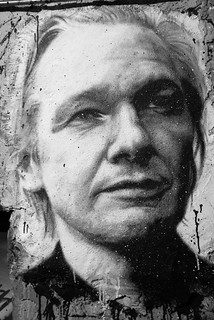
Julian Assange painted portrait - Wikileaks
Julian Assange painted portrait - Wikileaks (Photo credit: Abode of Chaos)
Are we subject to a type of censorship that curtails freedom of speech and prevents honest debate of issues of vital importance to civilisation?

In the West, we pride ourselves on our tolerance. This is especially the case in Europe and even more so in the UK, a land noted for its cultural diversity and its acceptance of the beliefs, customs and traditions of others. In order to protect those institutions, beliefs, sensibilities and creeds that differ from our home-grown varieties, government has implemented laws intended to prevent prejudice and insult. But, because of the undeniable threat of terrorism, they’ve also set in place watchdogs to detect activity that may be considered a threat to the State.

It’s my belief that the combined effect of these two factors is to stifle serious debate about religious bodies and/or traditions and customs.

Let me illustrate my point. If I wish to write a feature, or even a piece of fiction, highlighting perceived dangers presented by extremist groups, my first recourse is research, so I can get my facts right. So, I start to  investigate terms like Al-Qaeda, mujahadeen, taliban, islamist, the Army of God, Ku Klux Klan, etc. In common with most modern writers, my first port of call is the web. But wait: if I start typing such words into my search engine, am I going to immediately become a target for the anti-terrorist organisations that filter such words from our emails, texts and online searches? The danger certainly exists. And, I suspect, for many that’s sufficiently worrying to prevent them even taking the first steps.

In writing this piece, I wanted to ensure I spelt the words correctly (many of them have variant spellings, after all). For me, spelling is the prerogative of the SOED, a 2 volume version of the Oxford English Dictionary, which comes as a printed book of 20 volumes with 3 additional volumes to account for more recent words. My copy of the smaller book was printed in 2007. Al-Qaeda has been active since 1988, but doesn’t feature in the SOED. So I went to the web. I used the roundabout route of searching for Al-Jazeera, a respected broadcasting company, and was directed to the inimical Wikipedia. From there, I was more comfortable searching for the other terms.

But you see my point? Fear of the heavy-handed authorities descending on the house to remove my computer for forensic dissection, especially in light of the fate of such protectors of free speech as Edward Snowden and Julian Assange, makes me, and many others, wary of even investigating certain topics.

The other cause for concern in writing about such matters stems from the potential outcry and threats of death that may result. We have only to recall the cases of Salman Rushdie and his Satanic Verses (a book I actually read at the time, forming my own ideas about the real reason for the fatwa), and of Jyllands Posten, the Danish newspaper that published cartoons of the Islamic prophet, Mohammed. But it isn’t just Islam that poses such problems. There’s evidence that raising the subject of Christian, Budhist, Hindu or any other form of religious extremism can cause serious problems for those daring to criticise such organisations.

Even at a less heated level, the criticism of many religious groups, no matter where those beliefs originate, is invariably seen as an attack on faith and belief, so that simply questioning these issues often results in tirades of abuse, threats and even physical atttack.

Those of a rational turn of mind are effectively silenced by a system that was ostensibly put in place to protect the rights of minorities. It’s become very difficult to even venture an opinion on the validity of faith, the truth about religion, or the real value of certain rites and rituals unless the writer couches such ideas in the most delicate language.


Fear of causing offence, coupled with very real concerns over both official and extremist responses, has effectively neutered those who wish to hold open and honest debates about certain religious beliefs, traditions and customs. It takes a brave writer to raise these contentious issues. I suggest that the balance of the law has shifted dangerously toward censorship of those who employ reason and rationality and is now overprotective of those who wish to maintain what are often erroneous and frequently dangerous belief systems. This fear stifles the very necessary discussion of subjects that are often directly responsible for much injustice and harm in the world. What do you think?
Enhanced by Zemanta

Thursday, 25 October 2012

Does it Matter if the Words Are Not Right?


This might seem an odd question from a writer. I was prompted to ask by a fit of annoyance over poor language used by a journalist on television. She was reporting on a local news item and used the expression, ‘This problem is, of course, very unique to…’ and went on to ask her interviewee just ‘how unique’ he felt the issue was.

So what? Well, ‘unique’ is an absolute. There are no degrees of uniqueness. Something is either unique or not; it can’t be partially unique, very unique or, indeed, almost unique. We have other words to express such things. ‘Rare’, comes to mind, as do ‘uncommon’ and ‘scarce’. Because rarity is an elastic concept, we can use qualifiers with impunity. It’s fine to discuss degrees of scarcity, that degree dependent on the amount by which the object under discussion veers from the commonplace. 

If we begin to use absolutes in such a way, we diminish their real power in describing an event or quality. If I say that a woman conveys a ‘unique beauty’ I paint a picture of someone who is singular, incomparable. If, on the other hand, I describe her as a ‘rare beauty’, then I put her in a class along with others; the number contained in that class can be defined more or less by using qualifiers such as ‘very rare’, ‘unusually rare’, ‘moderately rare’, etc. So, in the ‘unique’ case, the reader is clear that the person described has no equal. In the ‘rare’ case, we know that there are others, though not a great number, who are comparable. It’s a fine distinction, but one worth retaining, I think.

In another example of poor journalism, one increasingly repeated these days, I heard a reporter talking about how ‘…there are less people involved in…’, when, of course, he should have said, ‘...there are fewer people involved in…’.  This is a slightly different matter, however. The use of less or fewer always provides the information that a smaller number is involved than the comparison. Whilst the use of the correct word is preferable, it doesn’t actually alter the basic idea being communicated. So, whilst I find the usage lazy and inaccurate, I can reluctantly accept its adoption because meaning isn’t changed when the error occurs.

This, then, is my question: If meaning is maintained, does it really matter if the wrong word is used to convey that meaning?

Are we concerned about correct usage simply for the sake of correct usage? Or is our concern, as writers, more to do with style, perhaps? Does wrong usage, whilst acceptable to many non-writers, merely illustrate a lack of care, education, or intelligence to those of us who write?
  
Language is primarily a means of communicating ideas. So, if those ideas are expressed without confusion in spite of wrong usage, does that incorrect usage really matter?

I pride myself on knowing correct usage, most of the time, but do my readers care, or even notice when such errors occur? As a writer, I feel duty bound to utilise the many fine shades of meaning possible within the English language. I feel that allowing such distinction to be eroded by ignorance, carelessness or expedience is a step along the road toward ultimate confusion and bedlam, as fine discriminations disappear under a carpet of banality. The poet in me abhors such laziness. But, apart from other poets and writers, do my readers care? That’s what I ask you. And I welcome your responses.

Enhanced by Zemanta

Sunday, 14 October 2012

Whose Water Is It, Anyway?

Water cycle http://ga.water.usgs.gov/edu/water...
Water cycle http://ga.water.usgs.gov/edu/watercycleprint.html Other language versions: Català Czech español Finnish Greek Japanese Norwegian (bokmål) Portugese Romanian עברית Diné bizaad (Navajo) and no text and guess water vapor (Photo credit: Wikipedia)

As far as I know, no individual or corporation has laid claim to the air we breathe or the light that stems from sun, moon and stars (though the possibility clearly exists in this materially-obsessed world of ours). We accept that these are naturally occurring phenomena that have enabled life on the planet we inhabit. Logic suggests that water be included in that short list. It’s a natural consequence of a long-established cycle that was not initiated by human activity and it’s a substance that’s the very essence of life. Yet there are those who lay claim to the water that exists in a given region. My view is that water, like air and sunlight, should not be allowed to ‘belong’ to anyone.

I hear the cries of those who either run or own shares in water companies, berating me for robbing them of their profits, and telling me that treated water doesn’t get that way for free. I know. I wouldn’t dream of arguing that it does. That isn’t what I’m suggesting. I’m saying that they do not and cannot make water.

We may clean and modify the raw material. But that raw material is a natural resource and is therefore not something over which someone can rightly claim ownership. The processing, storage and delivery are those elements for which we should expect to pay, allowing the companies concerned to add their reasonable profit for future investment and to pay their workers a living wage. But, to allow anyone to claim rain, which is what all drinking water is at source, as an owned resource is patently mad, bad and stupid. So, as a society, and I am talking worldwide here, we should accept that water, which exists without our intervention, isn’t a commodity to be traded but a resource to be distributed without reference to either profit or boundaries.

Treatment, modification, extraction, storage and delivery are the only elements that should be subject to cost. The raw material should be considered a zero cost component of such a business.

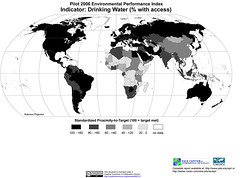
Drinking Water
Drinking Water (Photo credit: SEDACMaps)
Logic suggests that I should go further in my argument. Is rainfall a matter of human control? Only inasmuch as, occasionally, societies have seeded clouds in order to encourage precipitation at a specific time in a specific place, with variable success. We have no control over where and when those clouds are formed. That’s a natural process. It’s true that our activities are increasingly distorting it, but that’s an accidental by-product of our irresponsible behaviour.

So, it follows that not only is water not the property of any individual or company; it isn’t the property of any country or state either. The water cycle knows no boundaries. The presence or absence of water in any given location is due to a combination of natural influences: geology, geography and climate. Of course, there are man-made aquifers, reservoirs and other capture and storage facilities where man has usurped the natural product to direct it for his own purposes. But such activity doesn’t constitute ownership of the actual resource, it merely permits the transient capture of a quantity of it for local consumption and is therefore part of what I’ve referred to as storage.

Over the history of our species, we have instinctively tended to settle near sources of drinking, or fresh, water. The exceptions are nomadic peoples who have taken their chances and followed certain natural cycles in order to obtain their food and water. These are stateless peoples who, for historical reasons often lost in the annals of unrecorded history, have not been able, or allowed, to settle in any given location. But, for the majority of us, a settled existence has been the norm for millennia. And settlements have almost always developed near sources of drinking water simply because its absence would prevent expansion.

English: Mwamanongu Village water source, Tanz...
English: Mwamanongu Village water source, Tanzania. "In Meatu district, Shinyanga region, Tanzania, water most often comes from open holes dug in the sand of dry riverbeds, and it is invariably contaminated." . Français : Point d'eau du village de Mwamanongu, en Tanzanie. "Dans le district de Meatu (région de Shinyanga, Tanzanie), L'eau provient le plus souvent de trous creusés dans le sable de lits de rivières asséchées. Elle est systématiquement contaminée." (Photo credit: Wikipedia)
So, whether that water is obtained from boreholes, lakes, wells or rivers, it remains a natural resource. Yes, there have been more recent settlements that have provided their own man-made storage facilities and collected or redirected the water needed to fill them. But the water, the result of rainfall, remains a natural resource, along with sunlight and air. (I’m aware that my argument can be developed to include other natural resources, by the way, but I intend to discuss that in a later piece).

It follows that national borders are irrelevant to the incidence of water. Presence or absence is an accident of geography for any state, since this aspect of the cycle is unfixed. A city can grow up on the banks of a river which then changes course. A settlement can develop around a lake which subsequently drains due to tectonic or mineralogical activity. The boreholes leading to an underground aquifer can end up as mere holes in the ground when natural changes shift the level of that aquifer.

Yes, we, as a species, can and do make changes aimed at preventing such dangers to our second most essential resource. But the fact remains that the substance itself stands outside ownership or borders. Something that falls from the sky in the way that precipitation develops water sources can hardly be claimed as the property of any person, corporation or state. We are custodians only. Modifiers; nothing more.

In the near future, water, or its lack, will become an increasing source of dispute between nations. There are already signs of conflict arising from the reduction of available water in certain geographical areas. The famines in parts of Africa are almost entirely driven by changes in the water cycle in those regions; increased population has merely exacerbated the problem. My guess is that the problems in Israel are fundamentally caused by the perception that the most important source of fresh water is growing insufficient to sustain more than a given population. There are signs that drought will soon invade the fertile plains of the Punjab in India, making it impossible for them to provide the food on which that huge continent depends. The western states of the USA are finding more and more difficulty in obtaining water for agriculture, industry and human consumption. Not that this has stopped certain organisations from squandering the precious resource in displays of irresponsible excess.

If, as a world society, we fail to recognise the basic fact that water is a natural resource belonging to all and to none, regardless of source, we will have conflict in the near future. Almost certainly, the next major wars will be over the ownership of fresh water: man killing man through an inability to accept a basic truth. Water, like air and sunlight, is a natural consequence of the location and geography of the planet and belongs to no one and to everyone. It is time we dealt with it in that way.

Enhanced by Zemanta

Saturday, 17 March 2012

Is Piracy Just a Form of Petty Theft?

English: Flag of pirate Edward England Polski:...
Image via Wikipedia

Honest Questions From a Simple Man.

This discussion follows on from last week's debate about honesty. Here's the link, if you want to visit that first: http://stuartaken.blogspot.co.uk/2012/03/is-copying-same-as-theft.html .

Theo: We'd reached the conclusion that you'd be prepared to pay what you saw as a reasonable amount for things like CDs, DVDs and books. But that it was acceptable to steal these objects if they were overpriced.

Dave: I wouldn't put it like that.

Theo: How would you put it?

Dave: Look, if you feel you're being ripped off, especially by a big organisation, you want to get your own back. It's natural, isn't it?

Theo: So, what you're saying is that theft of small items from large organisations that overcharge for the goods is a legitimate activity?

Dave: Except I wouldn't call it theft.

Theo: So, we're looking at semantics here, are we?

Dave: No. That's just playing with words.

Theo: Well, I'm trying to understand. Tell me what you'd call it, then we can move on.

Dave: It's redistribution, isn't it? Like Robin Hood. He stole from the rich and gave it to the poor.

Theo: It's interesting that you still use the term 'stole' here but seem reluctant to use the same word for what we're discussing.

Dave: Yeah, well he redistributed wealth by taking things from the rich and giving them to the poor.

Theo: And these things he took were essential to the welfare of those he gave them to?

Dave: It was money mostly, and jewellery they could sell. Hell, these people were starving and the fat cats were taking more and more in taxes from them, so they could live in luxury.

Theo: So, this mythical act of redistribution was to do with inequality in society, where the differential in wealth was so great that those on the bottom were starving and those at the top were living lives of excess?

Dave: That's right. Social engineering, they call it.

Theo: Okay. I can see the justice and fairness in such a scheme. When authority won't do a job for society, society needs to do the job itself. And that seems perfectly fine when we're talking of the necessities of life. It starts to seem like envy, however, if we apply the same rule to things that aren't essential. We all need food, heat, shelter, etc., to live a reasonable life. But we don't actually 'need' the items we've been discussing. These things are extras; 'wants' rather than 'needs'. Would you agree?

Dave: If you put it like that…

Theo: Your argument is based on price, which you see as unfair. If we extend it logically, you could use the same argument to justify stealing someone's Lamborghini, because it's an expensive car as opposed you your own hatchback. Would you steal a car for that reason?

Dave: Of course not.

Theo: So, we come back to where you set the level for what you see as acceptable taking without paying. And I think we've already covered that ground and found that it's a subjective decision based on personal judgements about the perceived value of the object coupled with personal income. So, a book sold for £10.00 ($15.84) might be okay for many people but one sold for £20.00 ($31.68), especially in digital form, might be considered overpriced?

Dave: Like I said, it's a rip off. It costs almost nothing to produce a digital book, once the thing's been written.

Theo: Again, that's a subjective judgement. And, in any case, you're not paying only for the object itself, but for the time it takes for that object to be created. Let me tell you about writing as a profession. The average novel in the UK sells fewer than 2,000 copies. The author gets around 10% in royalties. That means that for a book that sells for £10.00, the author might make a total of £2,000.00. Most novels take around one to two years to complete. That's just for the actual writing. Of course, the process starts a long time before the writing does, since a novel is often the condensation of a lifetime's experiences. I have to ask whether you'd be prepared to have your time valued at the pittance the author receives. I mean, do the maths. I think you'll find that this overpaid artist is getting less than £1.00 ($1.58) per hour for his time. Not what I'd call a huge return, would you? Even the book priced at £20.00 earns him only £2.00 ($3.17) per hour.

Dave: Well, what about authors like J.K.Rowling; they earn millions.

Theo: For every best-seller, there are thousands who sell only a few hundred copies, if they're lucky.

Dave: They should write better books, then.

Theo: You'd like your choice to be reduced to only those books that everyone wants to read? You'd like a diet of the same all the time, would you? Just because something isn't as popular as something else, it doesn't render it less valuable, just less marketable, which is a different thing. We all have, amongst our collections, works by what are called 'niche' artists, and they often prove to be our favourite pieces, even though they've never reached the notice of the more general population.

Dave: As long as it's easy to copy digital stuff, it'll be copied without paying for it.

Theo: So, because it's possible, it's acceptable, is it?

Dave: It's going to happen. Get used to it.

Theo: It's possible to kill with a knife. Does that make murder acceptable? It's possible to duplicate almost everything with modern technology. Piracy exists across the board in manufactured goods. Usually the pirated goods are made by what amounts to slave labour in developing countries and the industry often supports terrorists and criminal gangs. The attitude that piracy is not only acceptable but should be encouraged is responsible for financing the worst type of criminal and terrorist activity. That must make the purchasers of such goods so proud.

Dave: That's not the same thing.

Theo: Looks very much like it to me. And what are the consequences of pirating on those who produce the original works? The really talented, the brightest stars, will find different fields, somewhere they can operate and be properly paid for their efforts and the original field will be impoverished as a result. Simply because some people are unwilling to pay a reasonable price for something because they perceive it as being too expensive when provided in a digital medium, which they can easily access. The argument that it's easy to make and reproduce isn't a justification for theft. Any more than the profiteering by the industry giants is justified. What we need is a more mature and honest appraisal of the reality of the situation. We need the pirates to be honest about their activities, to accept that they're taking the bread from the mouths of those who create. And we need the large distributors to accept that they must re-examine their attitude to the sale of such items. But, in the meantime, the people who suffer as a result of the actions of both sides are the creators of the very things that both sides value. Doesn't look like justice or fairness to me, and those amongst the piracy clan who claim to be doing society a favour should perhaps examine their motives a little more closely, don't you think?

Dave: So you're saying I should pay for every CD, DVD or book I want?

Theo: It's always all or nothing, isn't it? How about a compromise? We all share things we enjoy, and that's a great thing. No author minds his readers lending or even giving away the books they've bought to friends, etc. No author objects to the resale of second hand books. This is all perfectly normal. What isn't acceptable is the mass sharing and redistribution of free copies on those file-sharing sites that enable such activity. On that level, the whole idea of sharing simply becomes mass theft. You'd be perfectly happy to share your evening meal with a friend or two who popped in unexpectedly, but you'd be a little miffed if the whole neighbourhood suddenly descended on you and expected to be fed, wouldn't you? That's the difference between personal sharing and the sharing that happens in the digital file-sharing community. And, no matter how they dress it up, how they distort the reality to justify their activities, they are acting as thieves and stealing from the very people whose work they admire and desire. No matter how you dress it up; taking something that's offered for sale and not paying for it is theft.

Dave; You're a hard man, Theo.

Theo: I hope I'm simply a fair man, Dave. Fair and honest.

What do you think? I'd value your opinions. I've been involved in discussions like this with those who think they're some sort of latter day Robin Hoods. Here's a link to one such discussion, if you're interested in further thoughts from both sides of the argument: http://digg.com/newsbar/topnews/american_isps_to_launch_massive_copyright_spying_scheme_on_july_12_the_raw_story

This is the last in the current series of ethical discussions, as they're too time-consuming to allow me to do the real work of writing. But I intend to return to the idea in the future. Let me know what you think. I really do value your input and ideas.


Enhanced by Zemanta

Sunday, 26 February 2012

The Writing Week

Weary. Been a long week. But, then, it probably has been for you, too.
So, what have I been doing?
A new blog post - 7 common grammatical errors - scheduled for 15th March.
The first of a proposed series of debates, with an invitation to join the discussion. and taking the form of a chat between two invented characters. This week was on the subject of honesty and is posted below, if you'd like to join in.
8000 words of a short story written. Short story? Well, that's how it started out. I reckon there's another 1500 to go before it's finished.
But, to my regret, only 2 chapters of the NaNoWriMo novel edited this week.
There have been mitigating circumstances, with which I will not bore you.
Oh, and I updated the Writing Contests page, see the tab above if interested. That's actually quite a time consuming process, due to the research involved.
So, now, at just after 9.0 o'clock on Sunday evening, I think I'm ready for a rest.
Enhanced by Zemanta

Saturday, 25 February 2012

The Debate Begins: Are You Up For It?

English: Icon of U.S. currency.
Image via Wikipedia

Allow me to introduce myself: Theo: I believe in honesty, truth, reason and equality. I'm rational, passionate, caring, neutral and considerative as well, I hope, as considerate. That's really all you need know about me.

Hi there, I'm Dave. Opinion's the only thing that counts on the web. Mine's as valid as anyone's. I don't really care about anything enough to get involved but I like to put my point of view out there. I'm not consistent and sometimes I fight for the other side just for the hell of it; know what I mean? For me, this debating lark's just that: a lark. So, listen up, join in and have a go at both, either or neither of us.

Today, by way of introduction to the idea, we're going to discuss the question:

Is Honesty Absolute or Can it be Measured in Degrees?

Dave: Easy. You're either honest or you're not. No discussion.

Theo: Not quite the spirit of the idea, Dave. But I understand why you might say that. The problem, I think, is that 'honesty' covers such a wide range, encompassing so much within its definition.

Dave: You'll get used to this with Theo. He's a great bloke but he loves his long words. If you mean there's a lot of stuff called honesty, why not just say so, Theo?

Theo: I thought I just did. But let's stick to the topic at hand, shall we? For instance, is stealing something you'd include under the umbrella title?

Dave: I guess so, but let's not include it here. That's got to make a topic all on its own, surely?

Theo: Excellent. So, we'll consider the idea of honesty as a quality, a way of approaching life, shall we?

Dave: Sure.

Theo: Then I'll ask, is honesty the best policy? Which, I suppose, is where we should have started.

Dave: Good thought, Theo. Best policy? Well, depends how you view life in general doesn't it? I mean, if you're honest, you're going to have to pass up on all those chances fate chucks at your feet, aren't you?

Theo: Give us an example, Dave.

Dave: Okay. You're walking down the street and you come across a small value note lying there. D'you pocket it or leave it, spend it or take it to the cops? If you're absolutely honest, you'd have to take it to the cops, wouldn't you?

Theo: Absolute honesty would demand that action, yes. But, let's consider the consequences. By taking this small note; we'll say a fiver if you're British or a $10 bill if you're from the States. The rest of you will, unfortunately, have to do the conversion to your own currency, if you don't mind. So, you have this small amount of currency and you take it to the police. They take your details and you fill in a form and sometime in the future (after 30 days in UK), you get the call to say it's not been claimed and it's therefore yours, legally.

Dave: Sounds okay to me. But I'd not bother to report something as small as a fiver.

Theo: You probably employ common sense in this decision, Dave. I know you're not a man who takes frivolous decisions. The question expands into the discussion and consideration of consequences. In reporting this small matter, you've used some of your own valuable time, caused the duty officer at the police station to use time he might otherwise have spent more usefully in preventing crime, and probably used fuel in the journeys. The latter, of course, means that you've added to the general pollution of the planet, risked lives by driving further miles, and put more mileage on the clock of your car, thus reducing its value and bringing the time for the service nearer.
So, was this act of honesty actually worth it?

Dave: Like I said, I wouldn't bother for just a fiver. And looks like you've decided you wouldn't, either.

Theo: So, would you do it for a tenner?

Dave: No.

Theo: Twenty?

Dave: Probably not. There's loads of them around.

Theo: Fifty?

Dave: Now you're talking. Yeah, I'd go to the bother for a fifty.

Theo: And your reasons?

Dave: Well, for a start, I've never had a fifty myself and I don't think many people have. Fifty's a lot to lose. You'd notice it, wouldn't you? The person who lost it might think it's worth bothering the cops to see if some honest person's reported it. So, yeah. Fifty's the starting point for me to record it. Anything from there up and I'd take it to the cops.

Theo: And you'd do this because you think it's the morally right thing to do, not because you think you might be in danger of being accused of theft if you failed to report it?

Dave: I don't think most people think like that. It's not mine, the cops won't be wasting their time, because someone's likely to report it lost. So, it just makes sense to give it in. If no one claims it, you're fifty to the good and you can spend it with a clear conscience, can't you?

Theo: And you've been honest, into the bargain. Do you think it was dishonest not to return the smaller notes?

Dave: Not exactly dishonest. It's about priorities and amounts, isn't it? I mean, we decided it wouldn't be worth if to anyone for under a fifty. So, it's just common sense, really.

Theo: So, not a question of honesty, but one of expediency, then?

Dave: If you say so. Are we done with this one?

Theo: In the way that I think we can say that honesty, in the sense it's used in everyday matters, isn't an absolute, but an attitude that encompasses such qualities as degree, common sense and personal priorities. Thank you, Dave. I look forward to our next debate.

Dave: Yeah, right. And you lot out there reading this, let's have your thoughts, eh? Have your say. That's what this is about after all.

Enhanced by Zemanta