Google+
This blog has moved. Please go over to this link to see my new website.

Friday, 18 March 2011

Stuart's Daily Word Spot: Cabbage

Cabbage (Brassica oleracea)Image via Wikipedia
Cabbage: noun -  head made by the leaves of the plant, Brassica oleracea, served as a green vegetable, a plant of this species; my cabbage  - trans from French mon chou - my dear, my darling; a person of little intelligence; someone without interests or ambition; a person reduced by illness to an inactive state, a ‘vegetable’.

'Come on, Jemima, eat up your cabbage; it'll put hairs on your chest.'

'Come into my arms, my little cabbage, and let me transport you to heaven with my embrace.'

'That Ronald's a right cabbage; solid bone between his ears.'

'I'm sorry, Mrs Jones, but the accident has caused such severe brain injuries that, should your husband live, he'll be no more than a cabbage.'

Enhanced by Zemanta

Editing Update, Late!

Garden patioImage by stuartaken via FlickrEvents  (unspecified, and therefore subject to your personal speculation) prevented me from making this update last night, so, penitently, I fill the gap this morning.
I managed another two full chapters of what is now book 2, so chapter 4 awaits me there. Still going well, and in need of only minor tweaks to accommodate the fact that these were originally chapters 55 and 56 of the first book.
Also managed to do the tying corrections of more chapters of the first book, so I'm now ready to correct chapter 11 of that.
Today, weather permitting, I must venture into the garden armed with the secateurs to remove last year's growth from the buddleia (for the non-gardeners, this is known as the 'butterfly bush'), so that it will sprout more growth this year and attract more of those colourful insects.
Those of you who follow this blog will be aware that I often use pictures to illustrate these posts. They come, mostly, from an add-on called Zemanta. I was puzzled why this always seems to suggest pictures of Harley Davidson motorbikes when I do the edit topic. Then, somewhat belatedly, the penny dropped: 'chapters', of course, is a reference to the old Hell's Angels. Mystery solved.
This time, however, a picture from my own collection, showing part of the back garden (which, I think you Americans will call a 'yard'?).
Enhanced by Zemanta

Thursday, 17 March 2011

Ronnie Dauber, Author Interview.


SA: Tell us a little bit about yourself.

RD:  I’m a freelance writer and author and I live in Ontario, Canada with my family. I’ve been writing short stories and poetry all my life, winning my first poetry award when I was 12 years old for a regional contest about President Kennedy. I remained actively writing while raising my seven children, and when my youngest was old enough, I returned to full time college to earn my diploma in Business Admin and Common Law. I became a certified Court Reporter and enjoyed my legal career until I sustained injuries in a car accident and was forced to retire early. When I was able, I returned to college and earned three diplomas in writing literature for children and adults. Since then, I’ve enjoyed the time I’ve spent writing stories and I have many creations just waiting to get down on paper.

SA:  Tell us about your current book, Web Secrets, in a few sentences.

RD:  Web Secrets is an adult suspense/thriller, set in present day New York City. It’s about a young bride, Madison Richards, who investigates a personal issue and ends up tangled in a web of lies and deceit. As her family and friends begin to disappear, she has no one left to turn to except a friend in cyber space, and that’s when she discovers that she is the target of a psychopath killer.

SA:  How did you come to write this particular book?

RD: I have watched many movies and read a lot of books over the years, and as well I have a creative imagination. So putting them together often results in potential stories like this one that bounce around in my mind. Once I had the main conflict figured out, the rest came easy.

SA: Who is your favourite character in your novel?

RD:  My favourite character is my protagonist, Madison. She is an innocent young woman who had to grow up in a hurry and overcome some of her inner fears, and she did it under stressful circumstances. Yet, these circumstances didn’t change her beautiful sweet character.

SA: How can people buy your books?

RD: Web Secrets, along with my other novel, is available at Barnes & Noble and at Amazon as a hardcopy, as well as in the Kindle Book Store as an e-book. It’s also available at Lebrary.com and at Smashwords in several digital formats.

SA: What qualities do you believe make a successful writer?

RD: I think writers all possess different qualities in their own way but in general, I think that a creative mind blended with realistic facts and trained writing skills make a successful writer. Being creative allows the story to expand and become full and interesting, and having realistic facts makes it believable – unless you’re writing in the future or another genre like fantasy. Trained writing skills are useful so that the story can be polished and flow easily.

SA:   What do you believe are the most common mistakes that new writers make?

           RD:  I’ve read many first chapters of books from beginner writers and the repeated mistake that I see is they are writing their creation in their own words, but they have little knowledge of proper wording, format, dialogue or grammar, and they aren’t writing with an easy flow. They have a desire to write - and that’s good – but like any other profession, writers need to learn how to develop the skills into what is a good and acceptable manuscript that bears the quality and acceptance that professional publishers are looking for. This is what gives their book the quality to stand out from the others,  and yet it’s the one detail that many writers are bypassing.

SA: To what extent are grammar and spelling important to a writer?

      RD: Grammar and spelling to a writer are crucial in producing a quality novel because it’s one of the keys that denote a professional and quality written manuscript. But having said that, it’s interesting to note that even books written by famous authors might have the odd typo. The difference between that author and an aspiring author is that their name often is what sells their book and followers will buy it anyway, whereas the new author is still at the stage where they’re proving that they can write, and typos can work against their credibility.

SA: How much revision of your MS do you do before you send it off?

     RD: I spend more time revising than I do writing the original manuscript. I revise as I go along and since I know that most things should be introduced to the reader in the first few chapters, when I think of something different later on in the story that I know will work well, I go back and make a mention of it somewhere. This keeps the story flowing and prevents it from having unknown objects pulled out of a hat, so to speak, which makes the story less believable.


SA: Do you have support, either from family and friends or a writing group?

           RD:  I’m fortunate to have a very supportive husband who really believes that I have talent and who encourages me to write. My family is also supportive and they look forward to each new book debut. I’m a member of LinkedIn and I’ve joined several groups where I’m able to keep up-to-date with the writing profession and stay in the now with the business.

SA: Is presentation of the MS important to agents and publishers?

      RD: Yes, presentation of the MS is everything because it’s the “first impression” that reveals the writer’s qualities. This is important when writers want to prove to publishers that their work is worthy of being viewed by them. 

SA:  How long does it normally take you to write a book?

           RD: It doesn’t take me long to plan the story once my creative thoughts get going, and so getting it on paper would normally be done very quickly. Unfortunately, I’m not able to sit for long periods of time at my desk due to my injuries from the car accident and so what should only take a month to get onto paper can take me several months. This is very frustrating but on the other hand, I now have several books in my mind just waiting to get on paper.

SA:  Who or what inspires you?

           RD: I was taught in college to observe every little thing around me because many details in a story can be inspired from them. And so inevitably, everything I see has some part in my creations. My first book, Mudslide, was really inspired by my two sons. One went white water rafting and fell into the river and was caught under the rapids, and the other went on a portage hike where it stormed so much that they spent the entire hike trekking through mud. It didn’t take me long to put these two incidents together with my imagination and my own memories of hiking to create an interesting adventure novel for teens.

SA:  Is there any aspect of writing that you really enjoy?

           RD:  I really enjoy living through my protagonists, especially in the Survival Series. They are able to live and experience some really amazing events and since I have control over them, I can make anything happen that I want to happen and still survive.


SA:  Do you think writing is a natural gift or an acquired skill?

           RD: I think having the ability to write is a combination of both. You need the natural gift of imagination in order to create a story that is complete and that fulfills the reader’s needs, because without it you’ll miss a lot of detail or complacency that gives the story its value. But developing your writing skills is also important because you need to know how to write these creative thoughts in a format and with composition that gives it quality.

SA:  What advice would you give to writers still hoping to be published?

           RD: I would tell writers that the publishing world is changing and that self publishing is an acceptable means to get their book out there. There are actually two key issues that I would advise. One would be to have their manuscript edited by a professional copy editor to ensure that it meets the requirements of a quality manuscript, and the second would be to research the avenues of self-publishing thoroughly via discussions in writing forums and at sites like Editors and Predators, so they can know which ones are good.

SA: What are you writing now?

           RD: Currently, I’m a little more than halfway through the second book – Fire Storm - in the Survival Series. This series is a collection of young adult action-packed outdoor adventures involving four teens that always find themselves at the right place but at the wrong time. Their fun times always put them in a race against time as they become quests of rescue and survival.

SA: Do you have a website or a blog that readers can visit?

           RD: I have a professional blog at www.ronniedauberauthor.com that not only profiles my life as a writer, but links to blogs on my books, as well as books from other great authors. I also have a Face Book page called Ronnie Dauber – author, and I’m also on Twitter at http://twitter.com/#!/RonnieDauber. I invite everyone to please join me there.

For my review of Ronnie's book, Web Secrets, please visit Goodreads via this link.
Enhanced by Zemanta

Stuart's Daily Word Spot: Babel

The "confusion of tongues" by Gustav...Image via Wikipedia
Babel: noun – Babel was the city and tower where, according to the Bible (Genesis 11), all the confusion of different tongues took place: a confusion of sounds, meaningless noise; a scene of confusion, noisy assembly; a high structure, visionary project: adjective - confused, turbulent; lofty, visionary.

'When the lights went out in King's Cross Station, the resultant confusion caused a Babel from the many confounded and bewildered passengers caught there.'

'The reflected sunlight, contrasting with the deep shadows of the bazaar, caused a riot of colour, dazzling the eye with its Babel patchwork.'

Enhanced by Zemanta

Wednesday, 16 March 2011

Stuart's Daily Word Spot: Abate

The Great Mississippi Flood of 1927, U.S. Rout...Image via Wikipedia
Abate: verb - in law, make a nuisance or action stop; become null and void; bring down a person physically, socially, or mentally; depress, humble; fall; curtail, deprive of; reduce in size, amount, or value; lessen in force or intensity; moderate, diminish; take away part of something, deduct; beat down.

'I shall abate Master Cromwell and make him eat his words for the damage he has done to our land and monarchy.'

'Flood defences that are better constructed, might abate the waters next time we have torrential rains and save the town from a repeat of the destruction caused by the last deluge.'

Enhanced by Zemanta

Tuesday, 15 March 2011

And the Edit Goes On

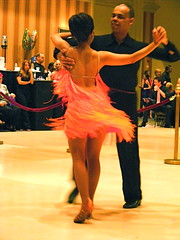
Orange Fringe FlareImage by catface3 via FlickrNothing done yesterday, as I had a long day at work; most of it with my ear glued to the phone, answering questions about rates bills. Also, our dance class in the evening, when we were put through the basics of, amongst others, the Viennese Waltz; not recommended for those who suffer from any form of dizziness.
This evening, I wanted to write and post the review of The Alchemist (see below). So, having dealt with the 69 emails awaiting my return from work, I thought the rest of my time would be better spent doing the typing corrections to the MS for the first book. Managed to complete 4 more chapters of that and now time for rest in preparation for tomorrow at the office and then an evening in Hornsea with my writing group.
Still, 4 chapters of corrections was a worthwhile contribution, I think.
Enhanced by Zemanta

The Alchemist by Paulo Coelho, Reviewed

A painting by Louis Comfort Tiffany depicting ...Image via Wikipedia
This parable, and best-selling inspirational novel, is written in a deceptively simple style.
Santiago, the hero of the piece, takes a journey of self-discovery from his homeland of Andalusia, via Tangiers, to the pyramids of Egypt. On the way, he learns many lessons about life, himself and the nature of spirituality.
As a passionate agnostic, I have a built-in suspicion of organised religion or anything that defines God by naming a being that must be beyond our comprehension. So, the references to Allah and to various religious groupings could easily have prejudiced me against the book. That they didn't, is testament to Coelho's ability to express his ideas in a way that is difficult to rage against. In fact, reading this work has caused me to re-examine my outright opposition to religious organisations to the extent that I can now view them as a way for some people to embrace the idea of a superior power and a connectedness of all things in the universe. And to accept them on that level only.
There is a complexity and philosophical depth to the arguments presented in this simple tale, which I suspect will be read on a number of different levels depending on the reader's attitude to matters spiritual. The ideas about love, far deeper and more universal than the romantic love of so much popular fiction, I found so close to my own as to resonate strongly with me.
That the author is a catholic should have made it difficult for me to empathise, but his faith never really got in the way of the ideas he tries to convey here. There is no attempt to convert or to suggest that one set of religious beliefs is any better than any other.
The elements of fantasy and innocence in the story will make it an unlikely tale for the cynical and those for whom romance is something to be avoided. But those with open minds may find something surprising here. I know I will find the ideas returning to me long after I have put the book away.
An interesting reading experience, but one which has not made me eager to try other books by the same author. So, I find myself oddly ambivalent about it; a mixture of admiration and doubt. I suspect the fact that I've come across many of the ideas before in The Secret, which turned out to be a great disappointment, has made me a little sceptical of the content.

Enhanced by Zemanta

Stuart's Daily Word Spot: Zap

Eucalyptus tree that was blown apart by a ligh...Image via Wikipedia
Zap: interjection - sound of a laser, ray gun, bullet, etc; sudden or dramatic event, expressed: verb - to kill, give a sudden blow, do away with, destroy; erase or alter; act against; send, put, strike quickly or with force; make more powerful or exciting; enliven, revitalize; overwhelm emotionally; cook or heat in a microwave oven; move quickly; operate a remote control to switch television channels quickly. Noun - energy, vigour, power, drive; strong emotional effect; a charge or bolt of electricity etc.; a beam or burst of radiation etc.

'General Phlobotomiticalitonis waved just one of his nine hundred and fifty seven tentacles and "Zap" went his ray gun, splattering a trillion Gordonian Tribulites in a single blast.'

'The best way to get rid of wasps is to zap the pesky things with a concentrated spray of wasp nest destroyer. One zap and they're history.'

'As the bolt of lightning illuminated the desolate plain, the zap of electrical discharge made the hair on Jennifer's head rise and stand on end.'

Enhanced by Zemanta

Monday, 14 March 2011

Stuart's Daily Word Spot: Yada-yada

Brad Pitt signs autographs for troops during h...Image via Wikipedia
Yada-yada: noun  tedious, trivial or meaningless talk, chatter.

'Caroline comes up to me with that expression she wears when she thinks I'm doing something I shouldn't and gives me this long lecture on how I should be more like Brad Pitt; yada-yada.'

Enhanced by Zemanta

Sunday, 13 March 2011

Edit of Volume Two Begins

With the completion of the handwritten edit of volume one, I was able to start the typed corrections today, and I've done chapter one, so far.
On volume two, I've modified the old chapter 54 of what was originally a continuation of volume one, to make it into chapter one of the second volume. Lost yet? It needed a lot of insertions to allow virgin readers to be able to pick up the story without having read the first book. But, to my surprise, it didn't need a full rewrite. So, I'm ready to continue with the full edit of the chapters for book 2 that have already been written. once that's done, I'll have to start writing (as in creating) the follow on chapters to complete book 2. But I'll keep up this daily post to let you know how it's going and as a motivation tool for myself when feeling tired.
Actually, I'm unlikely to do more editing tomorrow, or indeed the post, as I have to be at work until late and then I'll be out with my darling, tripping the light fantastic and generally making a fool of myself,but laughing a lot and enjoying the activity. Dance is remarkably spiritually refreshing. You should try it.
The opening waltz always renews my spirit, no matter what sort of day I've had at the boring place I work to earn a crust.
Enhanced by Zemanta

Stuart's Daily Word Spot: Xanthippe

An Emblem book print portraying Xanthippe empt...Image via Wikipedia
Xanthippe: noun - The wife of Socrates, a bad-tempered or scolding wife or woman.

'When George lazily referred to his wife as Xanthippe, she picked up the frying pan and demonstrated the accuracy of his description by beating him over the head with it, whilst yelling imprecations about his manhood at him.'

Enhanced by Zemanta

Saturday, 12 March 2011

Edit: Volume One is Done

Volume one is now complete, ending with chapter 53 at page 516. So, now I have to start on Volume two, of which I have the first 15 chapters written and ready for editing, and other chapters in need of their first edits. I'll have to pen either an introductory chapter for book 2 or make additions to the current text to make it possible to read as a stand-alone book for those who read it before reading book 1.
I'll start on that tomorrow.
I'm pleased with the first volume, and may start to do the odd sample from time to time to get feedback.
For now, after a full day, I'm ready to relax for what's left of the evening. So, I'll bid you all goodnight.

Dewey W. Dempsey, Author Interview:


Dewey W. Dempsey taught high school and college English for 17 years. He is a professional storyteller, and was a charter member of the Healing Stories Alliance of the National Storytelling Network. He taught storytelling and writing techniques in Arizona, Bermuda, California, Colorado, Georgia and Tennessee. He has written and published four novels and a collection of stories in hard copy and Kindle, and a nonfiction work, “Creating Your Own Spiritual System,” in blog form.

SA: What was your inspiration for the Diamond Rising Star Adair series.

DWD: I had just completed and sent of the MS of a heavily researched historical novel on a Cherokee family and the spiritual practices of the Cherokees before 1850. I was camping in the desert near Reno, Nevada and decided to write a contemporary detective novel. As I sat watching the sunrise and sipping my coffee the opening scene presented itself. I spent some time using techniques I had learned when I started creating my own stories for the storytelling circuit and the scene unfolded.

SA: What is your writing technique?

DWD: My technique for writing is to take an image and try to become fully present to it. My storytelling training was that unless I could visualize my stories completely with all of the senses I could not make it real for the audience. Then, the process involves asking the image for the backstory, the motivation, the history. Sometimes I need to research on locations and practical details. With one or two exceptions I never write about a location I have not visited. Even the fictionally created places are composites of places I have visited.

SA: How much revision do you do an your MS?

DWD: My process for the MS beyond the initial draft is two revisions: one focusing on theme and consistency and the other focusing on mechanics. I then send the revised MS to a core of readers from former and current writing groups and friends. I review all of the comments and then do a third revision. I then hire a professional proofreader and do final revisions.

SA: Where and when is your novel set and why did you make these specific choices?

DWD: In this series the locations are determined by the kinds of action that is being developed. In the first two novels, the core set of locations was centered around Denver, Colorado; Tahlequah, Oklahoma; Gran Lac, Wyoming(fictional); New York state and parts of Northern California. In this third novel parts of Mexico, Belize and British Columbia are added.

SA: How can people buy your books?

DWD: My Amazon.com author page includes paperback and Kindle versions. Author Page Amazon http://www.amazon.com/-/e/B004G7B5UC

SA: What qualities make a successful writer?

DWD: People tell me that I have led an interesting life and that is what they see as the strength of my books. The 'bad guys' in my works are based on my years of working with inmates on Death Row and in maximum security prisons, both male and female. This was followed by a career as a therapist working with severely mentally ill populations. I have traveled and observed people from all walks of life.

SA: How do you set about writing a piece?

DWD: So far, in all six of my novels, including the two in progress an opening scene has presented itself and I was off to the races.

SA: To what extent do you think genre is useful in the publishing world?

DWD: The concept of genre was invented by literary critics, not authors. It now determines marketing of fiction. I have not written a book that I feel exclusively fits into any genre. That struggle to select a genre for marketing purposes actually postponed the publication of my first two books.

SA: Do you think writing is a natural gift or an acquired skill?

Both. If the gift is not there no amount of skill will produce it.

SA: What single piece of advice would you give to writers still hoping to be published?

DWD: Persevere.

SA: What are you writing now?

DWD: The second book of the historical fiction (Qua Nie: the Wander Years) and the fourth book of the Diamond Series (Diamond and the Shape-Shifting Mayans).

SA: Do you have a website or a blog that readers can visit?

DWD: People are welcome to visit me at www.obsidianeaglellc.com

SA: Given unlimited resources, what would be your ideal writing environment?

DWD: Lake Tahoe, California; Magog, Quebec; Jay Peak, Vermont; Bermuda.

SA: Where do you actually write?

DWD: Wherever I am. I have a two pound portable word processor whose files can be downloaded to my computer for revision. My most frequent places have been coffee-house, campsites, ski lodges, airports, my deck, friends cabins and various rented cabins and resorts. I have written in over ten US states, four Canadian Provinces, Belize and Los Cabos, Mexico. My most frequent time for writing is dawn or early morning, but I write when I have the inspiration and the time.

PRESS RELEASE:
Native-American detective uses intuition, advanced technology to save world from Mayan Revenants
Dewey W. Dempsey reintroduces Diamond, a detective with strong Native American roots, in “Diamond: Psychotic Psychiatrists and Mad Mayans”
FORT OGLETHORPE, Ga. – Dewey W. Dempsey brings back the daring Diamond Rising Star Adair in the third title of the “Diamond” series, “Diamond: Pyschotic Psychiatrists and Mad Mayans” (ISBN 1456474138). Diamond, a strong, intuitive and well-educated woman, applies her talents toward solving crimes and saving lives.
After feeling demeaned and belittled in the first novel, “Diamond and the Bridger Mountain Butcher,” a vengeful psychiatrist has his sights set on Diamond and her lover, Jim Sullivan. The psychiatrist enlists the help of two colleagues to help commit serial murders. They begin by planting evidence at the crime scenes that will lead investigators directly to Diamond and Jim. Once the couple’s reputation is ruined, the psychiatrist plans to kidnap, torture and kill the couple.
Something seems amiss, however, for Diamond and Jim – one his former associates within the government’s serial-killers unit appears overly eager in seeing them convicted. Using her detective skills and superior intuition, Diamond discovers that the old colleague belongs to the Mayan Revenants.
Searching for the ties behind the man’s desire to kill her and her lover, Diamond finds two other members of the group, which plans to infiltrate the United States as part of the looming 2012 prophecies. With redesigned ancient Mayan-Toltec laser-like weapons and communication techniques, Diamond, Jim and America are in danger, and the couple must now outsmart the psychiatrist, the government and the Mayan Revenants.
“Diamond is different than most lead female detectives in mystery novels,” Dempsey says. “She’s a blend of Native-American mysticism and advanced technology.”
Fans of Dempsey’s “Diamond” novel series will rejoice over his latest installment. This time the intelligent, instinctive detective travels across Central America, the United States and Canada to save herself, her lover and her country.
“Diamond: Psychotic Psychiatrists and Mad Mayans” is available for sale online at Amazon.com and other channels.

MEDIA CONTACT:
Dewey W. Dempsey: Email: Phone: (706) 956-4889 Website: www.obsidianeaglellc.com

Enhanced by Zemanta

Stuart's Daily Word Spot: Wad

Banknotes of 5000 denomination in different cu...Image via Wikipedia
Wad: noun - a small bundle of soft, loose, material used as a plug, pad, or to keep things apart; plug of paper or cloth to keep the powder and shot in position in a gun; something rolled tightly, a bankroll; a lot of something, especially money; a mass, a heap; bun, cake, sandwich: verb - place a wad in a gun, plug a hole with a wad; to force soft, or fibrous material into a small space; to form into a wad.

'The kidnapper forced open her mouth and stuffed a wad of bank notes in to keep her silent.'

'Jane formed a plug from discarded clothing and used it to wad the hole in the dyke, thereby saving the city from a disastrous flood.'

Enhanced by Zemanta

Two Ends of the Pen: Interview with Stuart Aken

Two Ends of the Pen: Interview with Stuart Aken

Friday, 11 March 2011

Slowly Goes the Edit

Another chapter today. Seems so little, but I've had a full day and all continues to go well with the work.
Won't bore you with the details, but most of what I've done is writing related in one way or another. And I have prepared a new author interview for posting tomorrow. Look out for some interesting insights and comments from Dewey Dempsey, a much published author with a great deal of experience.

So, page 508, chapter 53 awaits the red pen tomorrow and, hopefully, I'll get a little more done then.
For now, it's the end of a longish day and time to relax.
Enhanced by Zemanta

Stuart's Daily Word Spot: Vacant

Robert Lovelace Preparing to Abduct Clarissa H...Image via Wikipedia
Vacant: adjective – an office or position unfilled or unoccupied; containing nothing, empty, uninhabited, untenanted; either occupied nor in use; devoid of or lacking something, entirely free from; showing inattention, lack of intelligence, or thought, empty-headed, expressionless, inane.

'Her expression entirely vacant, Clarissa stared across the vacant lot to where the house stood with its windows broken, doors open and rooms all vacant, as the occupiers had left it when the bomb had dropped.'
Enhanced by Zemanta

Do You Truly Love Books?

A common instance of theft: the bicycle frame ...Image via WikipediaIf you are a book lover, you will hopefully see the sense and justice in this - http://www.guardian.co.uk/books/2011/mar/10/authors-book-piracy-cost
Piracy in the music industry occurred mostly because music lovers believed they were being ripped off by the record companies. The resultant theft damaged a huge number of emerging bands and stopped many of them ever finding a public voice. The same is going to happen to the book industry if we, as writers, publishers and readers don't do something to stop it.
Piracy is theft. Pirates are thieves. Plain and simple. Would you steal a book from a store? No. So why is it okay to steal one electronically?
Some major publishers sell their ebooks at inflated prices, but most independent authors sell theirs at very reasonable cost, so please allow those of us who write to glean some financial reward from what, in many cases, represents years of hard work. The stories of rich authors are hugely inflated. Most novelists are lucky if they sell 2,000 books. At 10% royalties, do the maths. No one can live on that sort of income.
Sorry for the rant, for those who would never dream of such theft, but there are a lot out there who do this without any understanding of the consequences.
Let me have your views, please.
Enhanced by Zemanta

Thursday, 10 March 2011

Editing Away Still

Two more chapters completed today, so chapter 52 and page 497 await. Added a short piece to do with leather treatment, after seeing something of interest in a TV documentary the other night. Otherwise, not much needed changing.
Not bad, considering the day I've had. Written and posted the blog about ebooks below. Answered over 50 emails. Browsed the web for research material. Bought some more ebooks for the Kindle, and some free ones. Been to school to hear about student finance for my daughter, who has upped her grades today: well done Kate!
Walked with my wife in the howling gale. Read some of the current novel I'm reading on the Kindle.
Now it's time for relaxation. A drop of claret calls.
Enhanced by Zemanta

eBooks V Paper Books: Pros and Cons.


There has been a lot of recent discussion in the press about the effect of ebooks on the production and dispersal of paper books. It seems that sales of physical books have fallen whilst electronic versions are increasing. Could cost be a factor here? Most hardbacks are priced at around £18.99, whilst a good many ebooks come in at around £2.99, or less; in fact, many are free. Obviously, the cost of the ereader is a factor, but that's a one-off purchase and has the advantage that it allows the buyer to store many volumes. Barnes and Noble report that they sold over 1,000,000 ebooks on Xmas day alone! And it's estimated that between 3 and 5 million ereaders were activated in the week following Xmas. On the other hand, the top selling paper book apparently sold 1,225,456 copies during 2010.
The New York Times recently announced that it will carry a weekly list of ebook bestsellers in fiction and non-fiction.

A new French study has predicted that by 2015 (that's just 4 years away) 15-20% of readers will own a digital reading device and 25% of books will be sold in digital form.

In the latest issue of The Society of Author's quarterly, The Author, member Stewart Ross mentioned that he'd asked a question of children in several schools he'd visited. The question, 'Would you prefer to have all your books on one electronic reader or as lots of separate paper books?' elicited an overwhelming choice from the children for the former. And it's clearly the case, from a great deal of research recently concluded, that the younger generation are very much in favour of ereaders.

Last week, I decided to see for myself, and bought a Kindle. I'm a traditional reader and have read thousands of books presented as printed works between hard and soft paper covers. Like many, particularly older, readers, I love the feel, smell and appearance of the paper book. But, to my surprise, I have enjoyed reading on the Kindle screen. It has an ink system, which has the advantage, over back-lit systems, that it can be read in any light and doesn't suffer from dimming in harsh sunlight. So, it will be ideal for those holidays in the sun, when I generally take five or six books with me. The device can store up to 1600 volumes. Many classics are now available as free ebooks, a lot of modern writers are either publishing their own work through providers such as Smashwords, at very low prices, and some traditional publishers are beginning to realise that they cannot expect a reader to fork out the same money for a digital copy as they would for something printed on paper, so their books are also reducing in price.

There are, of course, disadvantages to the ebook: at present, few of these devices allow for colour illustrations, for example, though some do. The screen size won't allow the usual number of lines per page and this makes the reading experience different, though not necessarily worse. The feel of the device is odd; the single sheet of plastic feeling solid in the hand. Pages are turned by either stroking the screen or pressing a button. And, of course, there is none of the sound of paper in motion (though, some devices have this as a sound effect), none of the smell associated with an old volume, none of the feel of the luxury binding in leather that so much enhance the experience of reading from a 'real' book. And, of course, for those who love the covers and dust jackets, there are none of these: the cover picture doesn't appear on the Kindle, only at the point of sale, or, if you upload the free Kindle to PC software from Amazon, on that program's index screen.

But, it is easy to enlarge, or reduce, the font size, so the reader can arrange the text to suit his eyesight. The device keeps the reader's place without a bookmark and has an easy system for finding any individual book stored. There are covers for the devices that render them more friendly to the hand that holds them. The Kindle also permits the user to highlight passages, such as quotes, and to store these in a separate place for future perusal and use. One can also make notes; a very useful device for those doing research. It is possible to subscribe to magazines, newspapers and blogs, and, with the 3G enabled devices, to surf the web.

Environmentally, the paper book clearly has the disadvantage of tree destruction, though many publishers are using either recycled paper or paper from sustainable forests. The waste and pollution caused by paper making is also a factor here, as is energy use. For digital readers the problems include the use of toxic chemicals and probable exploitation of cheap labour in the developing nations where these things are made. But, many of the electronic components can be reclaimed and recycled.

My own work has been published in both forms. Breaking Faith is available as a paperback (POD) and an ebook via Smashwords and on Kindle. And my own anthology, Ten Tales for Tomorrow, is available through Smashwords for all platforms and on Kindle. So, I have experience, as a writer, of both systems. The MS for Breaking Faith had to be edited and brought to publishing standard before it was published in paperback form, so converting it to the necessary format for Smashwords was a relatively simple, if tedious, task. The short stories in Ten Tales for Tomorrow, were a mix of previously published and non-published work, so the MS for that had to be compiled, edited and made suitable for conversion. Again, this was a time-consuming but relatively simple task. I also took on the task of compiling, editing and designing an anthology of short stories for my writing group A Sackful of Shorts by Hornsea Writers took a little more work than my own collection, as I had to convert stories from 13 different authors, many of whom don't use the standard format or employ different word processing packages. Nevertheless, the finished product is a good read and, I believe, well presented on both Smashwords and Kindle. I intend, in the near future, to compile more anthologies of short stories, since mainstream publishers seem reluctant to embrace this very popular genre. If you would like a little introduction to the topic of conversion, please see my earlier post, Kindle – the Process of Publishing Your Ebook.

I've come to the conclusion that I'll continue to read 'proper' books but will do a lot of reading on the Kindle as well. Far from feeling a need to support one method above the other, I think both have their place in modern society. Many, I know, will resist the technological route for a long time, whilst others will embrace the ereader with enthusiasm. Whatever your personal choice, it's worth considering that both ways of reading have their positive sides and both have their negative aspects. I believe, for anyone who reads in any real quantity, both methods of experiencing the written word have their place and I suspect the arguments pitting one against the other are unnecessary and false.

But I'd love to hear what you all think.

Enhanced by Zemanta

Stuart's Daily Word Spot: U-boat

German U-boat U-25.Image via Wikipedia
U-boat: noun – German, abbreviation of Unterseeboot = ‘undersea boat’; a submarine (particularly a German one).

'The U-boat surfaced to vent off the collected foul gasses, caused by the cook's failure to refrigerate the beef, and discovered it was surrounded by warships that were decidedly unfriendly.'

Enhanced by Zemanta

Wednesday, 9 March 2011

Stuart's Daily Word Spot: Tabard

The tabard of an English pursuivant of armsImage via Wikipedia
Tabard: noun -  A coarse outer garment worn by common folk, monks and foot soldiers; a short open surcoat worn by a knight over his armour; a jerkin worn by a herald; woman's sleeveless jerkin or loose overgarment.

'She wore a highly decorated tabard in prime colours over her small white bikini, though it did little to hide her figure, as was her intention.'

'In my adult fantasy, currently undergoing the editing process, I've used the tabard as a universal and non-sexist garment for one of the societies depicted in the story, because it's an essential part of their religion that they're able to remove their covering quickly when at prayer.'

Enhanced by Zemanta

Tuesday, 8 March 2011

The Edit Moves On

GUANGZHOU, CHINA - NOVEMBER 13: Thitiyapa Poti...Image by Getty Images via @daylifeAnother chapter done, and chapter 50, page 477 now awaits perusal. And still all goes well.
I've written and scheduled another three blog posts this evening, following the day at work. My emails are all more or less dealt with, and a small amount of essential admin work completed. A pleasant walk after the evening meal worked off some of those calories and allowed quality time with my long-suffering wife. And I even managed to catch the news whilst drinking the after meal cuppa.
Last night's dance class went well and we enjoyed our waltzes, foxtrots, tango, salsa, samba, rumba, quickstep and jive, returning home feeling just a little tired but spiritually refreshed.
So, tomorrow is the writing group night, of course. More on Thursday. For now, a glass of red and a spot of relaxation before bed, I think.
Enhanced by Zemanta

Stuart's Daily Word Spot: Sentiment

Click on to EnlargeImage via Wikipedia
Sentiment: noun - Personal experience, one's feelings; sensation, physical feeling, awareness gained from vague sensation, the feelings of a person or group on a particular subject; an opinion or point of view, attitude, mental feeling, emotion; thought or view based on emotion; emotion expressed in literature or art, the feeling or meaning intended by a passage; emotional or tender feelings collectively; tending to be ruled by feeling rather than reason; superficial tenderness or sensitivity, exaggerated or indulgent emotion.

'I echo the sentiments of the last speaker in decrying the general deterioration of literacy amongst the professional med of the media.'

'The novel, a romance without any plot or characterisation, was a turgid roll of sentiment with no real emotion and little in the way of theme to recommend it.'

Enhanced by Zemanta

Monday, 7 March 2011

Stuart's Daily Word Spot: Rabbet

en:Creusot Steam Hammer, early 20th century po...Image via Wikipedia
Rabbet: noun - rectangular channel cut on the edge, face, of a piece of wood, stone, etc., usually to take the edge or tongue of another piece, beam fixed so it causes the rebounding of a steam hammer. verb – to join or fix using a rabbet or rabbets.

'Dorothy formed the rabbet and its matching tongue so accurately that the joined wooden structure held without the need of glue.'

'You'll need to rabbet that more precisely, Fred, if it's going to stand any chance of making a secure joint.'

Enhanced by Zemanta